
Matthew 2:16 is about King Herod’s ruthless and cruel attempt to eliminate the perceived threat of baby Jesus by ordering the massacre of all male infants in Bethlehem, demonstrating the corrupt and oppressive nature of power when threatened by divine influence.
16 Then Herod, when he saw that he had been tricked by the wise men, became furious, and he sent and killed all the male children in Bethlehem and in all that region who were two years old or under, according to the time that he had ascertained from the wise men.
Setting the Scene for Matthew 2:16
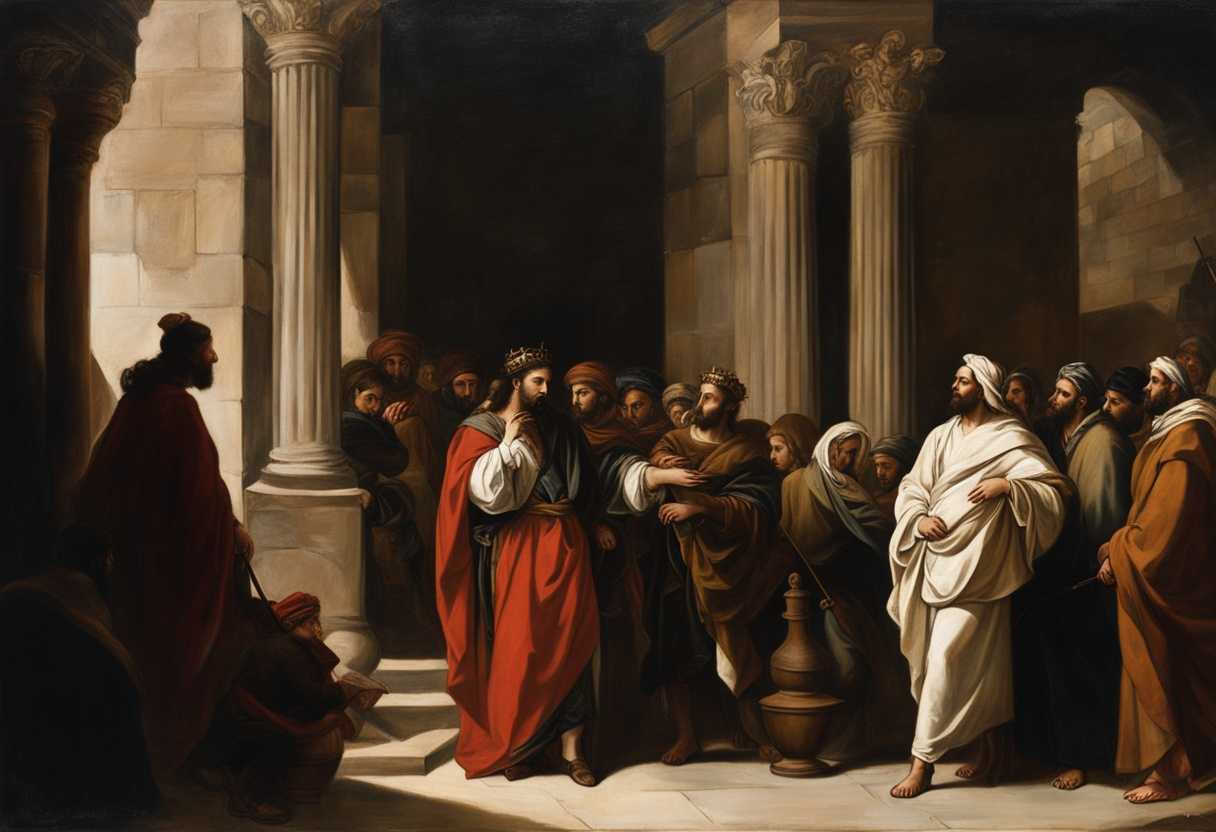
The scene in Matthew chapter 2 depicts King Herod’s furious reaction upon realizing that the Magi had deceived him by not returning to inform him of the whereabouts of the newborn King of the Jews. In a fit of rage and paranoia, Herod orders the massacre of all male children in Bethlehem who are two years old and under. The atmosphere is tense and filled with fear as soldiers are dispatched to carry out this horrific decree.
The scene includes King Herod, his advisors, soldiers, and the innocent families of Bethlehem. Herod, consumed by jealousy and insecurity, is surrounded by his loyal followers who are tasked with carrying out his cruel orders. The families of Bethlehem are depicted in a state of panic and despair as they try to protect their children from the impending danger. The surroundings are likely chaotic, with the sounds of wailing and pleading filling the air as the soldiers carry out the brutal massacre.
The betrayal by the Magi and the subsequent massacre ordered by Herod create a harrowing scene of tragedy and loss. The innocence of the children and the grief of their families serve as a stark contrast to the ruthless power and paranoia of King Herod. This scene serves as a reminder of the darkness and evil that can exist in the world, even in the midst of the hope and promise brought by the birth of Jesus.
What is Matthew 2:16 about?
Let’s identify the subject: “we”
“We will delve into this verse together and unpack its profound significance.” This verse reflects a dark moment in history where power and fear drove a ruler to commit a heinous act. King Herod’s cruel decree to massacre innocent male infants in Bethlehem reveals the extent to which some individuals will go to cling to power and suppress any potential threat to their reign. The stark realities of human nature – the capacity for greed, violence, and ruthlessness – confront us as we reflect on this verse. The massacre of the infants in Bethlehem serves as a reminder of the fragility of innocence in a world plagued by tyranny and oppression. It prompts us to ponder on how fear and insecurity can lead individuals to commit unspeakable atrocities in the pursuit of maintaining control. Contemplating this verse prompts us to question our own values and actions. How do we navigate power and authority in our own lives? Do we uphold justice and compassion in the face of adversity, or do we succumb to the temptations of power at the expense of others’ well-being? This verse ultimately serves as a cautionary tale, urging us to reflect on the consequences of unchecked ambition and the importance of standing up against injustice, no matter the cost.
Understanding what Matthew 2:16 really means
In the narrative of Jesus’ early life, Matthew 2:16 unveils a dark chapter following the Magi’s visit. King Herod’s insecurity about a prophesied new “King of the Jews” leads to a horrific decree: the slaughter of all male children in Bethlehem and its vicinity aged two and under. This chilling event echoes a recurring theme in biblical history where tyrannical rulers, like Pharaoh in Exodus 1:22, attempt to thwart God’s plans through heinous acts of violence. The prophecy in Jeremiah 31:15, depicting Rachel’s inconsolable grief, resonates with the sorrow that enveloped Bethlehem due to Herod’s ruthless command.
The relevance of this verse extends beyond its historical context, speaking to the enduring realities of injustice and suffering in our world. It serves as a poignant reminder of the innocent lives often caught in the crossfire of power struggles and oppressive regimes. Despite the darkness of Herod’s actions, the survival of Jesus amidst the chaos symbolizes hope and the assurance that God’s ultimate plan for salvation cannot be thwarted by human cruelty.
In our contemporary landscape, the call to protect the vulnerable echoes loudly. Just as the massacre in Bethlehem underscores the need for vigilance in safeguarding the innocent, we are urged to stand against all forms of oppression and violence that target the marginalized and defenseless in our society. The verse prompts us to reflect on how we can actively advocate for justice and mercy in a world where the cries of the oppressed still echo through the corridors of power.
Drawing parallels between biblical narratives and modern-day struggles can illuminate the enduring themes of resilience and hope in the face of adversity. Just as communities today face oppression and hardship, stories of faith and perseverance emerge, mirroring the survival of Jesus amidst Herod’s brutality. These narratives serve as beacons of light in the darkness, reminding us that even in the bleakest moments, God’s redemptive plan is at work, offering solace and strength to those who endure.
As we ponder the chilling events of Matthew 2:16, we are compelled to confront the harsh realities of our world, finding solace in the overarching plan of God that promises deliverance and justice. The verse serves as a clarion call to action, urging us to be agents of change, standing against injustice, and advocating for the protection of the innocent and vulnerable. In a world marred by suffering and oppression, the story of Herod’s massacre reminds us of the enduring need to be voices of compassion and agents of hope in a world yearning for redemption.
The question: How do we respond to the innocent suffering?
God sees and knows all in times of innocent suffering. He is aware of the pain and injustice that innocent individuals may face. It is important for us to turn to Him in prayer, seeking comfort and guidance during such challenging times. We are called to show compassion and support to those who are suffering, just as Jesus exemplified through His ministry on earth. We should be moved to action by innocent suffering, providing aid and assistance as the hands and feet of Christ. We can extend a helping hand, offer a listening ear, and seek justice for the oppressed. We can bring hope and healing to those who are experiencing pain and hardship by spreading love and kindness. Let us stand together in solidarity with the innocent and work towards a world where justice and mercy prevail.
Application
Look around your workplace, your home, your daily commute—darkness persists. Matthew 2:16 shows us the cruelty out there, but let’s be the change. Can you be the one who spreads kindness amidst chaos? Your simple acts of love can be the light piercing through the gloom. Are you ready to be the beacon of compassion amidst the harshness?

Reverend Michael Johnson is an experienced Church Minister with a profound expertise in spirituality and guidance. With a serene presence and a compassionate heart, he has faithfully served his congregation for over 20 years, leading them on a spiritual journey towards inner peace and enlightenment. Reverend Johnson’s extensive knowledge of religious philosophies and profound understanding of human nature have made him a trusted confidant and mentor to many, as he seamlessly weaves his profound wisdom into life teachings. Reverend Johnson’s calming demeanor and empathetic nature continue to uplift and heal souls, nurturing a sense of unity and tranquility within his community.