
Matthew 3:1-6 is about the proclamation of John the Baptist in the wilderness, calling people to repentance and preparing them for the coming of Jesus Christ through the symbol of baptism.
1 In those days John the Baptist came preaching in the wilderness of Judea,
2 “Repent, for the kingdom of heaven is at hand.”
3 For this is he who was spoken of by the prophet Isaiah when he said, “The voice of one crying in the wilderness: ‘Prepare the way of the Lord; make his paths straight.’”
4 Now John wore a garment of camel’s hair and a leather belt around his waist, and his food was locusts and wild honey.
5 Then Jerusalem and all Judea and all the region about the Jordan were going out to him,
6 and they were baptized by him in the river Jordan, confessing their sins.
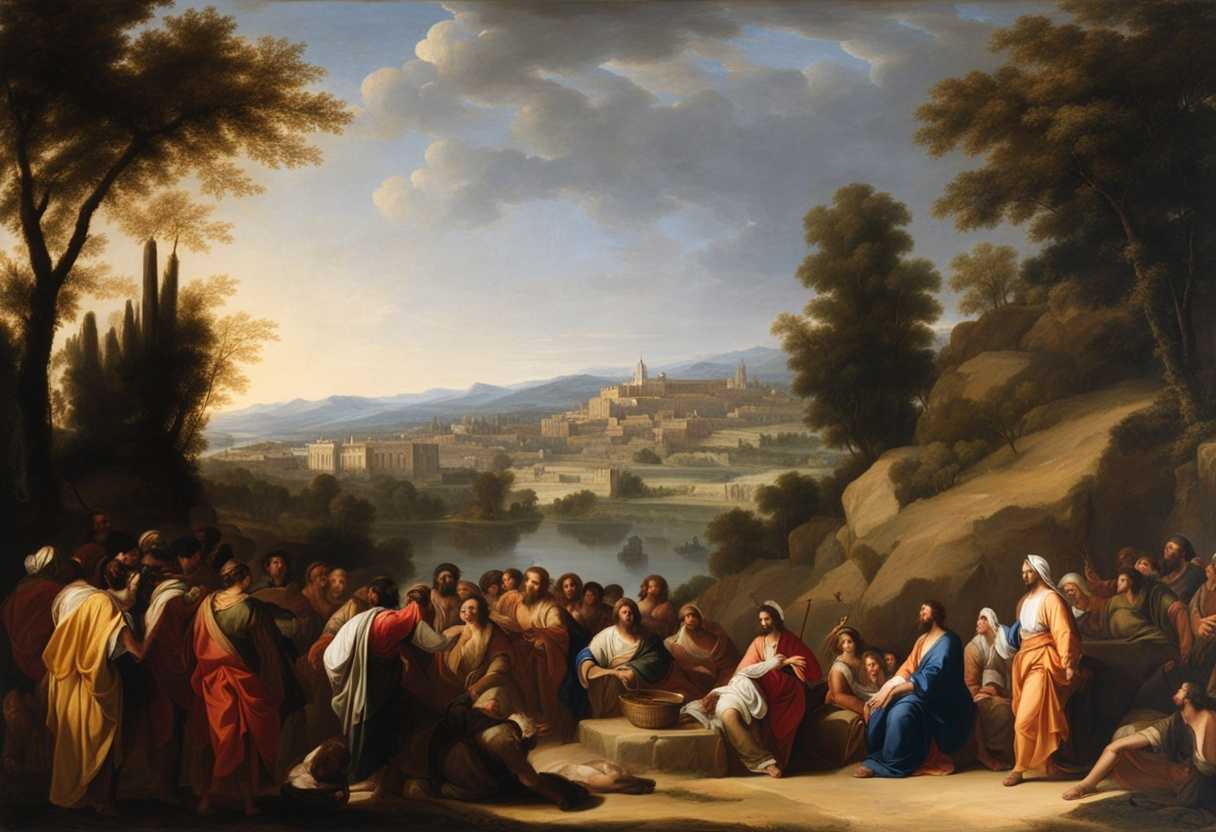
Setting the Scene for Matthew 3:1-6
In Matthew chapter 3, we find John the Baptist preaching in the wilderness of Judea. The scene is set along the banks of the Jordan River, a rugged and barren landscape with the river flowing gently in the background. John, dressed in camel’s hair with a leather belt around his waist, stands tall and commanding as he proclaims a message of repentance to all who would listen.
Crowds of people from Jerusalem, Judea, and the surrounding regions have gathered to hear John speak. They are a diverse group, including Pharisees and Sadducees, common folk, and even soldiers. Some have traveled far to seek out this eccentric preacher who speaks with such passion and authority.
As John baptizes those who come forward, the atmosphere is charged with anticipation and expectation. The people are moved by his words, feeling a sense of urgency to turn away from their sins and prepare for the coming of the Messiah. The sound of the rushing river mingles with the voices of the repentant, creating a powerful and transformative experience for all who are present.
What is Matthew 3:1-6 about?
John the Baptist plays an important role in preparing the way for Jesus Christ, as we learn in this verse. John the Baptist is described as preaching about repentance and baptizing people in the Jordan River. John calls people to turn away from their sins and seek forgiveness from God by preaching about repentance. Through baptism, a religious ritual symbolizing purification and spiritual renewal, John helps individuals to cleanse their souls and prepare themselves for the coming of Jesus.
Have you ever considered the significance of repentance and spiritual renewal in your own life? Just like the people who came to John the Baptist, we too can benefit from reflecting on our actions, seeking forgiveness, and striving for spiritual growth. John’s message reminds us that it is never too late to turn back to God and start anew. We witness John’s devotion to his faith and commitment to guiding others towards righteousness, inspiring us to consider how we can similarly encourage those around us to embrace a life of repentance and renewal. Let us reflect on the teachings of John the Baptist and strive to live our lives in alignment with God’s will.
Understanding what Matthew 3:1-6 really means
In the Gospel of Matthew, we are introduced to John the Baptist, a significant figure heralding the arrival of Jesus Christ. John’s ministry takes place in the wilderness of Judea, a stark setting that symbolizes both purification and encounter with God. His message is clear and urgent: “Repent, for the kingdom of heaven has come near.” This call to repentance is not merely about feeling sorry for one’s actions but entails a complete change of heart and direction away from sin. The Kingdom of Heaven, as John proclaims, represents the reign and rule of God, both a present reality and a future hope for believers.
Quoting the prophet Isaiah, John identifies himself as the voice in the wilderness preparing the way for the Lord. His role as a forerunner fulfilling ancient prophecies underscores the significance of his ministry in paving the path for the Messiah. People from various regions, including Jerusalem and Judea, flock to John, recognizing the need to confess their sins and be baptized in the Jordan River. This act of confession and baptism signifies a public acknowledgment of wrongdoing and a commitment to a new way of life.
The relevance of John’s message extends beyond his time, resonating with people today. Just as individuals were called to repentance and preparation for God’s Kingdom then, contemporary believers are urged to reflect on their lives, turn away from sin, and seek a deeper relationship with God. John’s emphasis on community and confession highlights the communal aspect of faith and the transformative power of acknowledging one’s faults in the presence of others.
Consider a scenario where a respected elder in a town speaks out about the need for change, prompting individuals to examine their lives and commit to transformation. This narrative mirrors John’s impact in Judea, where his message led to a collective renewal among the people. The anecdote illustrates how a call to repentance and a willingness to change can bring about personal and communal transformation, emphasizing the enduring relevance of John’s ministry in fostering spiritual growth.
In conclusion, John the Baptist’s timeless message serves as a reminder for each generation to prepare their hearts for God’s work. By embracing the principles of repentance, confession, and readiness for God’s Kingdom, individuals can experience spiritual revitalization and contribute to the realization of God’s reign in our world. John’s call echoes through the ages, inviting us to introspection, transformation, and a renewed commitment to living out the values of God’s Kingdom in our daily lives.
What is required for true repentance and renewal?
True repentance and renewal require acknowledging and confessing our sins. We cannot experience genuine transformation without first recognizing the ways in which we have strayed from God’s will and the hurt we have caused ourselves and others. This process involves humbling ourselves and coming before God with a contrite heart, seeking His forgiveness and mercy. True repentance and renewal also entail turning away from our sinful ways in addition to confessing our sins. It is not enough to simply say we are sorry; we must also make a conscious effort to change our behavior and live in accordance with God’s commands. This may involve seeking accountability, making amends with those we have wronged, and actively pursuing a path of righteousness and obedience.
Lastly, true repentance and renewal are marked by a transformation of the heart and mind. When we truly repent, we allow God to work in us, shaping us into the image of Christ. This process involves surrendering our will to His and allowing His Spirit to renew us from the inside out. Walking in step with the Spirit will lead us to experience the fruit of repentance in our lives, such as love, joy, peace, patience, kindness, goodness, faithfulness, gentleness, and self-control.
Application
Imagine your life as a project. Are there areas that need a redesign? Just like preparing a big presentation at work, it’s crucial to prepare your heart for what truly matters. Reflect on where you can make things right with God. The people in John’s time reset their paths; you can too. Will you take action today and make the changes needed to align with God’s vision for you?

Reverend Michael Johnson is an experienced Church Minister with a profound expertise in spirituality and guidance. With a serene presence and a compassionate heart, he has faithfully served his congregation for over 20 years, leading them on a spiritual journey towards inner peace and enlightenment. Reverend Johnson’s extensive knowledge of religious philosophies and profound understanding of human nature have made him a trusted confidant and mentor to many, as he seamlessly weaves his profound wisdom into life teachings. Reverend Johnson’s calming demeanor and empathetic nature continue to uplift and heal souls, nurturing a sense of unity and tranquility within his community.