
Matthew 3:13 is about the moment when Jesus came to John the Baptist to be baptized, symbolizing Jesus’ solidarity with humanity and his acceptance of his role in fulfilling God’s plan.
13 Then Jesus came from Galilee to the Jordan to John, to be baptized by him.
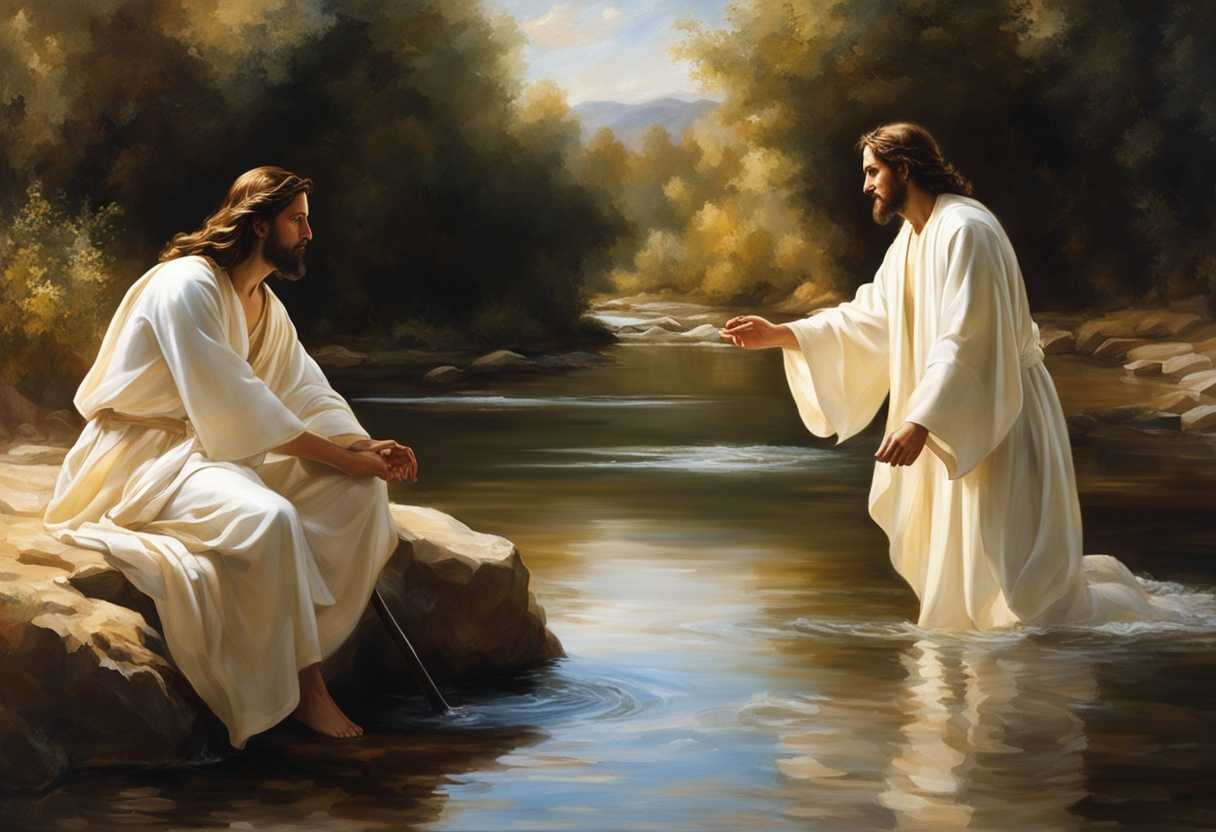
Setting the Scene for Matthew 3:13
In Matthew chapter 3, we find Jesus coming to the Jordan River to be baptized by John the Baptist. The scene is set along the banks of the river, with the sound of rushing water in the background and the sun shining down on the group gathered there. John the Baptist, a rugged and charismatic figure dressed in camel’s hair with a leather belt around his waist, stands waist-deep in the water, calling people to repentance and baptizing them for the forgiveness of sins.
As Jesus approaches, John recognizes Him immediately as the Messiah and protests, feeling unworthy to baptize the Son of God. Jesus insists, explaining that it is necessary to fulfill all righteousness. The crowd watches in awe as Jesus wades into the water, the heavens opening above Him, and the Spirit of God descending like a dove and resting on Him. A voice from heaven declares, “This is my Son, whom I love; with him I am well pleased.”
The moment is charged with divine significance, as Jesus, the sinless Lamb of God, humbly submits to baptism, identifying with humanity in preparation for His ministry on earth. The onlookers, including John the Baptist and the gathered crowd, are left amazed and transformed by this powerful encounter with the divine.
What is Matthew 3:13 about?
Jesus’ baptism by John the Baptist in this verse holds deep significance. Jesus not only identifies with humanity but also sets an example for us to follow by choosing to be baptized. Baptism is a public declaration of faith and repentance, symbolizing a new beginning and cleansing from sin. Jesus, who was sinless, still undergoes this act to show the importance of obedience to God’s will and the initiation of a spiritual journey.
Reflect on the phrase “to fulfill all righteousness.” What does it mean for Jesus to fulfill all righteousness through baptism? It signifies his perfect obedience to God’s plan and his willingness to submit to God’s will completely. Jesus showcases his humility, unity with humanity, and his role as our ultimate example by undergoing baptism. We should seek to live righteously, obeying God in every aspect of our lives, and be willing to participate in practices that align with His divine purpose, just as Jesus did.
Understanding what Matthew 3:13 really means
In Matthew 3:13, we witness a profound moment as Jesus travels from Galilee to the Jordan River to be baptized by John the Baptist. This event not only marks the initiation of Jesus’ public ministry but also symbolizes His solidarity with humanity. The act of Jesus, the sinless Son of God, choosing to undergo baptism among sinners speaks volumes about His humility and obedience to the Father’s will.
John the Baptist initially hesitates to baptize Jesus, feeling inadequate for such a task. However, Jesus insists, emphasizing the importance of fulfilling all righteousness. This interaction between John and Jesus in verses 14-15 underscores the significance of obedience and the divine purpose behind Jesus’ baptism. It aligns with the prophecy in Isaiah 53:12, which foretold the Messiah’s identification with transgressors, further emphasizing the depth of Jesus’ connection with humanity.
Paul’s words in Philippians 2:7-8 resonate with Jesus’ act of baptism, as he speaks of Christ humbling Himself and taking on the form of a servant. Jesus’ baptism exemplifies this humility and servanthood, setting a powerful example for us to follow. It challenges us to embrace humility, obedience, and a willingness to identify with others in their struggles.
The relevance of Jesus’ baptism extends to us today in various ways. It serves as a reminder of the importance of humility and obedience in our walk with God. Just as Jesus identified with humanity through His baptism, we are called to empathize with others and share in their experiences. Our own baptisms symbolize new beginnings, a commitment to God’s will, and a recognition of our need for repentance and purification.
Consider a scenario where a respected leader actively participates in a community service project, not for show but out of genuine solidarity with the community. This act mirrors Jesus’ humility in His baptism and can inspire others to bridge divides, foster unity, and work towards common goals. Reflecting on Jesus’ intentional journey to the Jordan River and His submission to baptism prompts us to ponder our own attitudes towards humility, obedience, and empathy towards others.
In essence, Matthew 3:13 invites us to contemplate the profound implications of Jesus’ baptism. It challenges us to emulate His humility, obedience, and willingness to identify with humanity. As we meditate on this verse, may we be inspired to walk in humility, serve others selflessly, and embrace new beginnings in our spiritual journey.
How can we humble ourselves before God?
One way we can humble ourselves before God is by following in the example set by Jesus in this verse. Jesus came to John the Baptist to be baptized even though he was sinless. Jesus demonstrated humility and obedience to God’s will by willingly submitting to this act. We too can humble ourselves by obeying God’s commands and submitting to His will in our lives, even when it may be difficult or challenging.
Additionally, we can humble ourselves before God through confessing our sins and seeking His forgiveness. Acknowledging our shortcomings and mistakes with genuine repentance shows humility and a recognition of our need for God’s grace and mercy. We humble ourselves in this way, inviting God to work in our hearts and lives, transforming us into more faithful followers of Christ. Recognizing His authority and sovereignty in our lives ultimately involves humility before God. It means surrendering our own will and desires to His and trusting in His wisdom and guidance. Through humility, we demonstrate our reverence for God and our reliance on Him for strength, forgiveness, and guidance in all aspects of our lives.
Application
Think about how you handle your daily challenges at work or with your family. Jesus showed humility and obedience when He got baptized by John, even though He didn’t have to. Just like Him, we need to trust and follow God’s plan, even if it feels tough. Are you ready to embrace humility and obedience, and let God guide your every step?

Reverend Michael Johnson is an experienced Church Minister with a profound expertise in spirituality and guidance. With a serene presence and a compassionate heart, he has faithfully served his congregation for over 20 years, leading them on a spiritual journey towards inner peace and enlightenment. Reverend Johnson’s extensive knowledge of religious philosophies and profound understanding of human nature have made him a trusted confidant and mentor to many, as he seamlessly weaves his profound wisdom into life teachings. Reverend Johnson’s calming demeanor and empathetic nature continue to uplift and heal souls, nurturing a sense of unity and tranquility within his community.