
Matthew 4:12-25 is about Jesus beginning his public ministry, calling his disciples to follow him, proclaiming the good news of the kingdom of God, and demonstrating his power through healing the sick and casting out demons.
23 And he went throughout all Galilee, teaching in their synagogues and proclaiming the gospel of the kingdom and healing every disease and every affliction among the people.
13 And leaving Nazareth he went and lived in Capernaum by the sea, in the territory of Zebulun and Naphtali,
14 so that what was spoken by the prophet Isaiah might be fulfilled:
15 “The land of Zebulun and the land of Naphtali, the way of the sea, beyond the Jordan, Galilee of the Gentiles—”
16 the people dwelling in darkness have seen a great light, and for those dwelling in the region and shadow of death, on them a light has dawned.”
17 From that time Jesus began to preach, saying, “Repent, for the kingdom of heaven is at hand.”
18 While walking by the Sea of Galilee, he saw two brothers, Simon (who is called Peter) and Andrew his brother, casting a net into the sea, for they were fishermen.
19 And he said to them, “Follow me, and I will make you fishers of men.”
20 Immediately they left their nets and followed him.
21 And going on from there he saw two other brothers, James the son of Zebedee and John his brother, in the boat with Zebedee their father, mending their nets, and he called them.
22 Immediately they left the boat and their father and followed him.
23 And he went throughout all Galilee, teaching in their synagogues and proclaiming the gospel of the kingdom and healing every disease and every affliction among the people.
24 So his fame spread throughout all Syria, and they brought him all the sick, those afflicted with various diseases and pains, those oppressed by demons, those having seizures, and paralytics, and he healed them.
25 And great crowds followed him from Galilee and the Decapolis, and from Jerusalem and Judea, and from beyond the Jordan.
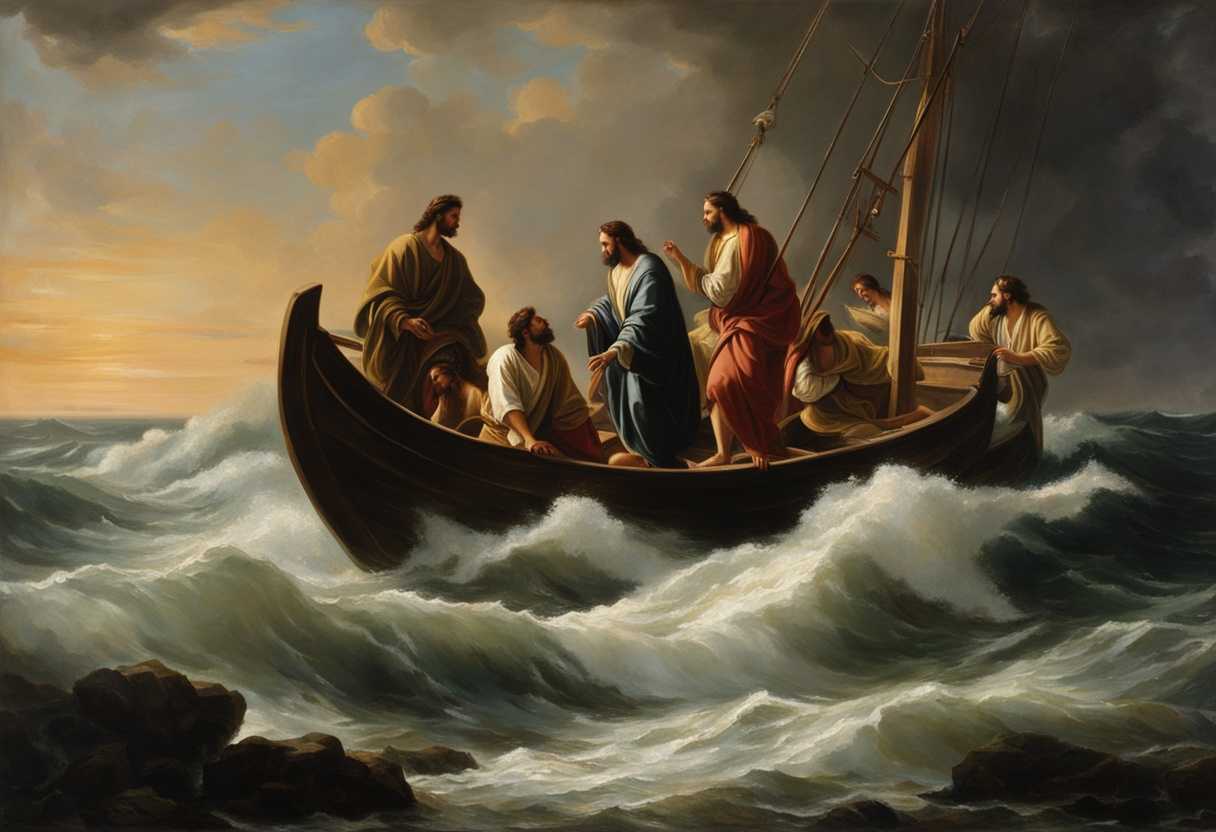
Setting the Scene for Matthew 4:12-25
In Matthew chapter 4, we find Jesus beginning His ministry in Galilee after John the Baptist had been arrested. The scene is set in the region of Galilee, a picturesque area in northern Israel known for its lush landscapes and the Sea of Galilee. Jesus, having just returned from the wilderness after being tempted by the devil, is now ready to embark on His mission to preach the good news of the kingdom of God.
As Jesus walks along the shores of the Sea of Galilee, He comes across two sets of brothers who are fishermen – Simon (Peter) and Andrew, and James and John. These men are hard at work casting their nets into the sea, trying to catch fish. Jesus calls out to them, inviting them to follow Him and become fishers of men. Without hesitation, the four men leave their nets and boats behind, immediately becoming disciples of Jesus.
The scene is bustling with activity as Jesus continues to travel throughout Galilee, teaching in the synagogues, preaching the gospel of the kingdom, and healing every disease and sickness among the people. Crowds begin to gather around Him, drawn to His message of hope and healing. This pivotal moment marks the beginning of Jesus’ ministry, as He gathers His first disciples and sets out to fulfill His divine purpose on earth.
What is Matthew 4:12-25 about?
This verse captures the essence of Jesus’ mission on Earth – to spread love, compassion, and healing to all. He demonstrates the importance of community, support, and shared purpose in fulfilling a greater calling as he calls disciples to join him on this journey. Jesus shows his divine power and compassion for those who are suffering by healing the sick, emphasizing the crucial role of empathy and care for others in his ministry.
Think about the significance of Jesus choosing to heal the sick as one of the first acts in his ministry. Why do you think this action was so central to his message and work? Consider how healing symbolizes not just physical ailments, but also emotional and spiritual wounds that so many people carry. How does Jesus’ focus on healing reflect the core values of his teachings, such as love, forgiveness, and redemption? Reflect on how you can embody these principles in your own life, reaching out to support and uplift those in need just as Jesus did.
Understanding what Matthew 4:12-25 really means
In Matthew 4:12-25, we witness the pivotal moment when Jesus transitions from the preparation phase of His ministry to actively engaging in teaching, healing, and calling His disciples. The passage begins with Jesus moving to Galilee after John the Baptist’s imprisonment, symbolizing a strategic shift in His ministry. This relocation fulfills the prophecy in Isaiah 9:1-2, portraying Jesus as the light in the darkness, bringing hope and salvation to the people. The urgent call to repentance echoes John the Baptist’s message, emphasizing the imminence of God’s kingdom and the need for a change of heart.
As Jesus starts His ministry in Galilee, He calls the first disciples, Simon Peter and Andrew, with a simple yet profound invitation: “Follow me, and I will make you fishers of men.” Their immediate response by leaving their nets exemplifies faith and obedience, illustrating how ordinary individuals can be called to extraordinary purposes by Jesus. This act of leaving behind their livelihood signifies a complete surrender to follow Christ wholeheartedly, trusting in His transformative power to shape their lives for His kingdom’s work.
Jesus’ ministry in Galilee encompasses teaching, preaching, and healing, demonstrating His authority and compassion. By healing every disease and affliction, Jesus showcases His power over physical and spiritual ailments, drawing crowds from various regions to witness His miraculous works. This compassionate healing ministry not only addresses physical suffering but also offers spiritual restoration, pointing to Jesus as the ultimate source of hope and wholeness for all who seek Him.
The relevance of these passages to contemporary audiences is profound. The timeless call to repentance and the nearness of God’s kingdom urge individuals today to turn from sin and embrace God’s grace. Just as Jesus called ordinary fishermen to be His disciples, He continues to call people from all walks of life to follow Him and participate in His redemptive work in the world. Jesus’ ministry of compassion and healing serves as a model for believers to extend love and care to those in need, embodying His transformative power in their interactions with others.
Consider a modern-day parallel where individuals may feel stuck in mundane routines, yearning for a deeper sense of purpose. Similar to how Jesus called the fishermen to a higher calling, He invites each person to discover meaning and fulfillment in Him. For instance, a teacher who answered this divine call by establishing a community center for underprivileged children found profound joy and purpose in serving others, mirroring the disciples’ decision to leave everything behind and follow Jesus. This anecdote illustrates how responding to Jesus’ call can lead to a life of significance and impact, echoing the disciples’ transformative journey with Christ.
In contemplating these verses, we are reminded of the foundational principles of Jesus’ ministry and the invitation for believers to actively engage in His mission today. The phrases and actions depicted in these passages serve as guiding lights, prompting us to reflect on our own responses to Jesus’ call, the transformative power of His teachings, and the boundless compassion He extends to all who seek Him. As we immerse ourselves in the narrative of Jesus’ early ministry, we are encouraged to embrace our roles as His disciples, embodying His love, grace, and healing in a world longing for His redemptive touch.
How can we respond to Jesus’ call today?
We can respond to Jesus’ call today by being willing to leave behind our old ways and follow Him wholeheartedly. We too must be willing to let go of anything that hinders us from fully committing to Jesus, just as the disciples left everything to follow Him. This may require us to make sacrifices, step out of our comfort zones, and trust in His leading despite uncertainty.
Additionally, we can respond to Jesus’ call by actively engaging in His ministry of spreading the good news of the kingdom of God. This may involve sharing the Gospel with others, ministering to those in need, and demonstrating love and compassion to those around us. We can be instruments of His grace and light in a world that is in need of His hope and salvation by following Jesus’s example and teachings.
Finally, we can respond to Jesus’ call by continually seeking to grow in our relationship with Him through prayer, studying His Word, and participating in Christian community. We can better discern His will for our lives and be empowered to serve Him faithfully as we strive to deepen our connection with Jesus. Through our obedience and commitment to following Jesus, we can experience the abundant life and purpose that He has called us to live.
Application
Get inspired by the story of Jesus calling His disciples and spreading the message of God’s kingdom. Let’s respond to His call just like Simon Peter and Andrew did, leaving everything behind. It’s time to take action and follow wholeheartedly. Are you prepared to embrace the same passion and commitment as those who spread the good news of Jesus?

Reverend Michael Johnson is an experienced Church Minister with a profound expertise in spirituality and guidance. With a serene presence and a compassionate heart, he has faithfully served his congregation for over 20 years, leading them on a spiritual journey towards inner peace and enlightenment. Reverend Johnson’s extensive knowledge of religious philosophies and profound understanding of human nature have made him a trusted confidant and mentor to many, as he seamlessly weaves his profound wisdom into life teachings. Reverend Johnson’s calming demeanor and empathetic nature continue to uplift and heal souls, nurturing a sense of unity and tranquility within his community.