
Matthew 7:17-20 is about recognizing individuals by their actions and the fruits they bear, indicating that true intentions and character are revealed through deeds rather than words.
17 So, every healthy tree bears good fruit, but the diseased tree bears bad fruit.
18 A healthy tree cannot bear bad fruit, nor can a diseased tree bear good fruit.
19 Every tree that does not bear good fruit is cut down and thrown into the fire.
20 Thus you will recognize them by their fruits.
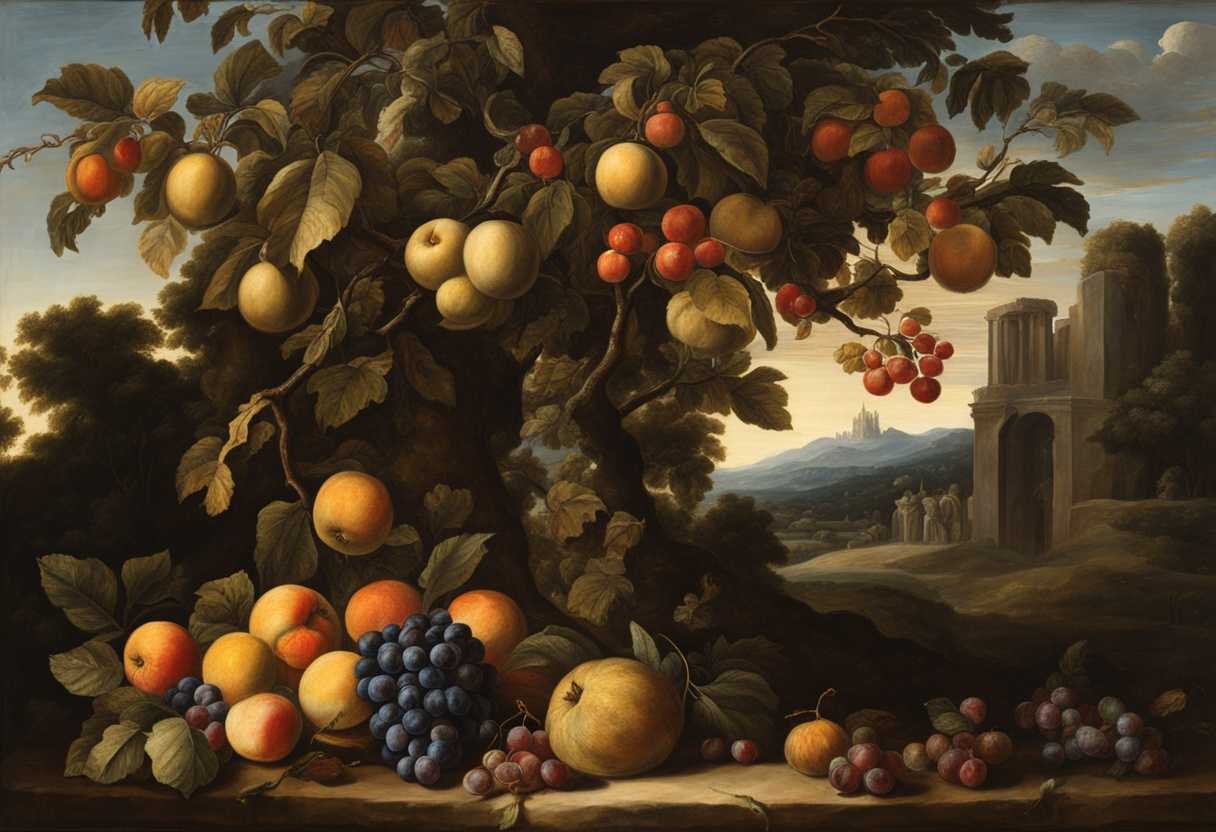
Setting the Scene for Matthew 7:17-20
In Matthew chapter 7, Jesus is delivering the Sermon on the Mount, a pivotal moment in his ministry where he imparts profound teachings to his disciples and a large crowd gathered on a mountainside. The scene is set against the backdrop of a serene hillside, with the Sea of Galilee visible in the distance, and the warm sun casting a golden glow over the landscape.
As Jesus speaks, his disciples, including Peter, James, John, and others, are seated attentively around him, absorbing his every word. The crowd is a mix of curious onlookers, eager followers, and skeptics, all drawn to the wisdom and authority with which Jesus speaks. The atmosphere is charged with anticipation and reverence, as Jesus imparts timeless truths about living a life of faith and righteousness.
In the specific verses of Matthew 7:17-20, Jesus uses the analogy of a tree and its fruit to teach about discerning true prophets from false ones. His words are met with contemplative silence as those gathered ponder the significance of his message, realizing the importance of examining the fruits of one’s actions and teachings. The scene is one of profound spiritual insight and transformative learning, as Jesus continues to impart timeless truths that resonate through the ages.
What is Matthew 7:17-20 about?
This verse from the Bible emphasizes the concept of cause and effect – that our actions and choices lead to specific outcomes. A healthy tree will produce delicious and desirable fruit, while a damaged or diseased tree will yield undesirable or rotten fruit. Our actions and decisions produce results that can be seen. The Bible encourages us to reflect on the impact of our actions and the qualities they reveal about our character by using this analogy.
Think about it – if you plant seeds of kindness, compassion, and integrity in your daily life, the fruits of those values will shine through in your relationships and the way you interact with the world. Conversely, if you nurture negative traits like deceit, selfishness, or cruelty, the consequences will be reflected in the outcomes you experience. This verse serves as a powerful reminder of the importance of self-awareness, accountability, and the role our choices play in shaping our reality.
So, as you navigate through your life’s journey, remember that you have the power to cultivate the kind of “fruit” you wish to bear. Focusing on fostering good qualities within yourself can create a positive ripple effect that benefits not only you but also those around you. Just like a gardener tends to their trees to ensure a bountiful harvest, tend to your actions and intentions with care and mindfulness, knowing that they hold the key to the quality of your life and the impact you have on the world.
Understanding what Matthew 7:17-20 really means
In the Sermon on the Mount, Jesus imparts wisdom about the Kingdom of God and righteous living. One key theme highlighted in Matthew 7:17-20 is the significance of discerning true character and integrity through actions and outcomes. The metaphor of a good tree bearing good fruit and a bad tree bearing bad fruit is used to symbolize that a person with a righteous heart will naturally produce good deeds, while a corrupt heart will result in harmful actions. This passage emphasizes that actions are the true indicators of one’s character and faith, urging us to look beyond mere words to discern the authenticity of one’s beliefs.
Drawing parallels from other biblical passages, such as Galatians 5:22-23 and John 15:5, we see a consistent message about the importance of producing good fruit through living by the Spirit and remaining connected to Christ. James 2:18 further reinforces the idea that faith without corresponding deeds is incomplete, highlighting the inseparable link between belief and action in the Christian life. These passages collectively emphasize the transformative power of faith that manifests in tangible expressions of love, kindness, and righteousness.
In today’s world, where superficial appearances can often mask true intentions, the teachings in Matthew 7:17-20 remain profoundly relevant. This passage challenges us to reflect on whether our actions align with our professed beliefs and values, prompting a deeper examination of our integrity and authenticity. It serves as a poignant reminder of the importance of living out our faith in practical ways, not just professing it with words.
Consider the scenario of a community leader who espouses noble ideals but fails to embody them in their personal interactions. Over time, the inconsistency between their words and actions becomes apparent, eroding trust and credibility. Conversely, a humble individual who consistently lives out their values through acts of kindness and compassion earns genuine respect and admiration. This anecdote illustrates the enduring truth that actions speak louder than words, revealing the true essence of one’s character and faith.
In conclusion, Matthew 7:17-20 calls us to be mindful of our actions and the fruit they bear, as they reflect our inner beliefs and values. It challenges us to strive for a life characterized by good deeds and righteousness, demonstrating our faith through tangible expressions of love and compassion. This passage serves as a compelling exhortation to live authentically, with integrity and consistency, allowing our actions to testify to the depth of our faith and the sincerity of our convictions.
Are we producing good or bad fruit in life?
The measure of whether we are producing good or bad fruit in life can be seen by examining the type of fruit we are bearing. Our actions and choices reflect the condition of our hearts, just as a good tree produces good fruit and a bad tree produces bad fruit. Good fruit is characterized by love, kindness, patience, self-control, and other positive qualities that align with God’s character. On the other hand, bad fruit is marked by selfishness, deceit, immorality, and other behaviors that go against God’s will.
Therefore, if we find ourselves consistently exhibiting qualities that are not in line with the teachings of Jesus, it may be an indication that we are producing bad fruit in our lives. It is important for us to constantly evaluate our thoughts, words, and actions to ensure that we are rooted in good soil and bearing fruit that glorifies God. We can strive to produce good fruit that reflects His love and righteousness to the world around us by cultivating a relationship with God and allowing His Spirit to work in us.
Application
Reflect upon your actions and their impact on your world – are you sowing seeds of kindness and compassion, or negativity and discord? Just like trees bearing fruits, our deeds reveal the essence of who we are. Let us be diligent in nurturing a soul that radiates positivity and love, cultivating a legacy we can be proud of. Are we truly being the best version of ourselves in the eyes of others?

Reverend Michael Johnson is an experienced Church Minister with a profound expertise in spirituality and guidance. With a serene presence and a compassionate heart, he has faithfully served his congregation for over 20 years, leading them on a spiritual journey towards inner peace and enlightenment. Reverend Johnson’s extensive knowledge of religious philosophies and profound understanding of human nature have made him a trusted confidant and mentor to many, as he seamlessly weaves his profound wisdom into life teachings. Reverend Johnson’s calming demeanor and empathetic nature continue to uplift and heal souls, nurturing a sense of unity and tranquility within his community.