
Matthew 9:14-17 is about the importance of understanding the new spiritual era brought by Jesus, symbolized by the imagery of old wineskins bursting due to the new wine of his teachings, emphasizing the need for a receptive heart and a willingness to embrace change and growth.
14 Then the disciples of John came to him, saying, “Why do we and the Pharisees fast, but your disciples do not fast?”
9 And Jesus said to them, “Can the wedding guests mourn as long as the bridegroom is with them? The days will come when the bridegroom is taken away from them, and then they will fast.
16 No one puts a piece of unshrunk cloth on an old garment, for the patch tears away from the garment, and a worse tear is made.
17 Neither is new wine put into old wineskins. If it is, the skins burst and the wine is spilled and the skins are destroyed. But new wine is put into fresh wineskins, and so both are preserved.
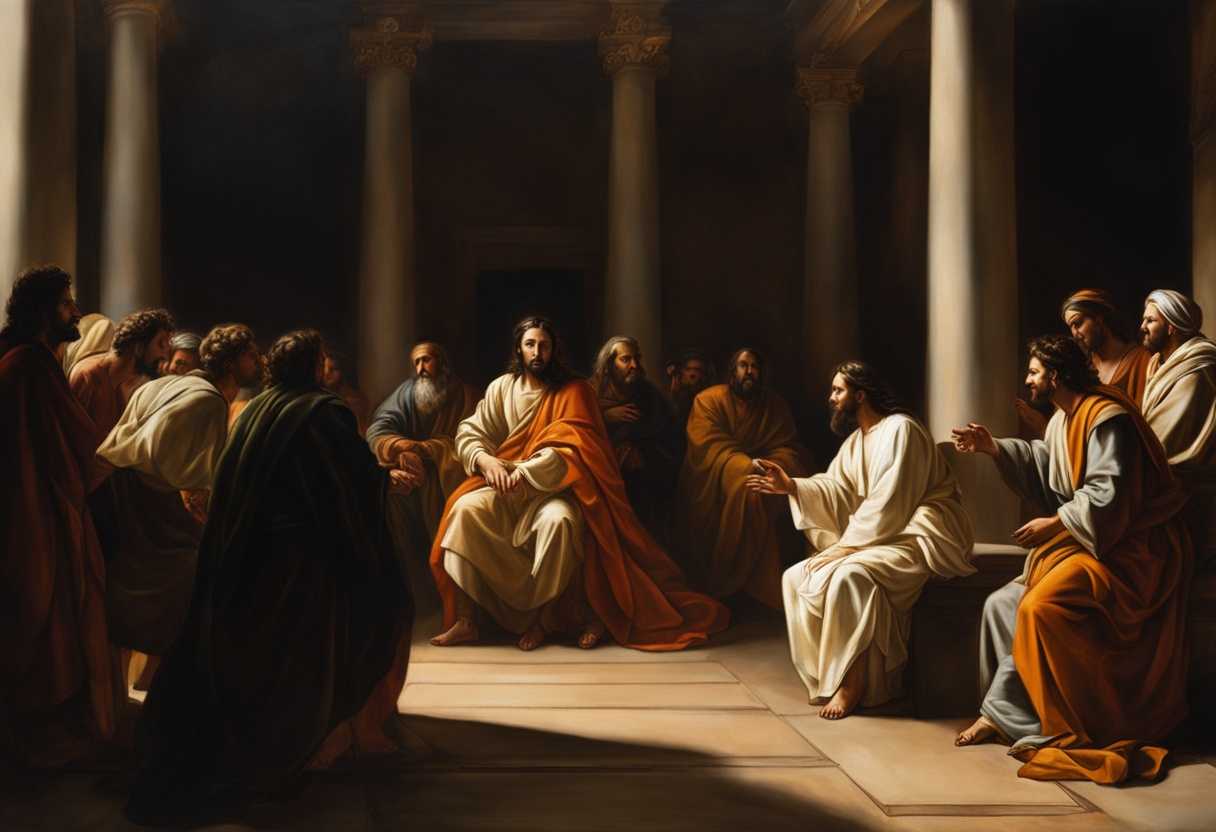
Setting the Scene for Matthew 9:14-17
In Matthew chapter 9, we find Jesus surrounded by his disciples and a group of Pharisees. The scene takes place in a bustling marketplace in the town of Capernaum, with vendors selling their goods and people going about their daily activities. The disciples, who have been following Jesus closely, are engaged in conversation with him as they walk through the marketplace.
The Pharisees, known for their strict adherence to Jewish laws and traditions, have been observing Jesus and his disciples closely. They approach Jesus with a question about fasting, wondering why his disciples do not fast like they and the disciples of John the Baptist do. Jesus takes this opportunity to teach them about the new way of thinking and living that he has come to bring, using the analogy of new wine needing new wineskins.
As the conversation unfolds, the contrast between the old and the new, the traditional and the revolutionary, becomes apparent. Jesus uses this moment to challenge the Pharisees’ rigid beliefs and to invite them to embrace a new understanding of God’s kingdom. The scene is filled with tension and anticipation as Jesus continues to reveal his radical message of love, grace, and transformation.
What is Matthew 9:14-17 about?
Jesus is using the analogy of new wine in new wineskins to explain the concept of the new covenant in this verse. Just like new wine cannot be poured into old wineskins because they would burst, the new covenant that Jesus brings cannot be contained within the old, traditional ways of thinking and living. The old ways of following the law and rituals are not compatible with the new teachings of love, forgiveness, and salvation through faith in Jesus.
Think about it this way: if we try to hold onto the past and resist change, we risk missing out on the transformative power of Jesus’ message. We too need to be open to letting go of our old ways of thinking and living in order to fully embrace the new covenant that Jesus offers us, just as wineskins need to be flexible and capable of expanding to accommodate the fermenting process of new wine. It’s a call to let go of legalism and embrace a deeper, more personal relationship with God through faith and grace.
So, as we reflect on this verse, let’s consider how we can be like new wineskins, ready to receive and fully experience the new wine of God’s love, mercy, and grace in our lives. Are we willing to let go of our old ways and traditions that may be holding us back from fully embracing the abundant life that Jesus offers us? Let’s open our hearts and minds to the transformative power of the new covenant and allow it to shape and renew us from the inside out.
Understanding what Matthew 9:14-17 really means
In Matthew 9:14-17, we witness a dialogue between Jesus and the disciples of John the Baptist, where the disciples raise a question about fasting, a customary religious practice of the time. Jesus responds with profound metaphors, shedding light on the essence of His ministry and the arrival of the Kingdom of God. By referring to Himself as the “bridegroom,” Jesus portrays a time of festivity and rejoicing, symbolizing the joy that His presence brings. This imagery invites us to contemplate the celebratory nature of our relationship with Christ and the abundant joy found in following Him.
Furthermore, Jesus employs the metaphor of putting “new wine into old wineskins,” illustrating the incompatibility between His revolutionary teachings and the rigid structures of traditional religious practices. This analogy emphasizes the need for openness to new ways of thinking and living in alignment with the transformative message of Jesus. Similarly, the image of sewing “new cloth on an old garment” underscores the futility of attempting to merge outdated beliefs with the fresh revelations brought by Christ. It prompts us to reflect on the necessity of embracing the new life and spiritual transformation that Jesus offers, rather than clinging to outdated paradigms.
Drawing parallels with related passages such as Mark 2:18-22 and Luke 5:33-39, we see a consistent theme of the newness and vitality inherent in Jesus’ ministry. These passages reinforce the idea of embracing change and renewal in our spiritual journey, mirroring the disciples’ need to adapt to the transformative teachings of Christ. Additionally, the reference to Isaiah 61:10, which speaks of rejoicing in the Lord akin to the joy of a bridegroom, further emphasizes the theme of celebration and joy in our relationship with God.
In our contemporary context, the message of Matthew 9:14-17 resonates profoundly. Just as the disciples were challenged to let go of old practices and embrace the newness of Jesus’ teachings, we are also called to embrace change and growth in our spiritual lives. The metaphorical imagery of new wine and new cloth serves as a powerful reminder of the transformative power of Christ, inviting us to experience a renewed life in Him. Like a person discovering a more fulfilling way of living, we are encouraged to release old habits and embrace the abundant joy and purpose found in following Jesus.
In conclusion, Matthew 9:14-17 urges us to welcome the transformative teachings of Jesus with open hearts and minds. It prompts us to let go of outdated beliefs and practices, embracing the new life and vitality that come from a relationship with Christ. As we reflect on the imagery of the bridegroom and the newness of Jesus’ message, may we find joy and celebration in the journey of spiritual growth and renewal that He offers us.
How can we embrace change and new teachings?
We can embrace change and new teachings by understanding the deeper meaning behind the verse. We must be open to receiving new knowledge with a fresh perspective, just as new wine isn’t poured into old wineskins because they would burst. Change and growth often require us to let go of old ways of thinking and embrace new ideas, even if they challenge our current beliefs. We must remain flexible and open-minded in order to fully embrace change and new teachings. Like the flexibility of new wineskins that can expand to accommodate the fermenting wine, we should be willing to expand our minds and open our hearts to new possibilities. We can continue to grow and evolve on our spiritual journey by being adaptable and receptive to new knowledge and teachings. Embracing change and new teachings ultimately requires a willingness to let go of rigidity and embrace transformation. Opening ourselves up to new ways of thinking can lead to spiritual renewal and growth, just as new wine brings about a fresh start. We can deepen our understanding and walk a path of continuous learning and enlightenment by being open to change and new teachings.
Application
Think of your life as a busy office or a bustling household. Just like new tools and methods help us manage better, Christ invites us to embrace change and renewal. Don’t cling to old habits or outdated traditions; be open to the transformation Jesus offers. Are you ready to step out of your comfort zone and welcome the new possibilities God has for you?

Reverend Michael Johnson is an experienced Church Minister with a profound expertise in spirituality and guidance. With a serene presence and a compassionate heart, he has faithfully served his congregation for over 20 years, leading them on a spiritual journey towards inner peace and enlightenment. Reverend Johnson’s extensive knowledge of religious philosophies and profound understanding of human nature have made him a trusted confidant and mentor to many, as he seamlessly weaves his profound wisdom into life teachings. Reverend Johnson’s calming demeanor and empathetic nature continue to uplift and heal souls, nurturing a sense of unity and tranquility within his community.