
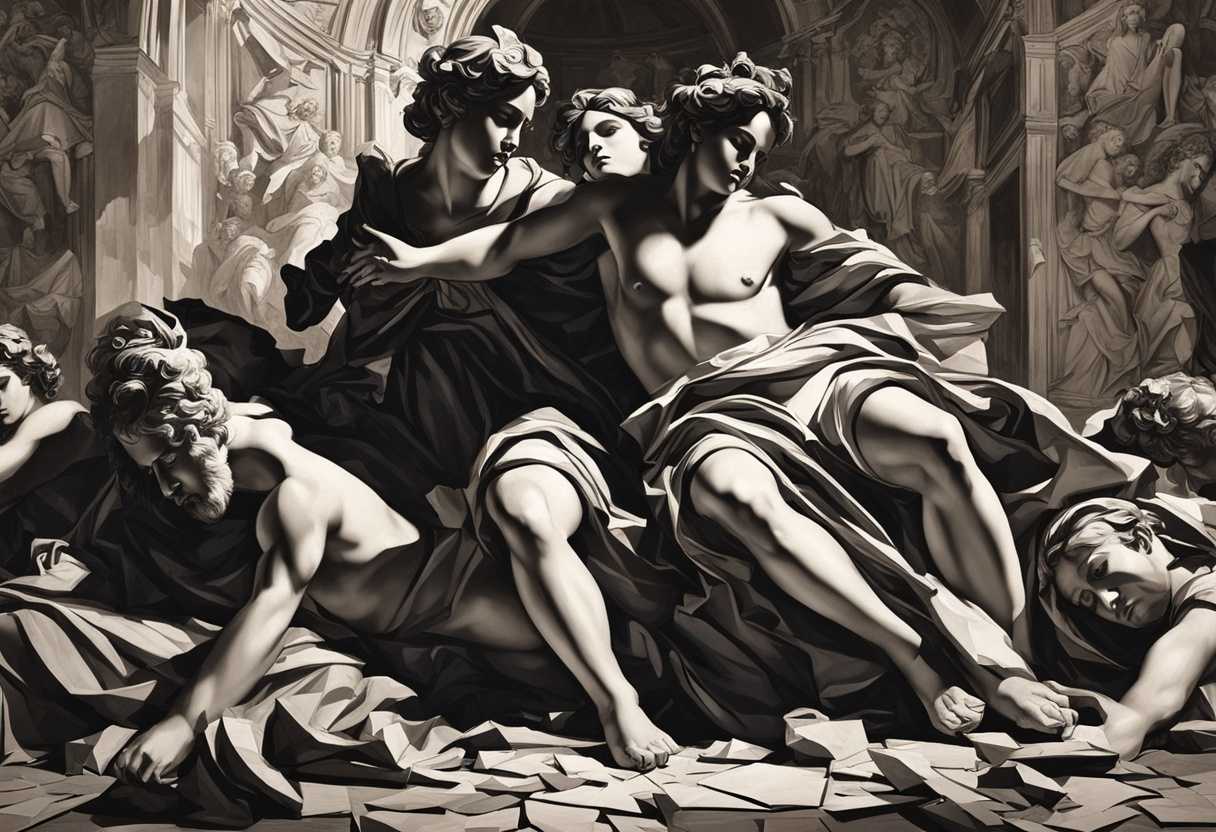
Micah 1:7 is about God’s impending judgement on Samaria and Jerusalem for their idolatry and sin, symbolized by their cities being turned into ruins with their treasures plundered.
7 All her carved images shall be beaten to pieces, all her wages shall be burned with fire, and all her idols I will lay waste, for from the fee of a prostitute she gathered them, and to the fee of a prostitute they shall return.
Setting the Scene for Micah 1:7
In Micah chapter 1, the scene is set in the ancient kingdom of Judah during a time of great turmoil and impending judgment. The prophet Micah, a humble man chosen by God to deliver a message of warning and hope to the people, stands in the midst of a bustling marketplace in the city of Jerusalem. The air is thick with the scent of spices and the sound of merchants haggling over their wares fills the streets.
Surrounding Micah are a diverse group of people – from wealthy merchants to humble farmers, all going about their daily routines unaware of the impending doom that Micah has been tasked to proclaim. Some stop to listen to his words, while others scoff and continue on their way, too preoccupied with their own concerns to heed the prophet’s message.
As Micah raises his voice to deliver the words given to him by God, the sun beats down on the city, casting long shadows across the cobblestone streets. The scene is a mix of chaos and order, with the prophet standing as a solitary figure amidst the hustle and bustle, a beacon of truth in a world filled with deception and sin.
What is Micah 1:7 about?
This powerful verse carries a sense of destruction and judgement. It speaks to the consequences that may come when people worship false idols or put their faith in material possessions. The imagery of images being smashed and gifts being burned with fire illustrates the idea of purging and cleansing, as well as highlighting the impermanence and futility of worldly goods.
It prompts us to reflect on what we place value in and where we derive our sense of worth. Are we investing our time, energy, and beliefs in things that are ultimately fleeting and insignificant? This verse challenges us to reconsider our priorities and reminds us of the importance of aligning ourselves with what is truly meaningful and lasting. This verse can also be seen as a metaphor for letting go of attachments and releasing what no longer serves us in a broader sense. It invites us to examine what we are holding onto tightly and encourages us to embrace change and transformation. It ultimately reminds us to focus on more important aspects of life, such as love, compassion, and spiritual growth.
Understanding what Micah 1:7 really means
In the Book of Micah, a minor prophet in the Old Testament, we find a powerful message of judgment and hope for the people of Israel. Micah prophesied during a time of great social injustice and moral decay, calling the nation to repentance and warning of the consequences of their sins. The verse in focus, Micah 1:7, reflects God’s judgment against idolatry, a prevalent sin among the Israelites. Understanding the historical and cultural context of idol worship in ancient Israel is crucial to grasp the gravity of this verse.
Idolatry was a constant temptation for the Israelites, despite God’s clear commandments against it. The worship of carved images and false gods not only violated the first two of the Ten Commandments but also led the people away from the true worship of Yahweh. In Exodus 20:4-5, God explicitly forbids the making of idols, emphasizing His jealousy for His people’s devotion.
The destruction of carved images and the burning of wages associated with idolatry symbolize the complete eradication of false worship practices. The concept of “wages” here refers to the profits or gains obtained through idolatrous practices, which are ultimately consumed by the fires of judgment. This imagery is reminiscent of Ezekiel 16:41, where burning houses represent the consequences of unfaithfulness.
God’s declaration to lay waste to all idols underscores His intolerance for any rival to His sovereignty. This comprehensive judgment against idolatry echoes the prophetic words in Isaiah 2:18, where idols are described as utterly abolished, highlighting the futility of trusting in man-made gods.
The metaphorical language in the latter part of the verse, comparing idolatry to the fee of a prostitute, vividly portrays Israel’s unfaithfulness to God. Just as a prostitute seeks payment for her services, Israel sought after false gods for temporary gratification. This imagery aligns with the language used in Hosea 4:12-14, where Israel’s spiritual adultery is condemned.
Today, idolatry may manifest in various forms such as materialism, career obsession, or any pursuit that supersedes one’s devotion to God. Jesus warned about the impossibility of serving both God and money in Matthew 6:24, emphasizing the need to prioritize our relationship with God above all else.
Consider the story of a person who realized they were placing their career above their spiritual well-being. Through introspection and prayer, they made changes that brought them peace and a deeper connection with God. This anecdote serves as a reminder of the transformative power of recognizing and removing idols from our lives.
In conclusion, Micah 1:7 serves as a poignant reminder of God’s intolerance towards idolatry and unfaithfulness. As we reflect on this verse, let us examine our own lives and identify any idols that may be hindering our relationship with God. May we seek His guidance in removing these obstacles and renewing our commitment to serve Him wholeheartedly.
What idols are we placing above God in our lives?
Idols represent anything we prioritize or worship above God in our lives. These idols could take the form of material possessions, power, status, relationships, or even our own desires. Placing these things above God can lead us away from His will and commands, causing division in our relationship with Him.
When we allow idols to take precedence in our lives, we are essentially replacing God as the central focus of our hearts and minds. This not only diminishes our relationship with Him but also hinders our growth and spiritual well-being. It is vital for us to continually examine our hearts and identify any idols that may be creeping in, redirecting our focus back to God as the ultimate authority in our lives.
Application
Let Micah 1:7 be your guiding light in our fast-paced world. Are you embracing justice, kindness, and humility in all aspects of your life? Let your actions speak louder than words as you navigate your way in this complex modern world. Will you rise to the challenge and truly make a difference in the lives of those around you?

Reverend Michael Johnson is an experienced Church Minister with a profound expertise in spirituality and guidance. With a serene presence and a compassionate heart, he has faithfully served his congregation for over 20 years, leading them on a spiritual journey towards inner peace and enlightenment. Reverend Johnson’s extensive knowledge of religious philosophies and profound understanding of human nature have made him a trusted confidant and mentor to many, as he seamlessly weaves his profound wisdom into life teachings. Reverend Johnson’s calming demeanor and empathetic nature continue to uplift and heal souls, nurturing a sense of unity and tranquility within his community.