
Micah 3:1-12 is about the denunciation of corrupt leaders and false prophets who exploit and deceive others, warning of the impending judgment and downfall that will befall them.
3 And I said: Hear, you heads of Jacob
and rulers of the house of Israel!
Is it not for you to know justice?
2 you who hate the good and love the evil,
who tear the skin from off my people
and their flesh from off their bones,
3 who eat the flesh of my people, and flay their skin from off them, and break their bones in pieces and chop them up like meat in a pot, like flesh in a cauldron.
4 Then they will cry to the Lord, but he will not answer them; he will hide his face from them at that time, because they have made their deeds evil.
5 Thus says the Lord concerning the prophets who lead my people astray, who cry “Peace” when they have something to eat, but declare war against him who puts nothing into their mouths.
6 Therefore it shall be night to you, without vision, and darkness to you, without divination. The sun shall go down on the prophets, and the day shall be black over them;
7 The seers shall be disgraced, and the diviners put to shame; they shall all cover their lips, for there is no answer from God.
8 But as for me, I am filled with power, with the Spirit of the Lord, and with justice and might, to declare to Jacob his transgression and to Israel his sin.
9 Hear this, you heads of the house of Jacob and rulers of the house of Israel, who detest justice and make crooked all that is straight,
10 They build Zion with blood and Jerusalem with iniquity.
11 Its heads give judgment for a bribe;
its priests teach for a price;
its prophets practice divination for money;
yet they lean on the Lord and say,
“Is not the Lord in the midst of us?
No disaster shall come upon us.”
12 Therefore because of you
Zion shall be plowed as a field;
Jerusalem shall become a heap of ruins,
and the mountain of the house a wooded height.
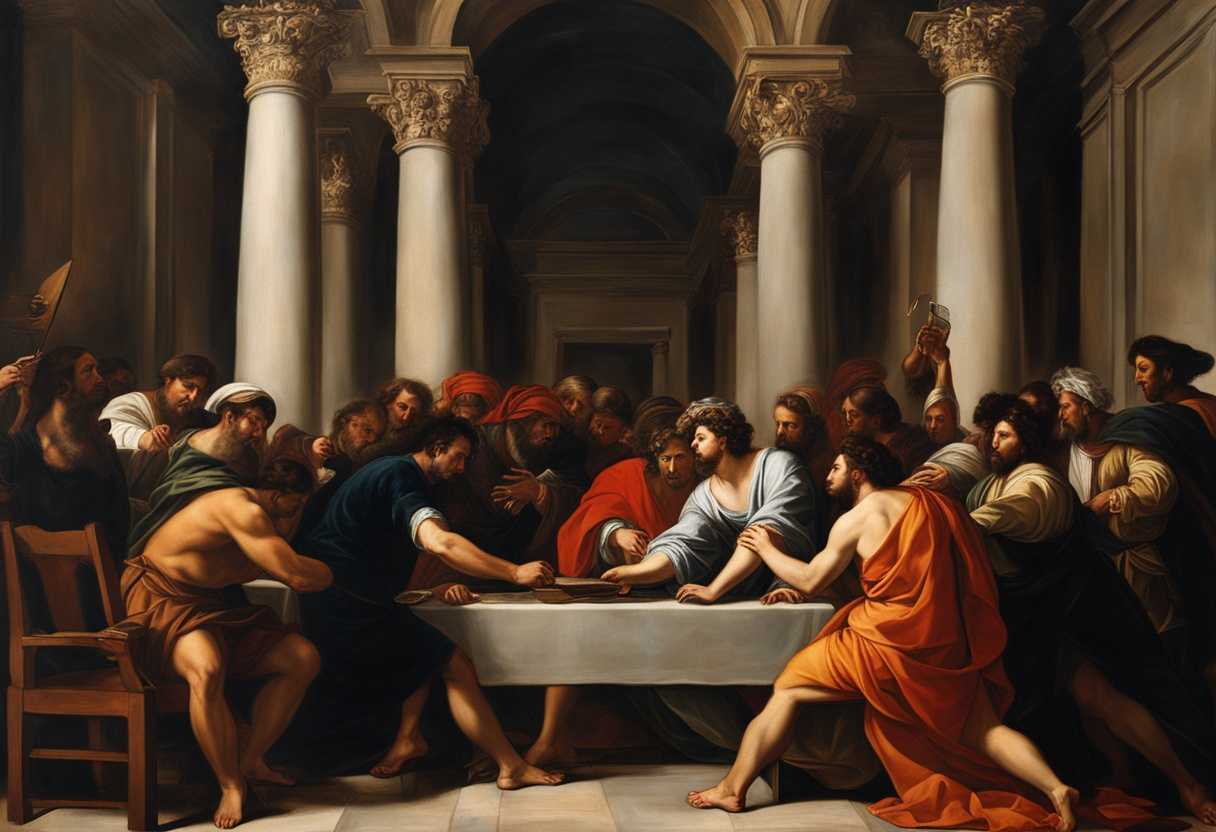
Setting the Scene for Micah 3:1-12
The scene in Micah chapter 3 is set in the city of Jerusalem during a time of great turmoil and corruption. The prophet Micah, a contemporary of Isaiah, is standing in the midst of the city square, surrounded by the rulers, priests, and false prophets of Judah. These leaders have been exploiting their power for personal gain, perverting justice, and leading the people astray.
The rulers, including King Ahaz and his officials, have been accepting bribes and perverting the law to benefit themselves. The priests have been teaching for hire and the false prophets have been divining for money, all while claiming to have the favor of God. Micah, filled with the Spirit of the Lord, boldly confronts these leaders, warning them of the impending judgment that will come upon them for their wickedness.
The scene is tense, with the city bustling around them as Micah delivers his message of rebuke and warning. The sun beats down on the dusty square, casting long shadows as the prophet speaks with authority and conviction, calling the people to repentance and urging them to turn back to the ways of the Lord.
What is Micah 3:1-12 about?
Oh, Micah 3:1-12 unveils a powerful message about the consequences of corrupt leadership and the hope of restoration through God’s justice and mercy. It’s a stark reminder of the responsibility leaders hold in guiding their people with integrity and righteousness. These verses serve as a cautionary tale, highlighting the destructive impact of leaders who abuse their power, exploit their positions, and fail to uphold justice and fairness. Can you imagine the chaos and suffering that result from such misconduct?
But don’t lose hope just yet! Through the shadows of corruption and despair, there is a glimmer of light in the promise of God’s justice and mercy. The text reassures us that ultimately, the truth will prevail, the wrongs will be made right, and justice will be served. It’s a comforting reminder that even in the face of darkness, God’s mercy and righteousness will shine through, offering solace and restoration to those who have suffered under the weight of corruption. So, let this passage inspire you to seek integrity, uphold justice, and trust in the promise of God’s unwavering righteousness.
Understanding what Micah 3:1-12 really means
In the book of Micah, a prophet from the 8th century BCE, we encounter a powerful message directed at the leaders of Israel and Judah. Micah’s words cut through the corruption and injustice prevalent among the ruling class, highlighting themes of justice, leadership, the repercussions of sin, and the promise of restoration. The prophet’s call to “Hear, you heads of Jacob and rulers of the house of Israel” is a direct plea for the leaders to recognize their responsibility and the gravity of their actions.
The stark contrast painted by Micah, between those who “hate the good and love the evil,” reveals a society where moral decay has taken root at the highest levels. The imagery of building Zion with blood and Jerusalem with iniquity vividly portrays the depth of their transgressions and the resulting decay within the community. The prophecy that “Zion shall be plowed as a field” serves as both a warning of impending destruction due to their sins and a call to repentance, offering a glimmer of hope for change and redemption.
Drawing parallels with other biblical passages, such as Isaiah 1:23, Jeremiah 22:3, and Matthew 23:23, we see a consistent thread condemning corrupt leadership and emphasizing the importance of justice, righteousness, and care for the vulnerable. These texts resonate across time, echoing the enduring relevance of upholding moral integrity and protecting the marginalized in society.
In our contemporary context, the message of Micah remains poignant and applicable. It challenges us to confront issues of modern leadership and corruption, urging us to strive for integrity and justice in positions of power. The call for social justice and compassion towards the marginalized reverberates as strongly today as it did in ancient times, reminding us of our collective responsibility to uphold these values in our communities.
Consider a scenario where a town grapples with corrupt officials siphoning public funds, leading to the neglect of essential services and the suffering of vulnerable residents. A courageous individual exposes the wrongdoing, sparking public outrage and eventual reform. This narrative mirrors the timeless struggle depicted in Micah’s prophecy, illustrating the destructive impact of corrupt leadership and the transformative power of accountability and justice.
In conclusion, Micah 3:1-12 stands as a poignant reminder of the enduring significance of righteous leadership, the devastating consequences of corruption, and the imperative to champion justice and integrity in our actions. It beckons us to reflect on our roles in society, urging us to emulate the virtues of compassion, fairness, and righteousness in all facets of our lives.
How can we use power and influence for good?
Power and influence, when used for good, can bring about positive change and benefit those who are in need. This verse urges those in positions of authority to act with justice and righteousness, ensuring that they do not abuse their power to exploit or oppress others. Leaders can create a more just and fair world for all by using their influence for the betterment of society.
When individuals in positions of power prioritize ethical behavior and uphold values such as compassion and fairness, they can positively impact the lives of those around them. Leaders can help create a more inclusive and equitable community by advocating for the marginalized, standing up against injustice, and promoting equality. Such actions show a commitment to serving others and striving for a world where all individuals are treated with dignity and respect. Individuals can play a crucial role in fostering a more just and compassionate society by heeding the message of this verse and using power and influence for good. When leaders act with integrity and fairness, they set a positive example for others to follow, inspiring change and making a meaningful difference in the lives of those they serve.
Application
Let’s embody the values of justice and righteousness from Micah 3:1-12 in our daily lives. It’s time to take a stand against injustice and corruption, working towards a world where fairness and integrity prevail. Will you be a beacon of righteousness in your circle, sparking change and spreading goodness wherever you go?

Reverend Michael Johnson is an experienced Church Minister with a profound expertise in spirituality and guidance. With a serene presence and a compassionate heart, he has faithfully served his congregation for over 20 years, leading them on a spiritual journey towards inner peace and enlightenment. Reverend Johnson’s extensive knowledge of religious philosophies and profound understanding of human nature have made him a trusted confidant and mentor to many, as he seamlessly weaves his profound wisdom into life teachings. Reverend Johnson’s calming demeanor and empathetic nature continue to uplift and heal souls, nurturing a sense of unity and tranquility within his community.