
Micah 3:1-3 is about the corrupt leaders and false prophets who exploit their power for personal gain, leading to the downfall and destruction of the people they were entrusted to shepherd.
3 And I said: Hear, you heads of Jacob
and rulers of the house of Israel!
Is it not for you to know justice?
2 you who hate the good and love the evil,
who tear the skin from off my people
and their flesh from off their bones,
3 who eat the flesh of my people, and flay their skin from off them, and break their bones in pieces and chop them up like meat in a pot, like flesh in a cauldron.
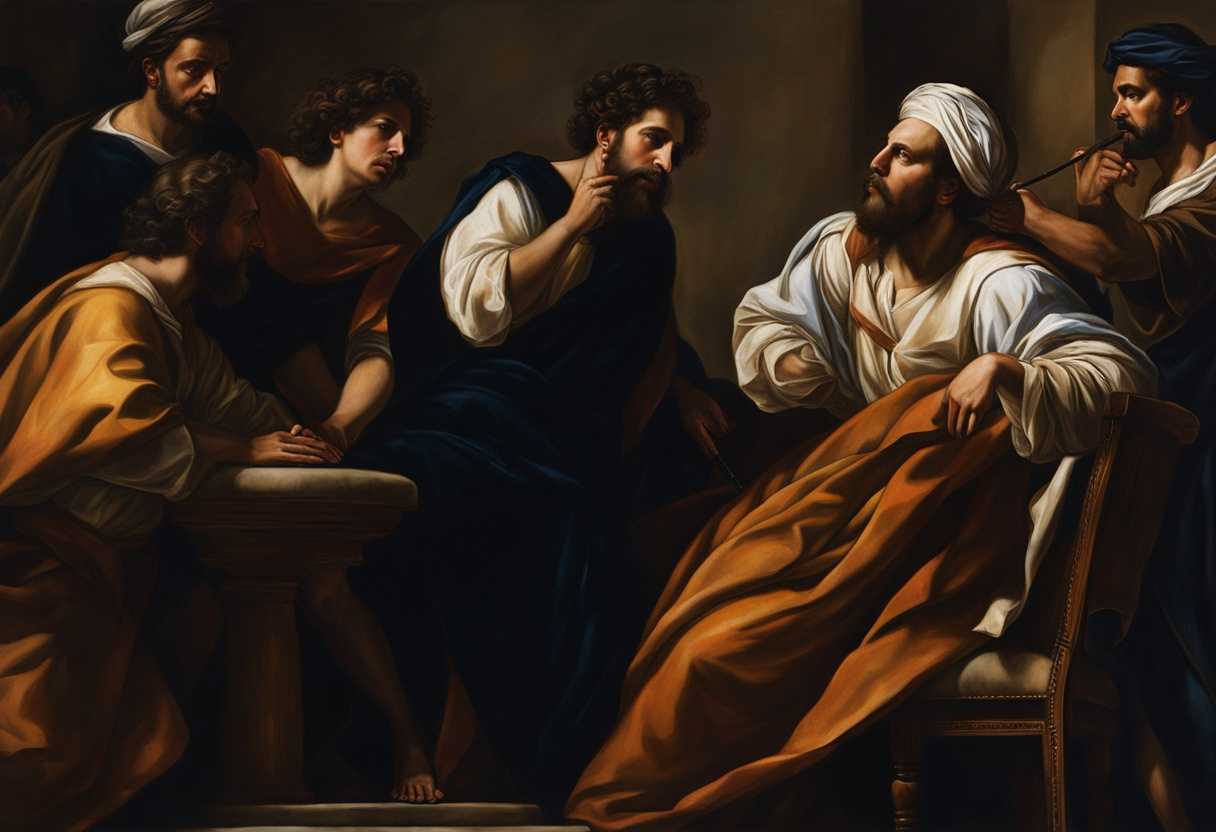
Setting the Scene for Micah 3:1-3
In Micah chapter 3, we find the prophet Micah standing in the midst of the bustling city of Jerusalem. The scene is set in the courtyard of the temple, where the religious leaders and rulers of the city have gathered. The air is thick with tension as Micah prepares to deliver a message of judgment and rebuke to those in power.
Among those present are King Ahaz, the corrupt ruler of Judah, and the false prophets who have been deceiving the people with their lies. The courtyard is filled with onlookers, from curious bystanders to loyal followers of the king, all eager to hear what Micah has to say. The sun beats down on the stone walls of the temple, casting long shadows across the gathered crowd.
As Micah begins to speak, his voice cuts through the noise of the city, condemning the leaders for their greed, corruption, and injustice. The tension in the air is palpable as he warns of the impending destruction that will come upon the city if they do not repent and turn back to God. The scene is charged with emotion as Micah stands alone, a lone voice of truth in a sea of deception and sin.
What is Micah 3:1-3 about?
The prophet in Micah 3:1-3 condemns corrupt leaders who abuse their authority and exploit their power for personal benefit. This passage serves as a powerful reminder of the responsibility that comes with leadership and the importance of using power for the greater good rather than selfish interests. Micah stresses the harmful impact of unethical leadership on society as a whole by highlighting the consequences of such actions.
Imagine a world where those in power prioritize personal gain over serving the people. Picture the chaos and suffering that would result from leaders who abuse their positions of influence. Micah’s message is a timeless reminder for leaders to act with integrity, compassion, and justice. It calls on all of us to hold our leaders accountable and strive for a society where power is used for the betterment of all, not just a few. We can reflect on this passage and consider how to promote ethical leadership and demand accountability from those in positions of authority.
Understanding what Micah 3:1-3 really means
In the Book of Micah, we encounter a prophet who fearlessly confronted the injustices of his time, speaking truth to power with unwavering conviction. The opening verses of Micah 3:1-3 echo this boldness as he addresses the leaders and rulers of Jacob and Israel, calling them to account for their actions. This direct approach sets the tone for a message of accountability and righteousness that reverberates through the ages.
“Listen, you leaders of Jacob, you rulers of Israel.” These words pierce through the corridors of power, demanding attention and introspection from those entrusted with authority. Just as in Isaiah 1:23, where leaders are rebuked for their corruption, Micah’s call is a stark reminder that leadership comes with the weight of responsibility and the expectation of justice.
“Should you not embrace justice?” This question cuts to the core of ethical leadership, emphasizing the imperative of upholding justice and righteousness in all decisions and actions. It resonates with the plea in Amos 5:24 for justice to flow like a mighty river, cleansing and renewing society from the stains of injustice.
“You who hate good and love evil.” These words expose the moral decay at the heart of corrupt leadership, where values are inverted, and darkness masquerades as light. Proverbs 17:15 condemns such perversion of justice, underscoring the enduring relevance of Micah’s message in a world where right and wrong can be distorted for personal gain.
“Who tear the skin from my people and the flesh from their bones.” The vivid imagery employed by Micah paints a harrowing picture of the suffering inflicted by those in power upon the vulnerable. This depiction of exploitation and brutality echoes the condemnation in Ezekiel 34:2-4, where shepherds are chastised for neglecting their flock for selfish gain.
“Who eat my people’s flesh, strip off their skin and break their bones in pieces.” The escalation of imagery intensifies the horror of the leaders’ actions, portraying a level of dehumanization and cruelty that shocks the conscience. This imagery finds resonance in Psalm 14:4, depicting evildoers who consume the vulnerable as if devouring a meal, devoid of compassion or empathy.
In today’s world, Micah’s words continue to resonate, calling for justice, integrity, and moral responsibility in leadership and individual conduct. The call for accountability and ethical behavior remains as urgent now as it was in ancient times, reminding us of our duty to uphold justice and righteousness in all aspects of life.
Consider the story of modern-day leaders like Nelson Mandela, who stood against injustice and corruption, embodying the principles set forth in Micah. Their courage and commitment to justice serve as beacons of hope and inspiration, urging us to emulate their example in our own spheres of influence.
As we reflect on the profound meaning behind Micah 3:1-3, let us heed the call to embrace justice, reject evil, and protect the vulnerable from exploitation. May we be vigilant in holding leaders accountable and steadfast in our pursuit of righteousness, knowing that our actions today shape the world of tomorrow. Let us pray for a society guided by justice and integrity, where compassion reigns, and righteousness prevails in every heart and every decision.
How can we use our power and influence responsibly?
We can use our power and influence responsibly by recognizing the weight of our actions and decisions on others. We should consider the impact of our influence on those around us, just as a ruler is held accountable for the well-being of their people. It is vital to use our power in a way that uplifts and supports others, rather than taking advantage of our position for personal gain or advancement at the expense of others.
Responsibility comes with power, and it is crucial to remember that our actions have consequences that can either positively or negatively affect those within our sphere of influence. We can strive to create a more just and equitable environment for everyone by being mindful of how we wield our power and influence. We ultimately measure our character by how we choose to use our power – to build up others or to exploit them for our own benefit.
Application
Let’s heed the call of Micah 3:1-3 and use our voices to champion justice and righteousness in our world. It’s time to speak out against oppression and support those who are overlooked or mistreated. We hold the power to make a difference in our communities by standing up for what is right. Will you rise with me and become a force for good in our modern society, spreading fairness and empathy wherever we go?

Reverend Michael Johnson is an experienced Church Minister with a profound expertise in spirituality and guidance. With a serene presence and a compassionate heart, he has faithfully served his congregation for over 20 years, leading them on a spiritual journey towards inner peace and enlightenment. Reverend Johnson’s extensive knowledge of religious philosophies and profound understanding of human nature have made him a trusted confidant and mentor to many, as he seamlessly weaves his profound wisdom into life teachings. Reverend Johnson’s calming demeanor and empathetic nature continue to uplift and heal souls, nurturing a sense of unity and tranquility within his community.