
Micah 3:6 is about the corrupt leaders of Israel who exploit their positions for personal gain, leading to a society plagued by injustice and moral decay.
6 Therefore it shall be night to you, without vision, and darkness to you, without divination. The sun shall go down on the prophets, and the day shall be black over them;
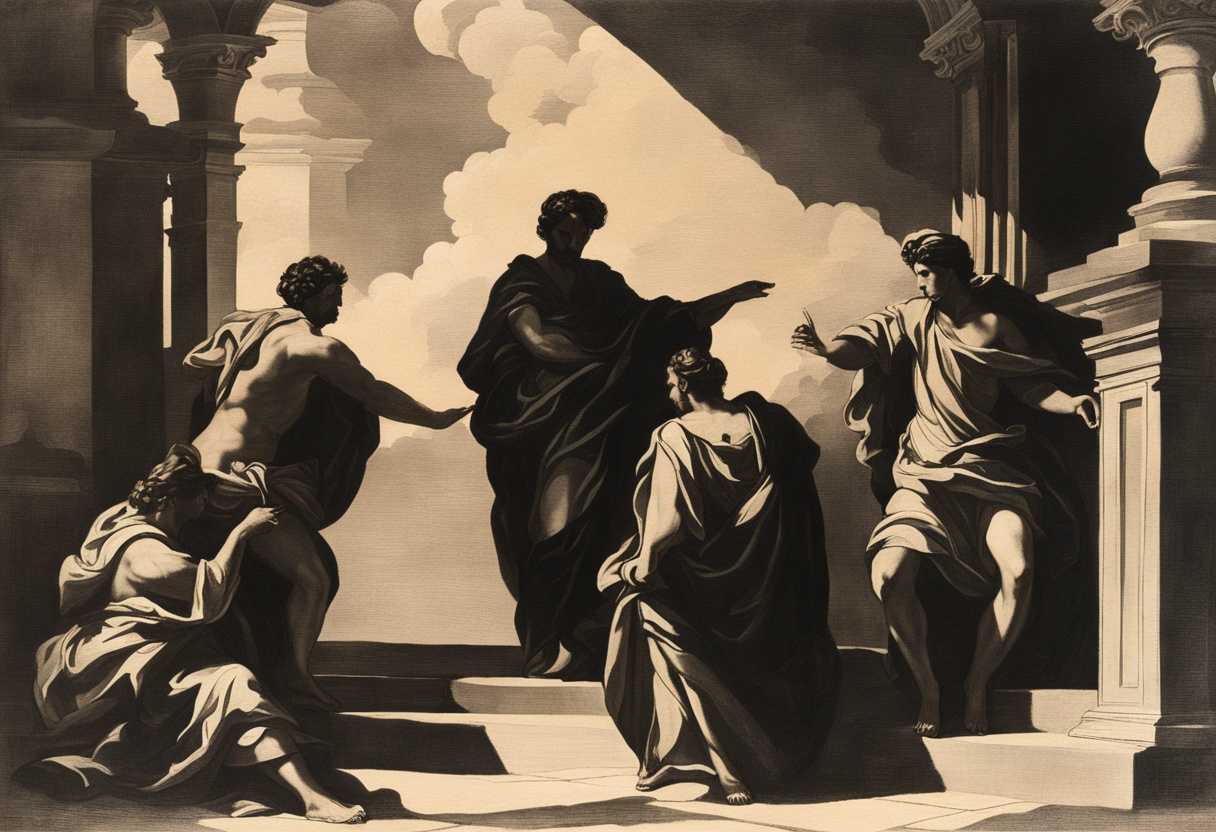
Setting the Scene for Micah 3:6
In Micah chapter 3, we find a scene set in the ancient kingdom of Judah during a time of great turmoil and corruption. The prophet Micah, known for his fearless condemnation of social injustice and moral decay, stands before the rulers and leaders of the land. These leaders, including King Ahaz and his officials, have strayed from the path of righteousness and have been exploiting their power for personal gain.
As Micah addresses the assembly, his words are filled with righteous anger and divine authority. The atmosphere is tense, with the rulers squirming uncomfortably under the weight of Micah’s accusations. The room is adorned with opulent decorations and symbols of power, a stark contrast to the poverty and suffering experienced by the common people outside the palace walls.
Despite the hostility and resistance he faces, Micah stands firm in his mission to speak truth to power and call for repentance. His words echo through the halls, challenging the rulers to change their ways and return to God’s commandments before it is too late. The scene is a powerful reminder of the enduring struggle between good and evil, justice and corruption, that has played out throughout history.
What is Micah 3:6 about?
False prophets who deceive and mislead others face powerful consequences, as seen in Micah 3:6. The verse portrays the harsh reality that those who abuse their power for personal gain or manipulate the truth will face judgment from God. It serves as a warning for individuals who misuse their influence to serve their own selfish ambitions at the expense of the vulnerable and the truth. We must reflect on our motivations and actions as teachers and leaders to ensure that we are guiding others with integrity and honesty.
Reflect on the implications of this verse – what does it mean for those in positions of authority and influence? How can we discern between true and false prophets in our lives? We, as educators and mentors, have a responsibility to lead by example and uphold ethical standards in our teachings. Let us cultivate a community of trust and authenticity, empowering others with truth and goodness, guided by the light of God’s wisdom and grace.
Understanding what Micah 3:6 really means
Micah 3:6, nestled within a passage of rebuke and condemnation by the prophet Micah, sheds light on the consequences of corrupt leadership and false prophecy. In this verse, a stark image is painted of a time when those who claim divine insight will be plunged into darkness, devoid of visions and guidance. This imagery serves as a powerful symbol of God’s judgment on those who distort the truth for personal gain.
Drawing parallels with other biblical passages, such as Amos 8:11-12 and Isaiah 29:10, we see a recurring theme of spiritual famine and blindness resulting from straying from God’s ways. Even in the New Testament, Jesus warns against following blind leaders in Matthew 15:14, emphasizing the timeless relevance of discerning true moral and spiritual guidance.
The relevance of Micah 3:6 extends beyond ancient Israel, resonating with contemporary society. It serves as a poignant reminder of the importance of integrity in leadership and the necessity of seeking genuine divine wisdom. In a world where false teachings and self-serving leaders abound, this verse prompts us to reflect on the source of our guidance and the authenticity of those we choose to follow.
Consider a scenario where a community entrusts a leader with their well-being, only to discover that this leader’s motives are tainted by greed. As chaos and hardship ensue, the parallels with Micah 3:6 become evident, illustrating the destructive consequences of leaders who deviate from God’s will.
Delving into the evocative phrases within the verse, we uncover layers of meaning that deepen our understanding of its message. “Night shall be unto you” signifies a period of confusion and obscurity for false prophets, stripped of their claimed insight. “Ye shall not have a vision” underscores the withdrawal of divine revelation, highlighting the irreplaceable nature of true guidance from God.
“The sun shall go down over the prophets” symbolizes the waning influence and exposure of falsehoods, while “The day shall be dark over them” reinforces the theme of divine judgment and spiritual blindness. These phrases serve as poignant reminders of the consequences of straying from the path of righteousness and authenticity in leadership.
By contemplating the weight of these phrases and their implications, we are urged to introspect on the integrity of our own leadership, the authenticity of our sources of guidance, and the importance of aligning ourselves with God’s truth. Micah 3:6 stands as a timeless admonition against the dangers of false prophecy and corrupt leadership, calling us to seek clarity and wisdom from the ultimate source of light and truth.
How do our actions reflect our spiritual leadership?
Our actions reflect our spiritual leadership by demonstrating the integrity of our character and the sincerity of our intentions. Spiritual leaders must be mindful of the impact their words and deeds have on those around them. Our actions should be aligned with our beliefs and values, serving as a source of inspiration and guidance for others to follow. We can set a positive example that fosters growth and unity within our community by leading with humility, empathy, and compassion.
When we prioritize righteousness and justice in all aspects of our lives, we not only strengthen our own spiritual journey but also empower others to do the same. Our actions should be grounded in love and fueled by a genuine desire to uplift and support those in need. Through acts of kindness, generosity, and understanding, we can lead by example and create a ripple effect of positivity and transformation. Our actions speak louder than words, and as spiritual leaders, we must remember this. We can inspire others to seek a deeper connection with their faith and live a life of purpose and meaning by embodying the values and teachings we espouse. Our actions should be a reflection of our commitment to serving others selflessly and creating a more just and compassionate world for all.
Application
Dear reader, let Micah’s words ignite a fire within you to look deep within your heart and evaluate your actions. Embrace integrity in all your dealings, pursue justice, and shower others with compassion. How will you choose to make a difference in someone’s life today?

Reverend Michael Johnson is an experienced Church Minister with a profound expertise in spirituality and guidance. With a serene presence and a compassionate heart, he has faithfully served his congregation for over 20 years, leading them on a spiritual journey towards inner peace and enlightenment. Reverend Johnson’s extensive knowledge of religious philosophies and profound understanding of human nature have made him a trusted confidant and mentor to many, as he seamlessly weaves his profound wisdom into life teachings. Reverend Johnson’s calming demeanor and empathetic nature continue to uplift and heal souls, nurturing a sense of unity and tranquility within his community.