
Micah 4:1-5 is about the prophetic vision of a future time of peace and harmony, symbolized by the image of nations coming together to worship the Lord on his holy mountain, where swords will be turned into plowshares and there will be no more war.
1 It shall come to pass in the latter days that the mountain of the house of the Lord shall be established as the highest of the mountains, and it shall be lifted up above the hills; and peoples shall flow to it.
2 and many nations shall come, and say: “Come, let us go up to the mountain of the Lord, to the house of the God of Jacob, that he may teach us his ways and that we may walk in his paths.” For out of Zion shall go forth the law, and the word of the Lord from Jerusalem.
3 He shall judge between many peoples, and shall decide for strong nations far away; and they shall beat their swords into plowshares, and their spears into pruning hooks; nation shall not lift up sword against nation, neither shall they learn war anymore.
4 But they shall sit every man under his vine and under his fig tree, and no one shall make them afraid, for the mouth of the Lord of hosts has spoken.
5 For all the peoples walk each in the name of its god,
but we will walk in the name of the Lord our God
forever and ever.
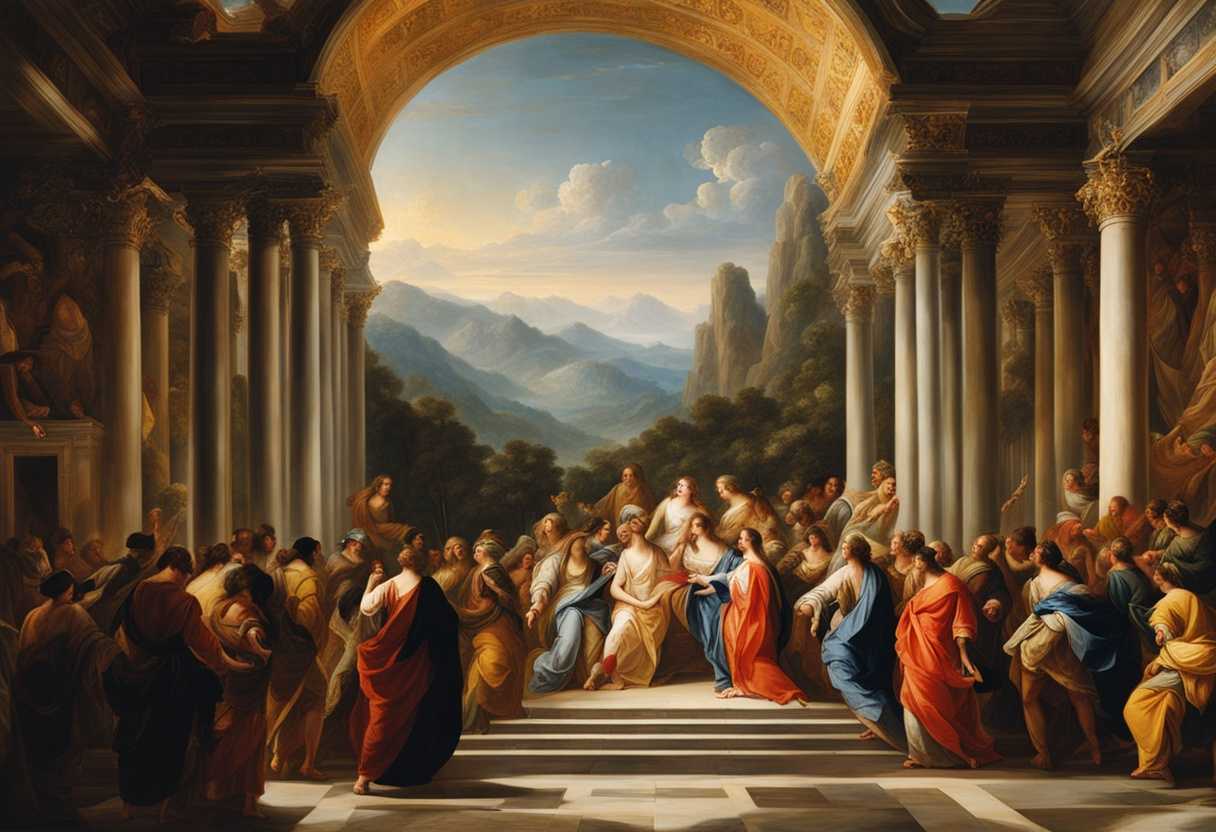
Setting the Scene for Micah 4:1-5
In the scene described in Micah 4:1-5, we find ourselves in a peaceful and idyllic setting on a mountain. The atmosphere is serene, with lush greenery surrounding a group of people gathered together. Among them are Micah, a prophet of God, and a group of individuals seeking wisdom and guidance. They have come to this mountain to listen to Micah’s teachings and prophecies.
The group is a mix of young and old, men and women, all eager to hear the words of Micah. As they sit on the grassy slope, the sun begins to set, casting a warm glow over the scene. In the distance, they can see the city below, a bustling hub of activity contrasted with the tranquility of the mountain.
Micah begins to speak, his voice carrying a sense of authority and wisdom. He shares prophecies of a future where peace will reign, swords will be turned into plowshares, and nations will no longer lift up sword against nation. The group listens intently, their hearts filled with hope for a better future as they soak in the words of the prophet.
What is Micah 4:1-5 about?
Isn’t it comforting to know that even in times of uncertainty and chaos, we can find hope in the promise of a future filled with peace and prosperity? Micah 4:1-5 paints a beautiful picture of a world where God’s reign brings about justice, harmony, and abundance for all people. It speaks to the longing in our hearts for a better tomorrow, where wars will cease, and all nations will come together in unity. Let us reflect on these verses and ask ourselves what we can do today to bring about a glimpse of this promised future. How can we actively work towards peace and justice in our own communities, knowing that every small act of kindness and compassion contributes to the bigger picture of God’s kingdom on earth? Let these words from Micah be a source of inspiration and motivation for us to be agents of change and ambassadors of peace, spreading God’s love and grace wherever we go.
Understanding what Micah 4:1-5 really means
Micah 4:1-5 paints a vivid picture of a future where God’s kingdom reigns supreme, ushering in an era of peace and prosperity. The imagery used in this passage is rich with symbolism, conveying profound truths about God’s sovereignty and the transformation He brings about in the world. The mention of the mountain of the Lord’s temple being established as the highest of mountains signifies the ultimate authority and preeminence of God’s kingdom over all earthly powers. This sets the stage for a universal recognition of God’s sovereignty, drawing people from all nations to seek His ways and walk in His paths.
The vision of beating swords into plowshares and spears into pruning hooks is a powerful metaphor for the transformation from conflict and war to peace and productivity. It speaks to the profound change that God’s kingdom brings about in the hearts of individuals and in the world at large. The promise of security and peace, where everyone can dwell without fear under their own vine and fig tree, resonates deeply with our longing for a world free from strife and anxiety.
This passage finds resonance in other biblical texts such as Isaiah 2:2-4 and Revelation 21:1-4, which also speak of a future characterized by peace and justice under God’s reign. The message of Micah 4:1-5 is not confined to a distant future but holds relevance for us today. In a world marred by conflict and division, this vision offers a beacon of hope, reminding us of the ultimate goal of God’s kingdom: a world where justice, peace, and security prevail.
Imagine a community torn apart by strife and animosity, mirroring the conflicts we see in our world today. Now picture that same community coming together, inspired by the vision of Micah 4:1-5, to seek peace and reconciliation. Through concerted efforts and a commitment to understanding and working together, they transform their environment into a place of harmony and mutual support. This real-life example illustrates the transformative power of God’s vision of turning weapons of destruction into tools of growth and sustenance.
Micah 4:1-5 serves as a timeless reminder of God’s ultimate plan for humanity—a kingdom marked by peace, justice, and divine guidance. As believers, we are called to embody this vision in our daily lives, actively promoting peace and seeking God’s wisdom in all our endeavors. Let us take inspiration from this prophetic vision and strive to be agents of reconciliation and peace in a world that yearns for the transformative power of God’s kingdom.
How can we promote peace and unity?
Promoting peace and unity involves striving to create a world where differences are respected and valued, and where conflict is resolved through dialogue and understanding. It requires a commitment to justice, equality, and compassion for all. We can build a society where harmony and cooperation flourish by upholding these values, leading to a more peaceful and united community. To promote peace and unity, we must look beyond our own interests and prioritize the well-being of others. We can foster a sense of belonging and solidarity by working together towards common goals and recognizing the humanity in each individual. Through empathy and understanding, we can bridge divides and build connections that strengthen our communities and promote a culture of peace.
The vision of peace and unity described in the verse emphasizes the importance of coming together as a global community, setting aside differences and working towards a shared vision of harmony and cooperation. We can contribute to a world where peace and unity prevail by following this guidance and promoting understanding and reconciliation.
Application
Embrace the vision of peace and unity in Micah 4:1-5. Let’s commit to creating harmony and understanding among all people, just like nations learning from God. As followers of Christ, let’s actively pursue reconciliation, justice, and compassion in our communities. Reflect the love and teachings of our Savior in all that we do. How will you answer the call to cultivate a world grounded in God’s peace and righteousness?

Reverend Michael Johnson is an experienced Church Minister with a profound expertise in spirituality and guidance. With a serene presence and a compassionate heart, he has faithfully served his congregation for over 20 years, leading them on a spiritual journey towards inner peace and enlightenment. Reverend Johnson’s extensive knowledge of religious philosophies and profound understanding of human nature have made him a trusted confidant and mentor to many, as he seamlessly weaves his profound wisdom into life teachings. Reverend Johnson’s calming demeanor and empathetic nature continue to uplift and heal souls, nurturing a sense of unity and tranquility within his community.