
Nehemiah 12:27-30 is about the joyful dedication and celebration of the rebuilt walls of Jerusalem, symbolizing the restoration of the city and the spiritual renewal of its people.
27 And at the dedication of the wall of Jerusalem they sought the Levites in all their places, to bring them to Jerusalem to celebrate the dedication with gladness, with thanksgivings and with singing, with cymbals, harps, and lyres.
28 And the sons of the singers gathered together from the district surrounding Jerusalem and from the villages of the Netophathites;
29 And from the house of Gilgal, and from the fields of Geba and Azmaveth, for the singers had built for themselves villages around Jerusalem.
30 And the priests and the Levites purified themselves, and they purified the people and the gates and the wall.
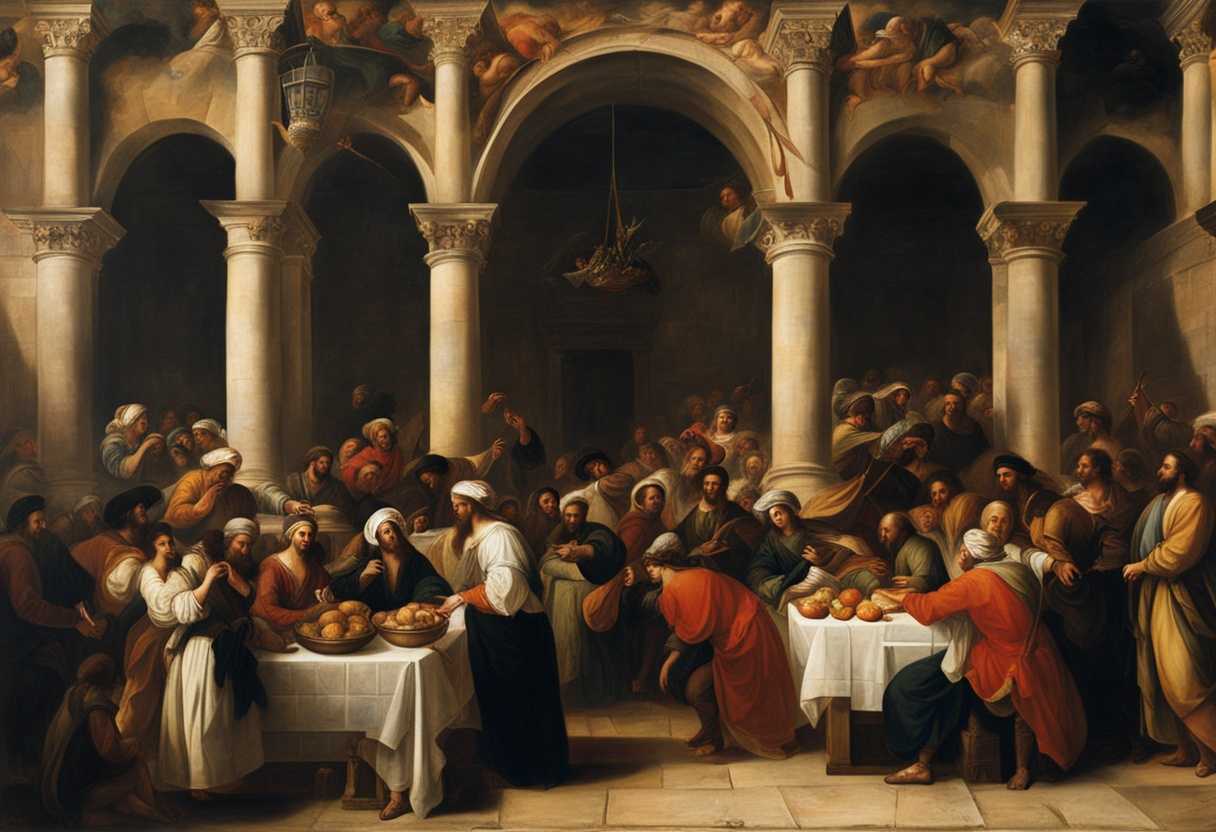
Setting the Scene for Nehemiah 12:27-30
The scene described in Nehemiah 12:27-30 takes place during the dedication of the wall of Jerusalem. The setting is filled with joy and celebration as the people of Israel come together to commemorate the completion of the wall that Nehemiah and his fellow workers had diligently rebuilt. The atmosphere is one of gratitude and praise as the community gathers to give thanks to God for His faithfulness and protection throughout the challenging process of rebuilding the wall.
Among those present are the priests, Levites, and leaders of the people, including Nehemiah himself. They are all dressed in their finest garments, with musical instruments in hand, ready to participate in the festivities. The surroundings are adorned with decorations and banners, creating a festive and jubilant atmosphere. The sound of music and singing fills the air as the people march in procession along the wall, offering songs of thanksgiving and praise to God for His provision and guidance.
The scene is a powerful reminder of the importance of unity, faith, and perseverance in the face of adversity. It serves as a testament to the power of God to bring about restoration and renewal in the midst of challenges. As the people of Israel come together to dedicate the wall of Jerusalem, they are not only celebrating a physical structure but also reaffirming their commitment to God and to each other as a community bound together by faith and shared history.
What is Nehemiah 12:27-30 about?
A celebration of dedication takes place in Jerusalem in this verse. The act of dedicating the wall signifies not only the physical completion of a structure but also the spiritual and emotional significance it holds for the people. The use of thanksgiving, singing, and instruments emphasizes the joy and gratitude felt by the community for reaching this milestone. It is a moment of unity and reflection on the hard work, faith, and perseverance that went into building the wall.
Can you imagine the sense of accomplishment and pride that the people of Jerusalem must have felt as they gathered to dedicate their wall? The singing and music must have echoed through the streets, symbolizing a harmonious bond among the people and their connection to something greater than themselves. This verse reminds us of the power of coming together to celebrate achievements, no matter how big or small. It serves as a reminder to pause, express gratitude, and acknowledge the importance of community in our shared journey.
Understanding what Nehemiah 12:27-30 really means
Nehemiah 12:27-30 recounts the solemn occasion of the dedication of the wall of Jerusalem, a pivotal moment signifying the completion of the city’s reconstruction and the restoration of its community. This event underscores the significance of worship, thanksgiving, and purification in the lives of the Israelites, emphasizing the importance of acknowledging God’s hand in their accomplishments and seeking His continued protection.
The phrase “dedication of the wall of Jerusalem” encapsulates a formal ceremony to consecrate the wall, recognizing God’s pivotal role in their success and appealing for His ongoing safeguarding. Gathering the Levites from their residences highlights the essential role of spiritual leadership in guiding the people in worship, underscoring the importance of seeking out those entrusted with religious duties.
The use of music, including cymbals, harps, and lyres, in songs of thanksgiving portrays the joy and gratitude of the people, showcasing music as a powerful medium for expressing praise to God. Furthermore, the act of purification, involving the people, gates, and wall, underscores the necessity of holiness and cleanliness before God, both in a physical and spiritual sense.
Drawing parallels to other biblical passages such as Psalm 100:4, 1 Corinthians 3:16-17, and Ezra 6:16-18, we see a consistent theme of dedication, thanksgiving, and spiritual purity resonating throughout Scripture. These principles serve as timeless reminders for believers today, prompting us to acknowledge God’s involvement in our achievements and to cultivate a heart of gratitude in all circumstances.
In our contemporary lives, we can apply the lessons from Nehemiah 12:27-30 by dedicating not only physical structures but also our homes, workplaces, and daily activities to God, seeking His blessing and guidance in all aspects of our lives. Just as the Israelites dedicated the wall of Jerusalem, we can dedicate our endeavors to God, recognizing His sovereignty and seeking His presence in all that we do.
Consider a family moving into a new home, gathering to pray and dedicate their dwelling to God, inviting loved ones to partake in a ceremony akin to the dedication of the wall of Jerusalem. This act not only acknowledges God’s provision and protection but also establishes a spiritual foundation for their new chapter, mirroring the Israelites’ commitment to consecrate their city’s defenses.
In conclusion, Nehemiah 12:27-30 imparts valuable lessons on dedicating our successes to God, expressing gratitude through worship, and purifying ourselves to be vessels worthy of His presence. These principles remain as pertinent today as they were in ancient times, guiding us to lead lives that honor God in every facet of our existence.
How can we honor and celebrate God’s guidance?
We can honor and celebrate God’s guidance by recognizing and acknowledging that it is He who has led us to where we are. We can offer prayers of gratitude for His unwavering support and guidance in our lives. Additionally, we can share our experiences of His guidance with others, spreading the message of His love and faithfulness.
One way to honor and celebrate God’s guidance is by coming together in community with fellow believers to praise and worship Him. We can lift up His name and give Him the glory He deserves by singing songs of praise, offering thanksgiving, and sharing testimonies of His guidance. This communal celebration can serve as a reminder of His presence in our lives and the importance of staying connected to Him through worship and fellowship.
Furthermore, we can honor God’s guidance by actively living out our faith and following His commandments. We demonstrate our trust in His guidance and faithfulness by walking in obedience to His word. Through acts of kindness, compassion, and love towards others, we can reflect the light of God’s guidance in our lives and be a testament to His grace and mercy.
Application
Let’s rally together like a tight-knit team at work, to celebrate our achievements and blessings with the energy of a thriving family. Draw inspiration from the unity and happiness in Nehemiah 12:27-30. Seize the chance to unite with fellow believers, showering appreciation and adoration on our faithful provider. Will you answer the call to come together with your spiritual comrades, harmonizing in gratitude and worship?

Reverend Michael Johnson is an experienced Church Minister with a profound expertise in spirituality and guidance. With a serene presence and a compassionate heart, he has faithfully served his congregation for over 20 years, leading them on a spiritual journey towards inner peace and enlightenment. Reverend Johnson’s extensive knowledge of religious philosophies and profound understanding of human nature have made him a trusted confidant and mentor to many, as he seamlessly weaves his profound wisdom into life teachings. Reverend Johnson’s calming demeanor and empathetic nature continue to uplift and heal souls, nurturing a sense of unity and tranquility within his community.