
Nehemiah 12:31-37 is about the celebration of the dedication of the walls of Jerusalem with rejoicing, thanksgiving, and musical instruments as a symbol of God’s faithfulness and protection over His people.
31 Then I brought the leaders of Judah up onto the wall and appointed two great choirs that gave thanks. One went to the south on the wall to the Dung Gate.
32 And after them went Hoshaiah and half of the leaders of Judah,
33 On that day men were appointed over the storerooms, the contributions, the firstfruits, and the tithes, to gather into them the portions required by the Law for the priests and for the Levites according to the fields of the towns, for Judah rejoiced over the priests and the Levites who ministered.
34 And Judah, Benjamin, Shemaiah, and Jeremiah,
35 and certain of the priests’ sons with trumpets: Zechariah the son of Jonathan, son of Shemaiah, son of Mattaniah, son of Micaiah, son of Zaccur, son of Asaph,
36 and his relatives, Shemaiah, Azarel, Milalai, Gilalai, Maai, Nethanel, Judah, and Hanani, with the musical instruments of David the man of God. And Ezra the scribe went before them.
37 At the Fountain Gate they went up straight before them by the stairs of the city of David, at the ascent of the wall, above the house of David, to the Water Gate on the east.
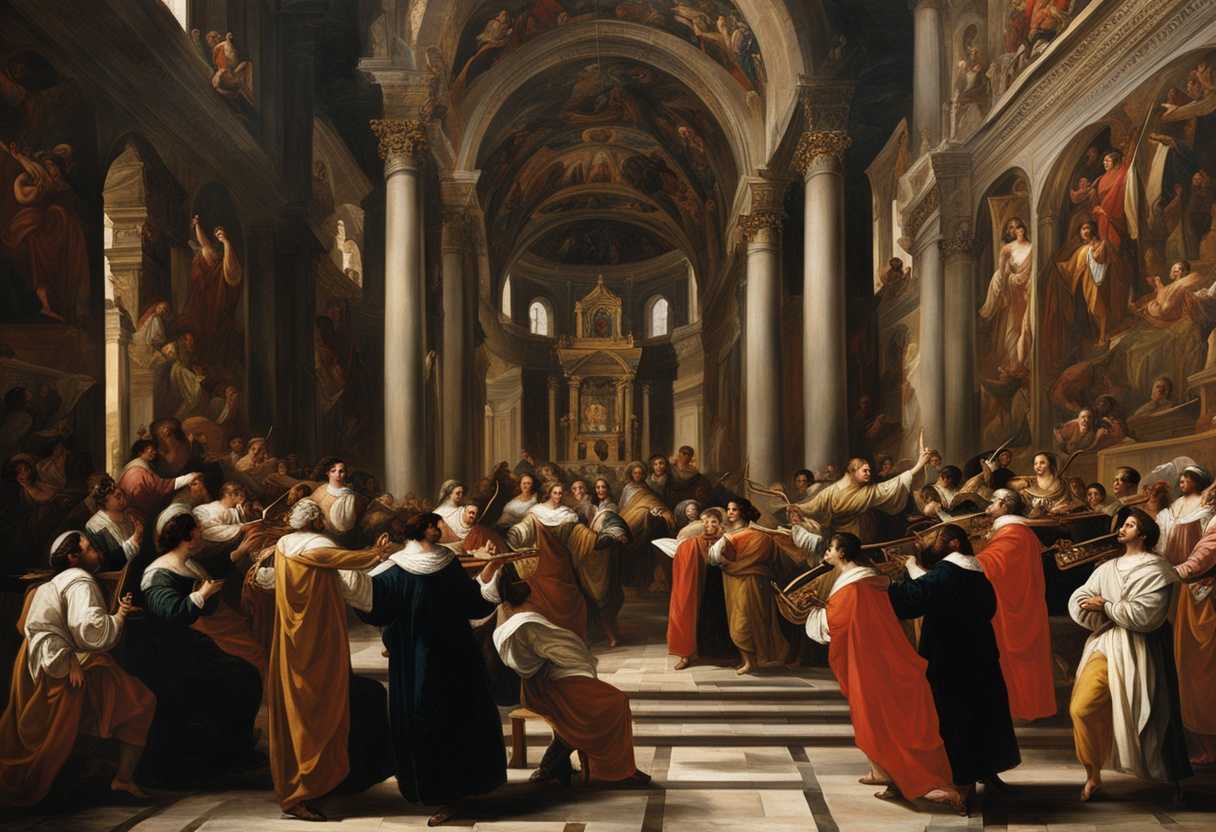
Setting the Scene for Nehemiah 12:31-37
The scene described in Nehemiah 12:31-37 takes place during the dedication of the wall of Jerusalem. Nehemiah, the governor, has gathered the priests, Levites, and the people of Israel for a joyous celebration. The dedication ceremony is a significant event as it marks the completion of the rebuilding of the walls of Jerusalem, a project that Nehemiah led amidst opposition and challenges.
The priests and Levites are dressed in their ceremonial garments, carrying musical instruments and singing praises to God. The sound of trumpets, cymbals, and harps fills the air as they process around the city walls. The people of Israel join in the procession, singing and rejoicing in the faithfulness of God in restoring and protecting Jerusalem.
The scene is one of unity, gratitude, and worship as the community comes together to give thanks for the restoration of their city. The dedication of the wall symbolizes not only the physical rebuilding of Jerusalem but also the spiritual renewal and recommitment of the people to God. It is a moment of great joy and celebration as they acknowledge God’s faithfulness and provision throughout their journey.
What is Nehemiah 12:31-37 about?
A scene of celebration, gratitude, and unity in Jerusalem is seen in this verse. The dedication of the wall symbolizes the completion of a significant project or goal, and it is being marked with thanksgiving, music, and rejoicing. This celebration is not just about the physical structure of the wall, but also about the dedication, hard work, and perseverance of the people who built it. The act of dedicating the wall demonstrates a commitment to the community’s values, protection, and unity.
Imagine the jubilation and sense of accomplishment that must have filled the air in Jerusalem during this dedication ceremony. The music and rejoicing signify a joyous moment of communal pride and solidarity. It is a reminder that coming together to celebrate achievements, big or small, is essential for fostering a sense of belonging and shared purpose. This verse encourages us to reflect on the importance of acknowledging and celebrating milestones, accomplishments, and the collective efforts of a community. Let it inspire us to cultivate a spirit of gratitude, unity, and joy in our own communities and celebrations.
Understanding what Nehemiah 12:31-37 really means
Nehemiah 12:31-37 recounts the dedication of the wall of Jerusalem, a pivotal moment in Israel’s history. Nehemiah, a respected leader, orchestrates a grand procession to commemorate the completion of the wall, symbolizing the city’s restoration and protection. This event takes place in the post-exilic era, as the Israelites return from Babylonian captivity, rebuilding their lives and city from the ruins of the past. The involvement of Judah’s leaders in ascending the wall signifies the importance of leadership and unity in achieving common goals, showcasing the power of collective effort in monumental tasks.
Assigning two large choirs to offer thanks during the celebration underscores the significance of gratitude and worship within the community. This act acknowledges divine assistance in their accomplishments, highlighting the role of faith and thanksgiving in their journey. The strategic organization of the procession, with one choir proceeding to the right on the wall, reflects a sense of order and purpose in their actions, emphasizing the importance of intentionality and direction in communal endeavors. These key phrases in Nehemiah’s narrative carry profound meanings that resonate with themes of leadership, gratitude, and organization.
Drawing parallels with other biblical passages such as Psalm 100:4, Ezra 3:11, and Philippians 4:6 further illuminates the enduring relevance of Nehemiah 12:31-37. These verses emphasize the importance of thanksgiving, worship, and reliance on divine providence, echoing the sentiments expressed in Nehemiah’s celebration. In a contemporary context, this passage serves as a poignant reminder of the value of community, leadership, and gratitude in a world often dominated by individualism. It prompts us to recognize the power of collective effort, celebrate achievements together, and acknowledge the role of divine guidance in our successes.
Consider a scenario where a town rebuilds its community center after a destructive storm. The town’s leaders organize a grand opening ceremony, involving the entire community. Local choirs are invited to sing songs of gratitude and praise, acknowledging the unity and hard work that facilitated the rebuilding process. This celebration not only marks the physical restoration of the community center but also strengthens the bonds among the townspeople, underscoring the importance of collaboration and thankfulness for collective accomplishments. Just as in Nehemiah’s time, this anecdote illustrates the enduring lessons of leadership, community, and gratitude that transcend historical contexts.
In conclusion, Nehemiah 12:31-37 serves as a timeless testament to the significance of leadership, community, and gratitude. It urges us to celebrate our communal achievements, recognize divine assistance in our endeavors, and foster unity through thankfulness. By embracing these principles, we can cultivate stronger bonds, foster a spirit of togetherness, and build a more cohesive and appreciative community.
How can we joyfully celebrate and give thanks together?
Together, we can joyfully celebrate and give thanks by coming together in unity and praising God for His faithfulness and provision. We can gather as a community, sing songs of praise, and lift our voices in thanksgiving for all that He has done for us. We can magnify the goodness of God and strengthen our bonds as brothers and sisters in Christ by joining in harmony and sharing in the celebration. We can also take time to reflect on the blessings and victories that God has brought into our lives as we rejoice and give thanks together. We can share testimonies of His faithfulness and provision, encouraging one another with stories of His goodness and grace. By celebrating together in this way, we not only express our gratitude to God but also build each other up in faith and unity, reminding one another of the power and love of our Heavenly Father. We come together with hearts full of gratitude and voices lifted in praise, setting aside differences and focusing on the goodness of the Lord.
Application
Reflect on the joyous celebration of the Israelites dedicating the walls of Jerusalem with songs and instruments. Let’s embrace this spirit of thanksgiving in our own lives for the victories and blessings we have received. Take a moment to commemorate each milestone in your spiritual journey with gratitude and exultation. Will you join in this celebration, offering praise and thanksgiving for God’s faithfulness in your life?

Reverend Michael Johnson is an experienced Church Minister with a profound expertise in spirituality and guidance. With a serene presence and a compassionate heart, he has faithfully served his congregation for over 20 years, leading them on a spiritual journey towards inner peace and enlightenment. Reverend Johnson’s extensive knowledge of religious philosophies and profound understanding of human nature have made him a trusted confidant and mentor to many, as he seamlessly weaves his profound wisdom into life teachings. Reverend Johnson’s calming demeanor and empathetic nature continue to uplift and heal souls, nurturing a sense of unity and tranquility within his community.