
Nehemiah 1:1-3 is about Nehemiah receiving news of the distress and destruction of Jerusalem, prompting him to enter a period of mourning, prayer, and seeking favor from God to help him address the situation.
1 The words of Nehemiah the son of Hacaliah. Now it happened in the month of Chislev, in the twentieth year, as I was in Susa the citadel,
1 that Hanani, one of my brothers, came with certain men from Judah. And I asked them concerning the Jews who escaped, who had survived the exile, and concerning Jerusalem.
3 And they said to me, “The remnant there in the province who had survived the exile is in great trouble and shame. The wall of Jerusalem is broken down, and its gates are destroyed by fire.”
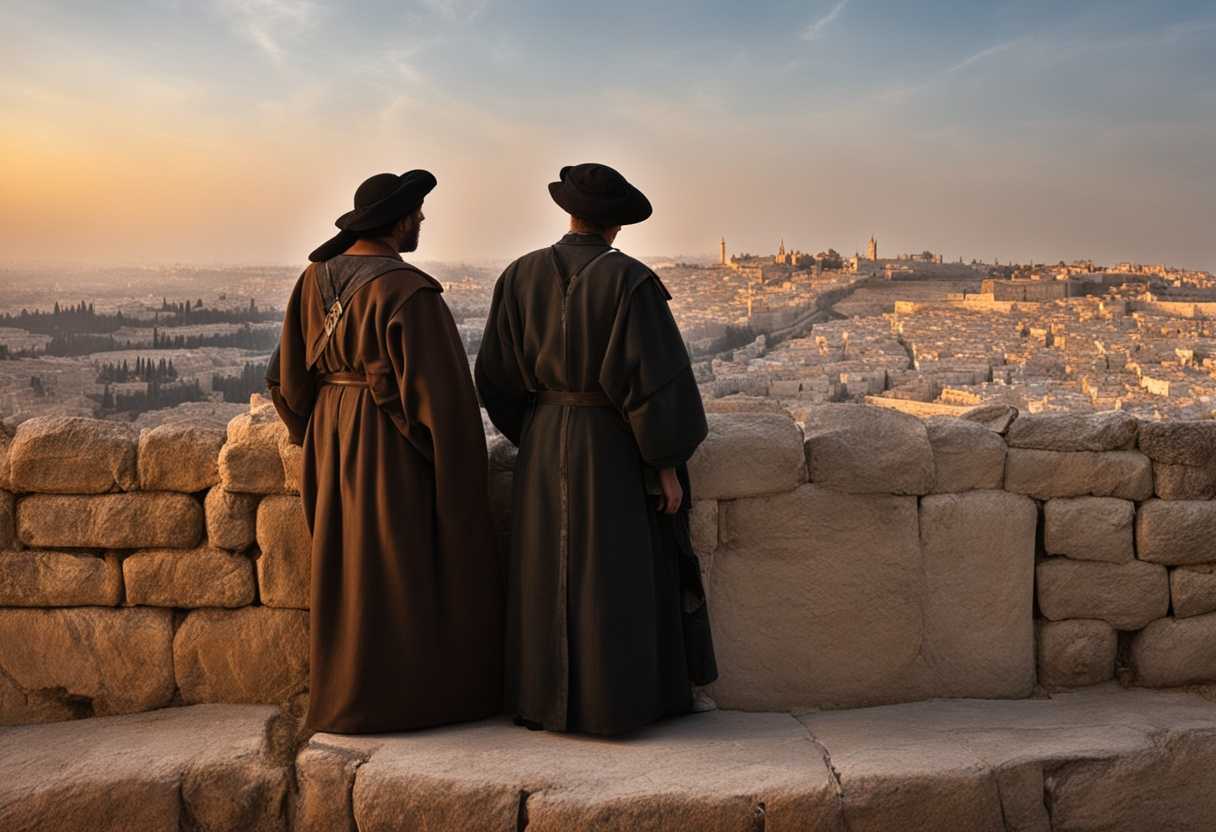
Setting the Scene for Nehemiah 1:1-3
The scene in Nehemiah 1:1-3 takes place in the citadel of Susa, the capital of the Persian Empire. Nehemiah, a Jewish cupbearer to King Artaxerxes, is present in the citadel along with some fellow Jews who had survived the exile and had returned to Jerusalem. The group had gathered to hear news from their homeland, and Nehemiah specifically inquired about the welfare of the people of Judah and the city of Jerusalem.
The setting is one of grandeur and opulence, typical of a royal court. The citadel of Susa is bustling with activity, with servants and courtiers going about their duties. The room where Nehemiah and his companions are gathered is adorned with luxurious furnishings and intricate decorations, reflecting the wealth and power of the Persian Empire. Despite the lavish surroundings, Nehemiah’s heart is heavy with concern for his people and the state of Jerusalem, prompting him to seek God in prayer for guidance and help in the restoration of his homeland.
What is Nehemiah 1:1-3 about?
Isn’t it heartwarming to see Nehemiah’s care and compassion for his people and his city? Nehemiah’s prayer in this verse demonstrates his deep connection to Jerusalem and the well-being of its inhabitants. He is not only concerned about the physical rebuilding of the city but also about the spiritual restoration of the people. This shows us the importance of not only taking care of the material aspects of a community but also addressing the emotional and spiritual needs of its members.
Nehemiah’s prayer is a powerful reminder of the role faith can play in times of hardship and struggle. Nehemiah shows us the importance of seeking divine guidance and support in times of need by turning to God in prayer. His prayer also reflects a sense of responsibility and stewardship towards his community, inspiring us to also take active roles in supporting and uplifting those around us. Nehemiah’s prayer for Jerusalem’s restoration ultimately teaches us about the power of compassion, faith, and community in overcoming challenges and rebuilding what has been broken.
Understanding what Nehemiah 1:1-3 really means
In Nehemiah 1:1-3, we are introduced to Nehemiah, a cupbearer to King Artaxerxes, who receives distressing news about the state of Jerusalem while he is in Susa, the capital of Persia. This sets the stage for Nehemiah’s deep concern and subsequent actions to rebuild the walls of Jerusalem, highlighting his sense of responsibility towards his people even while serving in a foreign land. The mention of Nehemiah’s lineage and the arrival of Hanani, his brother from Judah, adds a personal touch to the narrative, emphasizing the authenticity and gravity of the report he receives about the dire situation in Jerusalem.
The description of the Jewish remnant in great trouble and disgrace after surviving the exile underscores the vulnerability and urgency of their plight. The imagery of Jerusalem’s broken walls and burned gates symbolizes not only the physical destruction but also the spiritual desolation of the city, reflecting a loss of protection, identity, and honor. These key phrases paint a vivid picture of the challenges faced by the Jewish community, setting the stage for Nehemiah’s mission of restoration and rebuilding.
Drawing parallels with related biblical passages such as Ezra 4:12-16, Psalm 137:1-4, and Isaiah 58:12, we see a consistent theme of struggle, longing, and hope amidst adversity. Nehemiah’s response to the news serves as a timeless example of proactive leadership, empathy, and initiative in the face of challenges. Just as Nehemiah felt compelled to act for the restoration of Jerusalem, individuals today can be inspired to address brokenness in their lives and communities with compassion and determination.
Consider a modern-day scenario where a community faces devastation, and a leader steps up, akin to Nehemiah, to lead efforts in rebuilding and restoring hope. This anecdote illustrates how one person’s empathy and initiative can spark significant positive change, echoing Nehemiah’s commitment to addressing the needs of his people and taking tangible steps towards restoration.
In conclusion, Nehemiah 1:1-3 serves as a poignant reminder of the enduring relevance of empathy, leadership, and action in times of adversity. It challenges us to be attentive to the needs around us, to embody proactive leadership, and to respond with compassion and determination to bring about healing and restoration, both personally and within our communities. Just as Nehemiah’s story inspires us to make a difference, may we too be catalysts for positive change in the world around us.
What spiritual burdens are we carrying for others?
The spiritual burden we may be carrying for others is a sense of mourning and distress for their current state. We may find ourselves grieving over the brokenness and hardships faced by those around us, just as Nehemiah felt deeply troubled by the news of Jerusalem’s destruction. This burden can manifest in a desire to intercede on behalf of others, to pray for their well-being and restoration, and to seek ways to actively support and uplift them in their time of need.
Furthermore, the burden we bear for others may be a call to action and a sense of responsibility to make a difference in their lives. Like Nehemiah, who went on to take practical steps to address the situation in Jerusalem, our burden for others can propel us towards acts of compassion, service, and advocacy. It can inspire us to stand in the gap, to offer help and hope, and to work towards bringing about positive change and renewal in the lives of those we care about. Through this burden, we are reminded of the interconnectedness of humanity and the importance of supporting one another in times of struggle and adversity.
Application
Let’s unlock the strength that lies within us, just like Nehemiah did. When challenges arise, let’s turn to God for guidance and support. Our prayers have the power to shape our world and lead us to success. Will you seize this opportunity to connect with a higher power and overcome your obstacles today?

Reverend Michael Johnson is an experienced Church Minister with a profound expertise in spirituality and guidance. With a serene presence and a compassionate heart, he has faithfully served his congregation for over 20 years, leading them on a spiritual journey towards inner peace and enlightenment. Reverend Johnson’s extensive knowledge of religious philosophies and profound understanding of human nature have made him a trusted confidant and mentor to many, as he seamlessly weaves his profound wisdom into life teachings. Reverend Johnson’s calming demeanor and empathetic nature continue to uplift and heal souls, nurturing a sense of unity and tranquility within his community.