
Nehemiah 7:43-45 is about the enumeration of the people within the community of Israel who returned from exile, highlighting the importance of identity, community, and the restoration of God’s covenant people after their displacement.
43 The temple servants: the sons of Ziha, the sons of Hasupha, the sons of Tabbaoth,
44 The singers: the sons of Asaph, 148.
45 The gatekeepers: the sons of Shallum, the sons of Ater, the sons of Talmon, the sons of Akkub, the sons of Hatita, the sons of Shobai, 138.
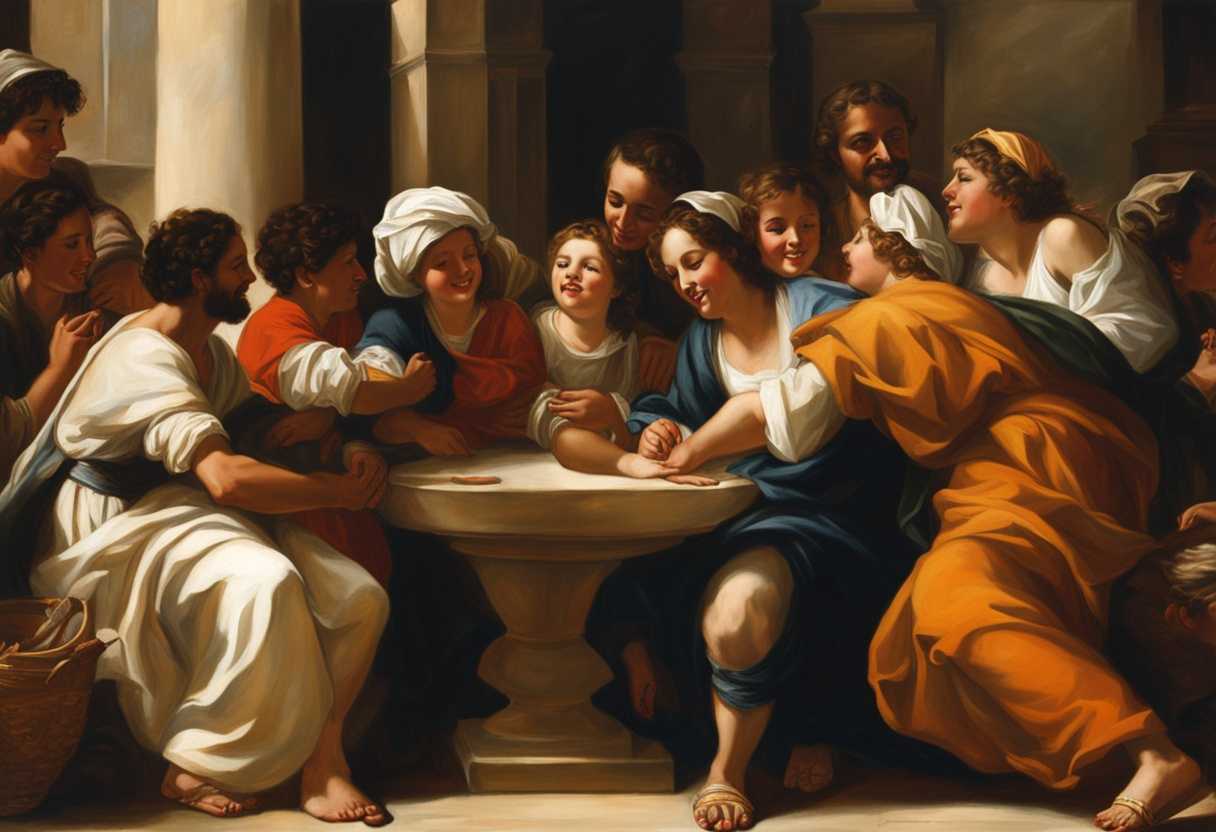
Setting the Scene for Nehemiah 7:43-45
In the aftermath of the Babylonian exile, the city of Jerusalem lay in ruins, its walls broken and its gates burned. Nehemiah, a cupbearer to the Persian king, had been moved by the plight of his people and the desolation of his homeland. After receiving permission from the king, he returned to Jerusalem with a mission: to rebuild the city and restore the community. The scene unfolds in the newly reconstructed city, where the air is filled with a mix of hope and trepidation. The sun casts a warm glow over the gathered crowd, illuminating the faces of those who have come to witness the reestablishment of their identity and heritage.
Among the crowd are the leaders of the people, including Ezra, the scribe, who has been instrumental in guiding the spiritual revival of the Israelites. The atmosphere is charged with anticipation as Nehemiah calls forth the descendants of the priests, Levites, and other families who had returned from exile. They stand in a makeshift assembly area, surrounded by the remnants of the old city walls, which now serve as a backdrop to their gathering. The sound of hammers and chisels can be heard in the distance, a reminder of the ongoing work to restore the physical structure of their home. The people are dressed in simple garments, their faces reflecting a mixture of determination and weariness, yet their spirits are buoyed by the promise of a new beginning.
As Nehemiah reads from the genealogical records, the names of the families echo through the air, each one a testament to the resilience of the Jewish people. The descendants of the priests, such as the sons of Jeshua, and the Levites, including the sons of Kadmiel, are called forth, their identities reaffirmed in the presence of their community. This moment is not just about rebuilding walls; it is about restoring a sense of belonging and purpose. The people listen intently, their hearts swelling with pride as they hear the names of their ancestors, each one a link in the chain of their shared history. The scene is a powerful reminder of the importance of community, heritage, and the divine promise that has sustained them through generations.
What is Nehemiah 7:43-45 about?
Nehemiah 7:43-45 provides a glimpse into the vibrant communal life of Jerusalem following the exile—a time of rebuilding not just the walls, but also the spiritual and religious identity of the people. The mention of the priests and Levites returning to Jerusalem is significant, as it highlights the importance of spiritual leadership and worship in the recovery of the community. Do you ever wonder why the roles of priests and Levites are so crucial in this narrative? They are not merely titles; they represent a lifeline to the covenant heritage and sacred practices anchored in the faith of the people.
Indeed, the priests and Levites had specific responsibilities that transcended simple religious observance; they were the intermediaries between God and the people, facilitating worship, teaching, and guidance. The passage reminds us that worship is not merely a personal experience but a communal one, rooted in shared identity and collective responsibility by emphasizing their return. How might this principle apply to our own lives today? Are we actively engaging in our communities, taking up roles that foster unity and spiritual growth among those around us? Let’s consider our own roles in our communities as we reflect on the commitment of the priests and Levites, contributing to a culture of worship and service that honors our collective identity and strengthens our connections to one another.
Understanding what Nehemiah 7:43-45 really means
In Nehemiah 7:43-45, we encounter a pivotal moment in the narrative of the Israelites’ return to Jerusalem. This passage lists various groups of people—priests, Levites, gatekeepers, singers, and temple servants—who played essential roles in the restoration of their community. Each group represents a unique aspect of worship and service, emphasizing the diversity and interdependence within the body of God’s people. Why is it significant that these roles are highlighted? It underscores the idea that every individual has a part to play in the larger narrative of faith and community.
The context of this passage is crucial. Nehemiah has returned to a city in ruins, and his leadership is instrumental in organizing the people. The restoration of Jerusalem is not merely about rebuilding walls; it’s about restoring identity and purpose. The Israelites are reclaiming their heritage as God’s chosen people. In a world that often prioritizes individualism, this collective effort serves as a reminder of the strength found in unity. How often do we overlook the importance of community in our spiritual journeys?
The themes of restoration and identity resonate deeply today. Just as the Israelites sought to reaffirm their covenant with God, we too are called to reflect on our identities within our communities. In our modern context, where many feel isolated, these verses challenge us to consider how we contribute to the collective identity of our church, family, or society. Are we actively participating in the life of our community, or are we merely passive observers?
The anecdote of a local church revitalizing its mission through community engagement illustrates this point beautifully. When the pastor encouraged members to share their stories, it sparked a renewed sense of purpose. This mirrors the Israelites’ experience as they came together to rebuild not just their city, but their identity as a people of faith. It prompts us to ask: How can we foster such engagement in our own communities?
The meaningful phrases in this passage, such as “the priests, the Levites, the gatekeepers, the singers, the temple servants,” highlight the diversity of roles within the community. Each role, no matter how seemingly small, contributes to the overall mission. This teaches us that in God’s eyes, every contribution matters. Similarly, the mention of “their families” emphasizes the generational aspect of faith. It reminds us that our involvement in community life can have lasting impacts on future generations. How are we nurturing faith within our families and communities?
In conclusion, Nehemiah 7:43-45 serves as a powerful reminder of the importance of community, identity, and the roles we play within it. As we reflect on our own lives, let us consider how we can contribute to the restoration and growth of our communities, just as the Israelites did in their time. In doing so, we not only honor our heritage but also pave the way for future generations to thrive in faith and unity. What steps can you take today to engage more deeply with your community?
How can we honor our spiritual heritage today?
To honor our spiritual heritage today, we can invest time in understanding and preserving the values and traditions that our ancestors held dear. This can be achieved through practices such as studying foundational texts, engaging in communal worship, and participating in rituals that have historical significance. These actions help to create a bridge between past and present, allowing us to appreciate the struggles and beliefs of those who came before us while strengthening our own spiritual identities. Fostering a sense of community among individuals sharing the same spiritual lineage is crucial. This can involve creating opportunities for storytelling, where elders pass down their wisdom and experiences to younger generations. Such interactions not only honor the past but also empower current members to live out their faith in meaningful ways. Sharing traditions, celebrating important milestones, and coming together for communal service can further reinforce the bonds of our spiritual community.
Lastly, we can honor our spiritual heritage by embodying its core principles in our daily lives. This involves actively living out values such as compassion, integrity, and justice, which serve as the foundation of our beliefs. We not only pay tribute to the teachings of our spiritual predecessors but also inspire others to follow suit by modeling these traits and engaging in acts of kindness and service. We ensure that the essence of our heritage continues to thrive in a modern context, shaping the future for generations to come.
Application
Think of your church and community as a mighty team at work, where each person plays a unique role in a beautiful symphony. Every one of us has gifts to share, just like each worker brings their skills to build a strong foundation. This is your moment to step up—don’t just stand on the sidelines! Picture how your contributions could uplift those around you, whether it’s through service, leadership, or simply showing up. What can you give to help light the path for others in our family of faith? Are you ready to take that leap and make a difference?

Reverend Michael Johnson is an experienced Church Minister with a profound expertise in spirituality and guidance. With a serene presence and a compassionate heart, he has faithfully served his congregation for over 20 years, leading them on a spiritual journey towards inner peace and enlightenment. Reverend Johnson’s extensive knowledge of religious philosophies and profound understanding of human nature have made him a trusted confidant and mentor to many, as he seamlessly weaves his profound wisdom into life teachings. Reverend Johnson’s calming demeanor and empathetic nature continue to uplift and heal souls, nurturing a sense of unity and tranquility within his community.