
Nehemiah 8:1-12 is about the people of Israel coming together to hear the reading of the Law, experiencing a renewal of their commitment to God’s teachings, and finding joy in understanding and obeying His word.
1 And all the people gathered as one man into the square before the Water Gate. And they told Ezra the scribe to bring the Book of the Law of Moses that the Lord had commanded Israel.
2 So Ezra the priest brought the Law before the assembly, both men and women and all who could understand what they heard, on the first day of the seventh month.
3 And he read from it facing the square before the Water Gate from early morning until midday, in the presence of the men and the women and those who could understand. And the ears of all the people were attentive to the Book of the Law.
4 And Ezra the scribe stood on a wooden platform that they had made for the purpose.
5 And Ezra opened the book in the sight of all the people, for he was above all the people, and as he opened it all the people stood.
6 And Ezra blessed the Lord, the great God, and all the people answered, “Amen, Amen,” lifting up their hands. And they bowed their heads and worshiped the Lord with their faces to the ground.
7 Also Jeshua, Bani, Sherebiah, Jamin, Akkub, Shabbethai, Hodiah, Maaseiah, Kelita, Azariah, Jozabad, Hanan, Pelaiah, the Levites, helped the people to understand the Law, while the people remained in their places.
8 They read from the book, from the Law of God, clearly, and they gave the sense, so that the people understood the reading.
9 And Nehemiah, who was the governor, and Ezra the priest and scribe, and the Levites who taught the people said to all the people, “This day is holy to the Lord your God; do not mourn or weep.” For all the people wept as they heard the words of the Law.
10 Then he said to them, “Go your way. Eat the fat and drink sweet wine and send portions to anyone who has nothing ready, for this day is holy to our Lord. And do not be grieved, for the joy of the Lord is your strength.”
11 So the Levites calmed all the people, saying, “Be quiet, for this day is holy; do not be grieved.”
12 And all the people went their way to eat and drink and to send portions and to make great rejoicing, because they had understood the words that were declared to them.
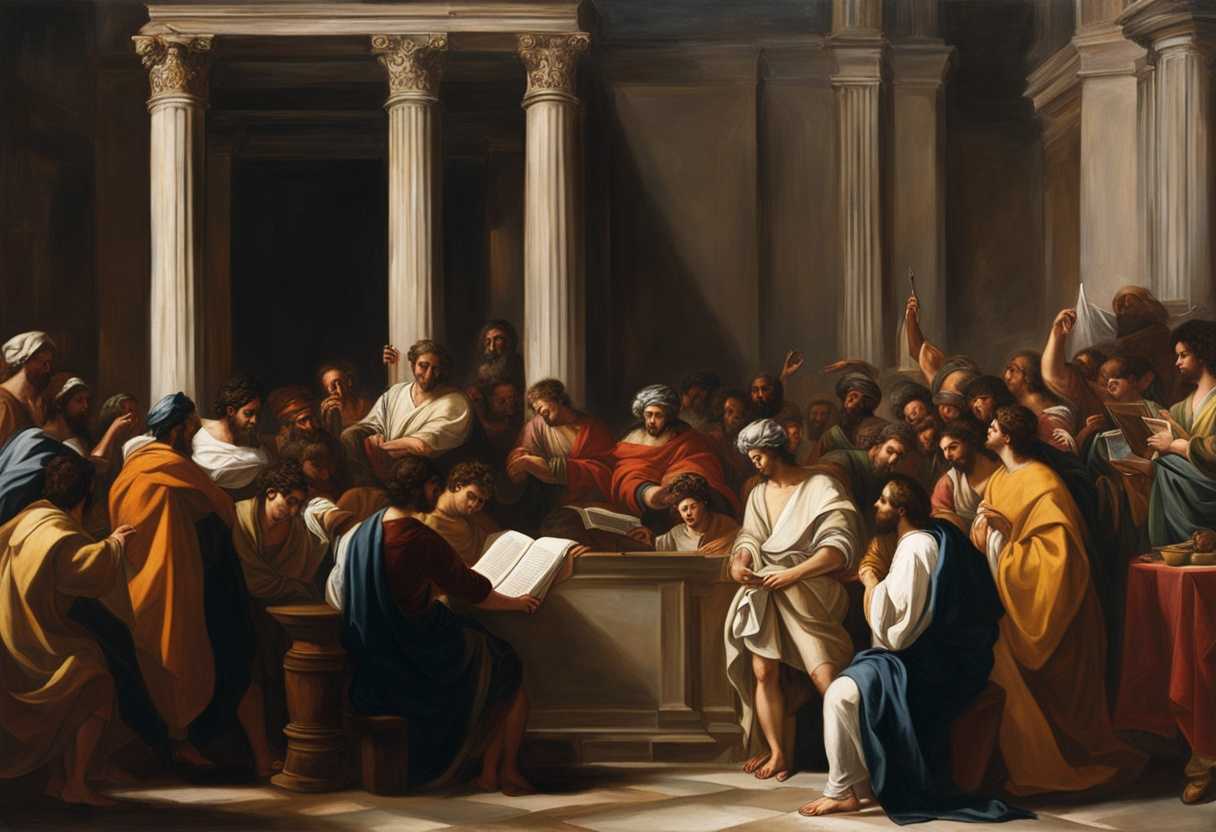
Setting the Scene for Nehemiah 8:1-12
In Nehemiah chapter 8, the scene is set in the square before the Water Gate in Jerusalem. The people have gathered there, both men and women, along with all who could understand what they heard. They have come together to listen to Ezra the scribe read from the Book of the Law of Moses. The square is bustling with activity as the crowd eagerly awaits the reading.
Ezra, accompanied by other priests and Levites, ascends a platform that has been constructed for this purpose. The people stand in reverence as Ezra opens the book and begins to read from it. As he reads, the people listen attentively, hanging on every word. The scene is filled with a sense of anticipation and reverence as the words of the Law are proclaimed.
As the reading continues, the people are moved to tears by the words they hear. They are convicted of their sins and shortcomings, but also filled with a sense of hope and renewal as they realize the importance of following God’s commandments. The atmosphere in the square is one of repentance and joy as the people respond to the reading with worship and praise. It is a powerful moment of spiritual awakening and rededication to God’s Word.
What is Nehemiah 8:1-12 about?
Imagine a community gathered together, listening intently as the sacred words of their tradition are read aloud. Ezra, a religious leader, shares the Law with the people in this verse. The impact is so profound that it stirs deep emotions within them—tears of sorrow and joy. Reflect on the power of words and the significance of shared traditions, I encourage you as a teacher. Why do you think the people reacted with both weeping and rejoicing? What might this reveal about the connection between faith, community, and personal transformation? Their bonds might have been strengthened and their commitment to their shared beliefs deepened by experiencing the Law together.
This verse illustrates the potential for teachings to evoke a range of emotions and to inspire individuals to reflect on their own beliefs and actions. It prompts us to consider the ways in which sacred texts can shape our understanding of ourselves and our relationships with others. Let us ponder this passage and think about the teachings or values that hold special meaning for us and how we can engage with them in a way that both challenges and uplifts our spirits.
Understanding what Nehemiah 8:1-12 really means
Nehemiah 8:1-12 captures a significant moment in Israel’s history, post-Babylonian exile, where unity and communal worship are paramount. The gathering of the people as one underscores the strength found in togetherness, emphasizing the collective purpose in honoring God. Ezra’s pivotal role as a scribe and priest signifies the importance of spiritual leadership and the dissemination of God’s Word, highlighting the significance of guidance in understanding and applying Scripture.
The act of reading the Law of God clearly and providing interpretation for the people showcases the necessity of not just reading Scripture but comprehending its meaning. This practice of communal learning and understanding is echoed in other biblical passages like Deuteronomy 31:12-13 and Joshua 8:34-35, emphasizing the reverence for God’s commandments and the importance of public reading and adherence to His Word. Acts 2:42 further illustrates the continuity of communal worship and learning among early Christians, reinforcing the value of coming together to study and apply God’s teachings.
In today’s society, characterized by individualism and rapid pace, Nehemiah 8:1-12 reminds us of the significance of community in spiritual growth and understanding Scripture. It prompts reflection on the value of gathering together to study, interpret, and apply God’s Word in our lives. The passage also highlights the essential role of spiritual leaders in guiding and teaching the congregation, ensuring accessibility and comprehension of the Word of God.
Consider a scenario where a community faces a crisis and seeks solace and direction in a local church. The pastor reads from the Bible, offering explanations and hope, fostering unity and purpose among the congregation. This anecdote mirrors the experience of the Israelites in Nehemiah’s time, showcasing how collective worship and understanding strengthen faith and community bonds.
Nehemiah 8:1-12 serves as a poignant reminder of the importance of unity, the guidance of spiritual leaders, and the pursuit of deeper understanding of God’s Word. It encourages us to come together as a community, supporting one another in comprehending and applying Scripture in our daily lives. This passage challenges us to prioritize communal worship, learning, and application of God’s teachings in a world often characterized by individualism and haste.
How can we approach God’s Word with reverence?
Approaching God’s Word with reverence involves recognizing its authority and importance in our lives. We can come before the Word of God with a humble and respectful attitude, just as the people in Nehemiah 8 listened attentively and stood up when the Book of the Law was read. We can acknowledge that this is not just any book, but the inspired Word of God that has the power to transform lives.
Additionally, approaching God’s Word with reverence includes a desire to understand and apply its teachings in our lives. We can allow the Word of God to convict us of sin and guide us in the ways of righteousness, just as the people in Nehemiah’s time wept when they heard the words of the Law. Studying the Word with a teachable heart and a willingness to obey what it says demonstrates our reverence for God and his commands.
Lastly, approaching God’s Word with reverence involves a sense of awe and worship. We can read, meditate on, and apply God’s Word with a sense of gratitude for the privilege of having access to the mind and will of our Creator. Approach the Bible not as a mere academic exercise or religious duty, but as an opportunity to draw closer to God and deepen our relationship with Him.
Application
Dear reader, just as Nehemiah saw the hunger in people’s eyes for the Word of God, let us ignite that same passion within ourselves for studying the Scriptures. Let’s commit to immersing ourselves in the teachings, seeking not only knowledge but also understanding and application in our daily lives. The Bible is a beacon of light in our modern world, guiding us through the challenges of work, family, and beyond. So, how will you answer the call to embrace the Word of God and let it shape your thoughts and actions?

Reverend Michael Johnson is an experienced Church Minister with a profound expertise in spirituality and guidance. With a serene presence and a compassionate heart, he has faithfully served his congregation for over 20 years, leading them on a spiritual journey towards inner peace and enlightenment. Reverend Johnson’s extensive knowledge of religious philosophies and profound understanding of human nature have made him a trusted confidant and mentor to many, as he seamlessly weaves his profound wisdom into life teachings. Reverend Johnson’s calming demeanor and empathetic nature continue to uplift and heal souls, nurturing a sense of unity and tranquility within his community.