
Numbers 11:29 is about Moses expressing his desire for all God’s people to prophesy, emphasizing the potential for everyone to experience the divine presence and power, rather than restricting such encounters to a select few.
29 But Moses said to him, “Are you jealous for my sake? Would that all the Lord’s people were prophets, that the Lord would put his Spirit on them!”
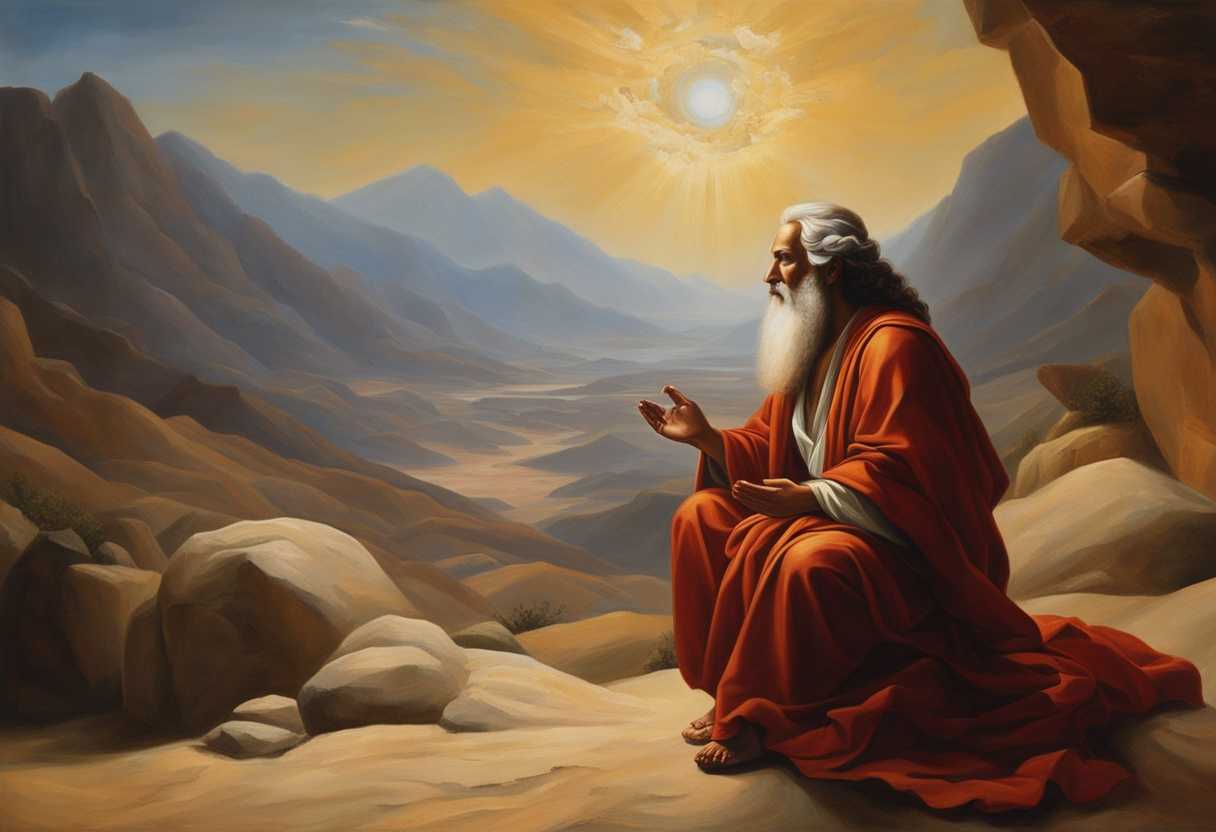
Setting the Scene for Numbers 11:29
In Numbers chapter 11, Moses is leading the Israelites through the wilderness towards the Promised Land. The scene in question takes place after the Lord has taken some of the Spirit that was on Moses and given it to seventy elders of Israel, who prophesied. However, two men named Eldad and Medad remained in the camp and also received the Spirit, prophesying there.
The setting is the vast desert landscape, with the Israelite camp stretching out in the distance. Moses, the revered leader of the Israelites, is at the center of the scene, surrounded by the seventy elders who had just received the Spirit. Eldad and Medad are not present with them but are in the camp, where they are also prophesying. The atmosphere is charged with the presence of God’s Spirit, and there is a sense of awe and wonder among the people witnessing these events.
As the news reaches Moses about Eldad and Medad prophesying in the camp, Joshua, Moses’ assistant, suggests that they be stopped. However, Moses responds with a profound statement, expressing his wish that all the Lord’s people would prophesy and that the Lord would put His Spirit on all of them. This moment highlights Moses’ humility and his desire for all to experience the presence and power of God, setting a powerful example for the Israelites and for us today.
What is Numbers 11:29 about?
This verse, from the book of Numbers in the Old Testament, expresses Moses’s desire for a community where everyone is empowered to speak on behalf of God. Moses is responding to the complaint of two individuals who were upset that others were prophesying in the camp in the context of the story. Moses, in his wisdom, wishes that all the people could experience the spiritual connection and communication with the divine that comes with prophesying. He understands the value and importance of having multiple voices speaking on behalf of God within the community.
Moses’s wish for all to be prophets challenges traditional power structures and emphasizes the idea that spirituality and divine communication are not limited to a select few. This verse encourages us to reflect on our own understanding of who can communicate with God and challenge the idea that spiritual authority should be concentrated in the hands of a few. It prompts us to consider the ways in which we can empower and uplift the voices of all people in our communities, acknowledging that everyone has the potential to connect with the divine and share important messages of faith and wisdom.
Understanding what Numbers 11:29 really means
In Numbers 11:29, we find Moses responding to Joshua’s concern about unauthorized prophesying with a profound question, “Are you jealous for my sake?” This inquiry highlights the importance of humility and the recognition that God’s Spirit is not limited to a select few individuals. It challenges the notion of exclusivity in spiritual gifting and emphasizes the inclusivity of God’s work among His people. Moses goes on to express a deep desire for widespread empowerment, stating, “I wish that all the Lord’s people were prophets.” This sentiment reveals a vision of communal participation in God’s mission, where every believer has a role to play.
The verse further underscores the potential for every believer to be an instrument of God’s will, as Moses exclaims, “That the Lord would put his Spirit on them!” This statement echoes the sentiment found in Joel 2:28-29 and Acts 2:17-18, where the pouring out of the Spirit is depicted as a universal phenomenon, not limited by age, gender, or social status. The democratization of spiritual gifts is a central theme that resonates throughout the Bible, as seen in 1 Corinthians 12:7, which emphasizes that these gifts are given for the common good of the community.
Today, Numbers 11:29 challenges us to reexamine hierarchical structures within religious communities and encourages a more inclusive and participatory approach to faith. It calls believers to recognize and affirm the spiritual gifts present in others, fostering a supportive and empowering community where each individual’s contribution is valued. Imagine a scenario in a church where a member who has never spoken publicly suddenly delivers a profound message. Initially, there may be feelings of unease or jealousy, but the response should mirror Moses’ encouragement to celebrate and embrace the diverse ways in which God works through His people.
In conclusion, Numbers 11:29 invites us to embrace a vision of community where everyone is empowered by the Spirit, breaking down barriers of exclusivity and competition. By fostering an environment where all can contribute their spiritual gifts for the common good, we create a vibrant and dynamic faith community that reflects the diverse ways in which God chooses to work through His people. Let us heed the call to celebrate the unique gifts and callings of each individual, recognizing that God’s Spirit is not limited by human boundaries but flows freely among His people for the advancement of His kingdom.
How can we embrace and support diverse expressions of spirituality?
Embracing and supporting diverse expressions of spirituality involves recognizing and honoring the unique ways in which individuals connect with the divine. Spiritual journeys vary greatly from one person to another, just as each person has their own path in life. We can create a more inclusive and accepting environment where all forms of spirituality are valued by appreciating and respecting these differences.
It is important to cultivate a mindset of openness and curiosity towards various spiritual beliefs and practices. Rather than imposing our own beliefs onto others, we can seek to learn from different perspectives and engage in meaningful conversations that enrich our understanding of the spiritual landscape. We can create a space where diverse expressions of spirituality can flourish and coexist harmoniously by fostering dialogue and mutual respect. We can actively encourage individuals to explore and deepen their connection with the divine in ways that resonate with their hearts and souls while supporting diverse expressions of spirituality. Providing avenues for spiritual growth and self-discovery, such as meditation groups, prayer circles, or interfaith gatherings, can help people find their own unique paths to spiritual fulfillment. We move towards a more compassionate and inclusive society by embracing this diversity.
Application
Let Numbers 11:29 be your guiding light, urging you to strengthen your bond with the divine. Invite God into your life with open arms and a willing heart, ready to embrace the unexpected paths He may unveil for you. Are you prepared to take that leap of faith and let God’s miracles shape your journey?

Reverend Michael Johnson is an experienced Church Minister with a profound expertise in spirituality and guidance. With a serene presence and a compassionate heart, he has faithfully served his congregation for over 20 years, leading them on a spiritual journey towards inner peace and enlightenment. Reverend Johnson’s extensive knowledge of religious philosophies and profound understanding of human nature have made him a trusted confidant and mentor to many, as he seamlessly weaves his profound wisdom into life teachings. Reverend Johnson’s calming demeanor and empathetic nature continue to uplift and heal souls, nurturing a sense of unity and tranquility within his community.