
Numbers 11:31-32 is about the provision of quail to the Israelites in the wilderness, showcasing how God meets their physical needs even when they grumble and complain.
31 Then a wind from the Lord sprang up, and it brought quail from the sea and let them fall beside the camp, about a day’s journey on this side and a day’s journey on the other side, around the camp, and about two cubits above the ground.
32 The people rose all that day and all night and all the next day, and gathered the quail. Those who gathered least gathered ten homers. And they spread them out for themselves all around the camp.
Setting the Scene for Numbers 11:31-32
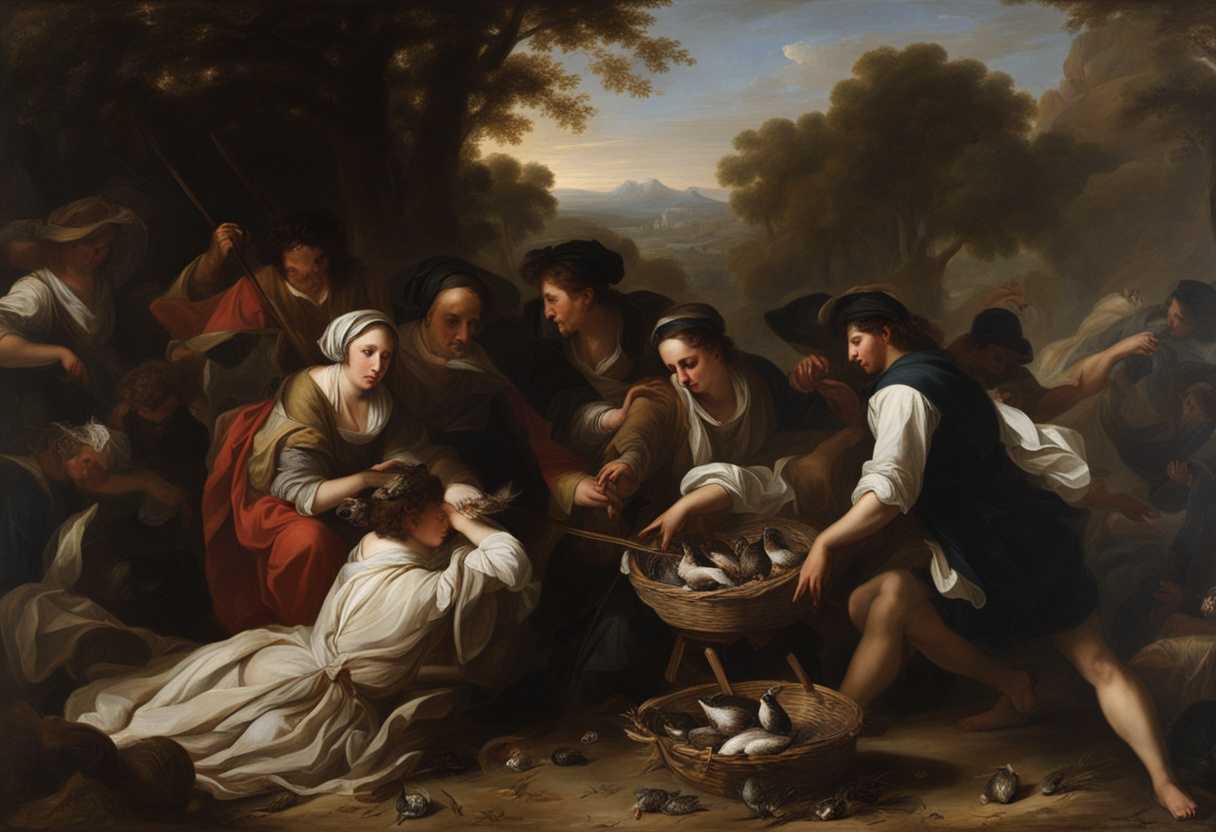
The scene in Numbers 11:31-32 takes place in the wilderness during the time when the Israelites were journeying from Egypt to the Promised Land. The Israelites had been complaining about the lack of meat, and God responded by sending quail to satisfy their cravings. A strong wind blew in quail from the sea, and they fell around the camp for a day’s journey in every direction, about three feet deep on the ground.
The Israelites, led by Moses, gathered the quail excitedly, but while the meat was still between their teeth, before they had even chewed it, the anger of the Lord blazed against them, and many were struck down with a severe plague. The scene is chaotic, with the people scrambling to collect as much quail as they could, unaware of the consequences that would follow their greed and lack of faith.
The surroundings are described as the vast wilderness, with the camp of the Israelites bustling with activity as they gather the quail. The atmosphere is one of anticipation and gluttony, as the people indulge in the meat that was provided to them by God in response to their complaints. However, their lack of gratitude and reverence leads to a swift and severe punishment from the Lord.
What is Numbers 11:31-32 about?
This verse teaches us a valuable lesson about balance, gratitude, and consequences. It shows how God provides for His people but also expects them to be content with what they are given. The Israelites’ desire for more than what they were provided with led to their downfall. This story serves as a reminder for us to be grateful for what we have and not to let greed consume us.
Have you ever found yourself wanting more and more, even when you already have everything you need? This verse challenges us to reflect on our own desires and motivations. Are we appreciative of the blessings we have been given, or are we always striving for more? It also reminds us that there are consequences for our actions. Just like the Israelites faced punishment for their greed, we too must be mindful of the consequences of our decisions. This verse ultimately encourages us to find contentment in what we have and trust that God will provide for our needs. It serves as a powerful reminder to be grateful, humble, and mindful of our actions. Let’s take this message to heart and strive to live with gratitude and moderation in all aspects of our lives.
Understanding what Numbers 11:31-32 really means
In Numbers 11:31-32, we witness a profound display of God’s provision and the Israelites’ response to it. The context finds the Israelites in the wilderness, led by Moses after their exodus from Egypt. Dissatisfied with their current situation, they longed for the meat they had in Egypt, prompting their complaints. In response, God intervened directly, sending quail for them to eat. The phrase “A wind went out from the Lord” signifies divine intervention, highlighting God’s immediate response to His people’s needs and complaints.
The mention of God bringing quail from the sea underscores the miraculous nature of this event. Quail, not typically found in such abundance, were provided in large numbers, showcasing the extraordinary provision of God. The description of the quail being two cubits deep around the camp emphasizes the overwhelming abundance of God’s provision, almost to the point of excess. Additionally, the continuous gathering of quail by the people throughout the day and night demonstrates their insatiable desire and the relentlessness of their pursuit.
This passage is not an isolated incident but part of a pattern of divine provision seen throughout the Bible. Exodus 16:13 also recounts God providing quail for the Israelites, reinforcing the theme of God meeting His people’s needs. Psalm 78:26-29 reflects on this event, emphasizing God’s power and the people’s ingratitude, serving as a cautionary tale for us today. In John 6:31-35, Jesus references the manna and quail in the wilderness, pointing to Himself as the true bread from heaven, drawing parallels between the physical provision in the wilderness and the spiritual sustenance He offers.
The relevance of this passage extends to our lives today. Just as God provided for the Israelites, He continues to provide for our needs, offering comfort and assurance in challenging times. The Israelites’ story serves as a reminder of the dangers of ingratitude and the importance of finding contentment in what we have. Trusting in God’s timing is crucial, as His provision may come in unexpected ways and at unexpected times.
Consider a modern-day scenario where a struggling family receives an unexpected gift or opportunity that meets their needs, akin to the provision of quail in the wilderness. This anecdote illustrates that God hears our prayers and provides for us, often in ways we least expect. Reflect on moments in your life when you experienced unexpected provision and consider areas where gratitude can replace complaints or discontent. Trust in God’s provision and timing, even when it differs from your expectations, knowing that His ways are higher than ours.
By delving into the deeper meanings of this passage and exploring related scriptures, we uncover timeless lessons on God’s provision, our response to His blessings, and the significance of cultivating a heart of gratitude. Let us learn from the Israelites’ journey in the wilderness, drawing wisdom from their experiences to guide our own faith walk today.
How can we cultivate contentment and gratitude?
One way to cultivate contentment and gratitude is to focus on the blessings we already have in our lives. Reflecting on the abundance of goodness and provisions that we enjoy can help us develop a sense of contentment and appreciation for what we have. Shifting our perspective to recognize the positives in our lives can foster a sense of gratitude that can bring us joy and satisfaction. Practicing mindfulness can help us cultivate contentment and gratitude. We can develop a deeper sense of thankfulness and contentment by being fully present in each moment and appreciating the experiences and blessings as they come. Mindfulness allows us to savor the good things in life, big or small, and to cultivate a greater sense of gratitude for the blessings that we might otherwise overlook. Serving others and practicing kindness can also contribute to a sense of contentment and gratitude. We can gain a deeper appreciation for the blessings in our own lives by helping those in need and showing compassion to others. Acts of service and kindness not only benefit others but also fill our hearts with gratitude and contentment, reminding us of the abundance of goodness around us.
Application
Reflect on the bountiful blessings God bestows upon us. Just as He provided for the Israelites in the wilderness, He continues to provide for us today. Let’s embrace His abundance with gratitude and shape our actions to honor His goodness. How will you show appreciation for God’s blessings in your life right now?

Reverend Michael Johnson is an experienced Church Minister with a profound expertise in spirituality and guidance. With a serene presence and a compassionate heart, he has faithfully served his congregation for over 20 years, leading them on a spiritual journey towards inner peace and enlightenment. Reverend Johnson’s extensive knowledge of religious philosophies and profound understanding of human nature have made him a trusted confidant and mentor to many, as he seamlessly weaves his profound wisdom into life teachings. Reverend Johnson’s calming demeanor and empathetic nature continue to uplift and heal souls, nurturing a sense of unity and tranquility within his community.