
Numbers 12:1-13 is about the jealousy and subsequent punishment of Miriam and Aaron for questioning the authority and uniqueness of Moses as chosen by God.
1 Miriam and Aaron spoke against Moses because of the Cushite woman whom he had married, for he had married a Cushite woman.
2 And they said, “Has the Lord indeed spoken only through Moses? Has he not spoken through us also?” And the Lord heard it.
3 Now the man Moses was very meek, more than all people who were on the face of the earth.
4 And suddenly the Lord said to Moses and to Aaron and Miriam, “Come out, you three, to the tent of meeting.” And the three of them came out.
5 And the Lord came down in a pillar of cloud and stood at the entrance of the tent and called Aaron and Miriam, and they both came forward.
6 And he said, “Hear my words: If there is a prophet among you, I the Lord make myself known to him in a vision; I speak with him in a dream.
7 Not so with my servant Moses. He is faithful in all my house.
8 With him I speak mouth to mouth, clearly, and not in riddles, and he beholds the form of the Lord. Why then were you not afraid to speak against my servant Moses?
9 And the anger of the Lord was kindled against them, and he departed.
10 When the cloud removed from over the tent, behold, Miriam was leprous, like snow. And Aaron turned toward Miriam, and behold, she was leprous.
11 And Aaron said to Moses, “Oh, my lord, do not punish us because we have done foolishly and have sinned.
12 Let her not be like one dead, whose flesh is half eaten away when he comes out of his mother’s womb.”
13 And Moses cried to the Lord, “O God, please heal her—please.”
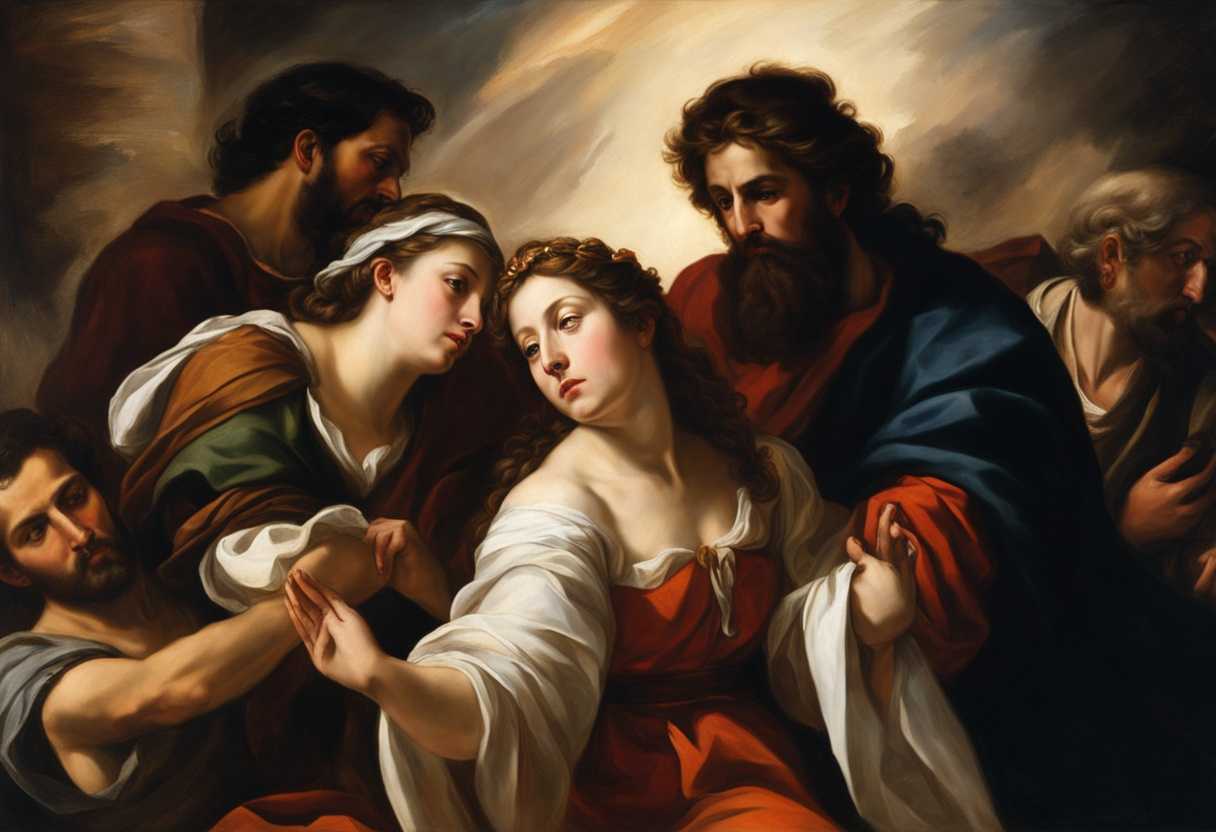
Setting the Scene for Numbers 12:1-13
The scene in Numbers chapter 12 takes place in the wilderness, where the Israelites are encamped during their journey from Egypt to the Promised Land. In this particular passage, we find Moses, Aaron, and Miriam gathered together. Miriam and Aaron begin to criticize Moses for marrying a Cushite woman, which they disapprove of. As they speak against Moses, God intervenes, calling them out for their jealousy and speaking directly to them.
The siblings find themselves in a tense and confrontational situation, with Miriam and Aaron questioning Moses’ authority and decisions. The setting is likely a tent or a communal gathering space within the camp, with the dust of the desert floor surrounding them. The atmosphere is charged with emotion as God’s presence descends upon them, and they are forced to confront their actions and attitudes towards their brother Moses. This scene serves as a reminder of the challenges and conflicts that can arise even among those chosen by God, highlighting the importance of humility and obedience in leadership.
What is Numbers 12:1-13 about?
Miriam and Aaron challenge Moses’ leadership in this verse, speaking against him and questioning his authority. Miriam is struck with leprosy as a consequence of their actions. This story illustrates the importance of respecting leaders and upholding unity within a community. It also serves as a reminder of the consequences of speaking negatively about others and causing division.
Have you ever felt the urge to question someone’s authority or criticize their decisions? This verse teaches us the importance of maintaining respect and unity, even when we may disagree with those in positions of leadership. It prompts us to reflect on our own actions and words, reminding us to be mindful of how we interact with others and the impact it can have on relationships and the overall harmony of a group.
When faced with disagreements or differing opinions, it is essential to address them respectfully and constructively, rather than resorting to negativity or undermining others. This story serves as a cautionary tale, urging us to prioritize unity and understanding in our interactions with those around us.
Understanding what Numbers 12:1-13 really means
In Numbers 12:1-13, we witness a poignant account of sibling rivalry and divine intervention within the family of Moses. Miriam and Aaron, Moses’ own sister and brother, express discontent over his marriage to a Cushite woman. This discontentment leads to them questioning Moses’ unique position as the chosen leader through whom God speaks. The Lord, ever attentive to the matters of the heart, confronts Miriam and Aaron’s jealousy and pride, affirming Moses’ special relationship with Him. Miriam’s rebellion results in her being struck with leprosy, a stark consequence of her actions. However, Moses, embodying compassion and humility, intercedes on her behalf, pleading with God for her healing.
The key phrases in this passage offer profound insights into the dynamics at play. The questioning of Moses’ authority by Miriam and Aaron reveals the destructive nature of jealousy and pride, highlighting the importance of humility in leadership. Moses, described as exceedingly meek, exemplifies the qualities that God values in His chosen servants. The distinction made between how God communicates with prophets and His direct, intimate relationship with Moses underscores the uniqueness of their bond.
Drawing parallels to other biblical passages enriches our understanding of the themes presented. Exodus 33:11 reinforces the exceptional closeness between God and Moses, emphasizing the depth of their communication. James 4:6 echoes the significance of humility, a trait that Moses embodies and that contrasts with the pride displayed by Miriam and Aaron. Matthew 5:44 resonates with Moses’ plea for Miriam’s healing, illustrating the transformative power of love and prayer even towards those who oppose us.
The relevance of this narrative to contemporary audiences is striking. It serves as a timeless lesson on humility in leadership, urging individuals to emulate Moses’ meekness amidst a culture that often exalts pride. Moreover, Moses’ response to criticism through intercession rather than retaliation offers a profound example of grace in the face of adversity. The passage also underscores the delicate balance between God’s justice, as seen in Miriam’s punishment, and His mercy, demonstrated through her eventual healing.
To illustrate the practical implications of these teachings, envision a workplace scenario where humility and grace triumph over criticism and discord. Just as Moses’ compassionate intercession led to reconciliation within his family, embracing humility and responding with kindness can foster unity and productivity in any setting.
In conclusion, Numbers 12:1-13 imparts valuable lessons on humility, grace, and the interplay of justice and mercy. It challenges us to reflect on our own responses to criticism, our attitudes towards authority, and our capacity for compassion towards those who wrong us. May we strive to embody the spirit of Moses, seeking humility in our interactions, extending grace to our detractors, and trusting in the perfect balance of God’s justice and mercy in our lives.
How do we respond when others question our authority?
When others question our authority, we should respond with humility and grace, understanding that our authority ultimately comes from God. Moses remained calm and did not retaliate against those who questioned his authority in the story of Numbers 12:1-13. Instead, he trusted in God to defend him and vindicate him. When faced with opposition or doubt in our authority, we can follow Moses’ example by staying true to our beliefs, focusing on our relationship with God, and letting Him be our ultimate source of strength and validation.
It’s important to remember that our authority is not based on our own merits or achievements, but rather on the purpose and calling that God has placed on our lives. We can confidently navigate any challenges to our authority with grace and wisdom by staying rooted in God’s truth and walking in obedience to Him. God ultimately validates our authority and equips us to fulfill His plans for us, and we can trust in His sovereignty even in the face of doubt or opposition.
Application
Reflect on staying true to your purpose, humble in your interactions, just like Moses in times of strife. Let’s mirror his strength in faith, unwavering despite the storms. Trust in the Almighty to shield you from unjust critics, just as He did for Moses. Are you prepared to embody humility and entrust your path to the divine guidance?

Reverend Michael Johnson is an experienced Church Minister with a profound expertise in spirituality and guidance. With a serene presence and a compassionate heart, he has faithfully served his congregation for over 20 years, leading them on a spiritual journey towards inner peace and enlightenment. Reverend Johnson’s extensive knowledge of religious philosophies and profound understanding of human nature have made him a trusted confidant and mentor to many, as he seamlessly weaves his profound wisdom into life teachings. Reverend Johnson’s calming demeanor and empathetic nature continue to uplift and heal souls, nurturing a sense of unity and tranquility within his community.