
Numbers 12:1-16 is about the consequences of Miriam and Aaron’s jealousy towards Moses, demonstrating the importance of humility and the dangers of speaking against those chosen by God.
1 Miriam and Aaron spoke against Moses because of the Cushite woman whom he had married, for he had married a Cushite woman.
2 And they said, “Has the Lord indeed spoken only through Moses? Has he not spoken through us also?” And the Lord heard it.
3 Now the man Moses was very meek, more than all people who were on the face of the earth.
4 And suddenly the Lord said to Moses and to Aaron and Miriam, “Come out, you three, to the tent of meeting.” And the three of them came out.
5 And the Lord came down in a pillar of cloud and stood at the entrance of the tent and called Aaron and Miriam, and they both came forward.
6 And he said, “Hear my words: If there is a prophet among you, I the Lord make myself known to him in a vision; I speak with him in a dream.
7 Not so with my servant Moses. He is faithful in all my house.
8 With him I speak mouth to mouth, clearly, and not in riddles, and he beholds the form of the Lord. Why then were you not afraid to speak against my servant Moses?
9 And the anger of the Lord was kindled against them, and he departed.
10 When the cloud removed from over the tent, behold, Miriam was leprous, like snow. And Aaron turned toward Miriam, and behold, she was leprous.
11 And Aaron said to Moses, “Oh, my lord, do not punish us because we have done foolishly and have sinned.
12 Let her not be like one dead, whose flesh is half eaten away when he comes out of his mother’s womb.”
13 And Moses cried to the Lord, “O God, please heal her—please.”
14 And the Lord said to Moses, “If her father had but spit in her face, should she not be shamed seven days? Let her be shut outside the camp seven days, and after that she may be brought in again.”
15 So Miriam was shut outside the camp seven days, and the people did not set out on the march till Miriam was brought in again.
16 After that the people set out from Hazeroth and camped in the wilderness of Paran.
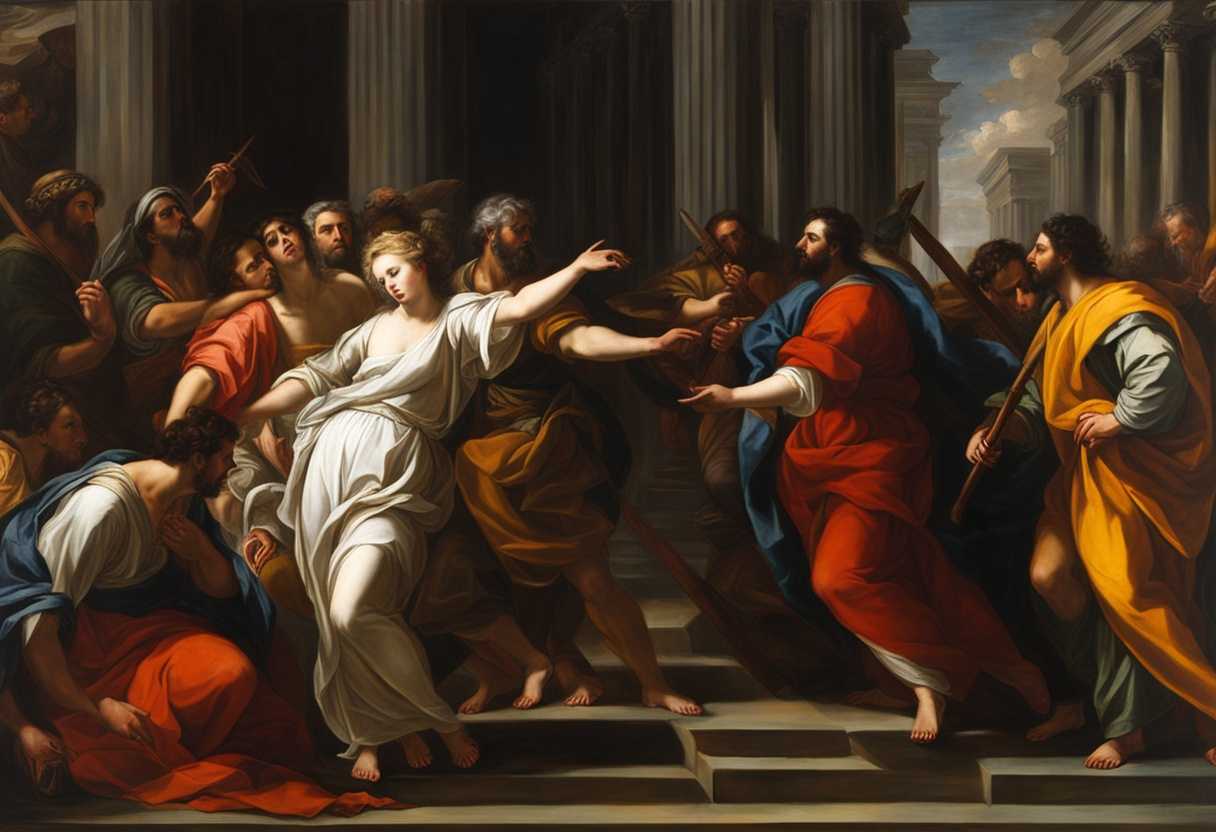
Setting the Scene for Numbers 12:1-16
In Numbers chapter 12, we find Moses, Aaron, and Miriam in the wilderness of Paran. The scene unfolds with Miriam and Aaron speaking against Moses because of his Cushite wife. They question Moses’ authority and claim that God speaks through them as well. The setting is a stark desert landscape, with the Israelites camped around the Tabernacle, the dwelling place of God among them.
Moses, chosen by God to lead the Israelites out of Egypt, finds himself facing opposition from his own siblings. The tension escalates as God intervenes, calling all three siblings to the Tabernacle. There, God rebukes Miriam and Aaron for their rebellion against Moses, affirming Moses’ unique relationship with Him. Miriam is struck with leprosy as a consequence of her actions, highlighting the seriousness of challenging God’s chosen leader.
The scene serves as a powerful reminder of the importance of humility and obedience in God’s eyes. It showcases the consequences of jealousy and rebellion within the community of believers. Ultimately, it reinforces the authority and special relationship that Moses had with God, setting him apart as the leader chosen to guide the Israelites through their journey in the wilderness.
What is Numbers 12:1-16 about?
Moses’ remarkable humility and God’s swift defense against Miriam and Aaron’s jealousy are witnessed in this powerful verse. Moses, known for his meekness and closeness to God, did not retaliate when his siblings criticized him. Instead, he chose to rely on God’s judgment and let Him handle the situation. This act of humility demonstrates Moses’ deep trust in God and his understanding that it is God who ultimately decides what is right and just.
On the other hand, Miriam and Aaron’s jealousy and arrogance are evident as they question Moses’ authority. Their desire for power and prestige led them to challenge Moses, a move that clearly did not sit well with God. He intervened swiftly, rebuking Miriam and Aaron for their actions and affirming Moses’ unique relationship with Him. This serves as a reminder that God recognizes and rewards humility while addressing and correcting jealousy and arrogance.
So, as we reflect on this verse, we are invited to ponder on the virtues of humility, trust in God’s judgment, and the dangers of jealousy and arrogance. It challenges us to assess our own attitudes and actions towards others, reminding us that true greatness lies in our ability to humbly submit to God’s will and trust in His wisdom, rather than seeking power and recognition at the expense of others.
Understanding what Numbers 12:1-16 really means
The Book of Numbers, situated in the Pentateuch, plays a crucial role in recounting the journey of the Israelites from Egypt to the Promised Land. In Numbers 12:1-16, we witness a significant event involving Moses, Aaron, and Miriam, highlighting themes of jealousy, pride, humility, and God’s sovereignty.
Miriam and Aaron’s murmuring against Moses unveils a deeper issue of jealousy and pride. Their questioning of Moses’ unique calling and leadership echoes similar sentiments in Exodus 2:1-10, where Moses is chosen by God for a specific purpose. This challenges us to reflect on how jealousy and pride can distort our perception of God’s appointed leaders.
The phrase “Has the Lord spoken only through Moses?” raises questions about authority and obedience. By questioning Moses’ leadership, Miriam and Aaron not only challenge a human leader but also question God’s divine choice. This parallels with 1 Samuel 8:7, where rejecting God’s chosen leader is seen as a rejection of God Himself, underscoring the gravity of such actions.
“The Lord heard this” serves as a reminder of God’s omniscience and justice. Just as in Psalm 139:4, where God’s knowledge encompasses our words before they are spoken, Numbers 12 reveals that nothing escapes God’s attention. This prompts us to consider our own words and actions in light of God’s constant presence.
Moses’ humility stands out amidst the conflict, emphasizing the importance of humility in leadership and before God. This humility, as seen in Numbers 12 and echoed in Matthew 5:5, showcases a character trait highly valued by God and essential for effective leadership.
God’s response to the situation is swift and decisive, as He manifests His presence in a pillar of cloud. His rebuke, “Why then were you not afraid to speak against my servant Moses?” underscores the seriousness of speaking against God’s chosen leaders. This aligns with Romans 13:1-2, emphasizing the need to respect and submit to God-ordained authorities.
Miriam’s punishment of leprosy serves as a tangible consequence of sin and rebellion. Drawing from Leviticus 13-14, where leprosy symbolizes impurity and separation, we see the severity of speaking against God’s appointed leaders and the need for repentance.
In applying the lessons from Numbers 12:1-16 today, we are reminded of the importance of respecting and supporting our spiritual and community leaders. Cultivating humility and a quickness to repent are also highlighted as essential traits for personal growth and reconciliation. God’s justice and mercy, exemplified in Miriam’s punishment and subsequent healing, showcase His perfect balance of righteousness and compassion, calling us to walk humbly with Him.
In conclusion, Numbers 12:1-16 serves as a poignant reminder of the dangers of jealousy, pride, and disrespect towards God’s chosen leaders. It underscores the value of humility, respect, and repentance in our interactions with authority figures and in our relationship with God. Let us reflect on these lessons, seeking God’s guidance in fostering a spirit of humility, respect, and obedience in our lives.
How do we respond when we feel superior to others?
When we feel superior to others, it is important to remember that God does not show favoritism. Miriam and Aaron acted in pride and criticized Moses because they thought they were just as important as him in this passage. However, God made it clear that He had chosen Moses to be the leader and that he was unique in God’s eyes. This story reminds us that God values humility and obedience rather than self-righteousness and arrogance.
Instead of harboring feelings of superiority over others, we should focus on understanding and valuing everyone as equals in God’s eyes. We should seek to emulate Moses’ example by remaining humble in the face of criticism. When we recognize that our strengths and abilities come from God, we can approach others with humility and respect, rather than looking down on them. Our worth does not come from comparing ourselves to others, but from God’s love and grace.
Application
Dear friend, just as we value harmony at work and harmony at home, let’s also respect and honor those in positions of authority. Take a moment to ponder how criticism towards leaders can sow discord and hinder progress. Let’s instead choose humility and support, fostering unity and growth in our communities. Will you join me in lifting up our leaders in prayer and encouragement today?

Reverend Michael Johnson is an experienced Church Minister with a profound expertise in spirituality and guidance. With a serene presence and a compassionate heart, he has faithfully served his congregation for over 20 years, leading them on a spiritual journey towards inner peace and enlightenment. Reverend Johnson’s extensive knowledge of religious philosophies and profound understanding of human nature have made him a trusted confidant and mentor to many, as he seamlessly weaves his profound wisdom into life teachings. Reverend Johnson’s calming demeanor and empathetic nature continue to uplift and heal souls, nurturing a sense of unity and tranquility within his community.