
Numbers 14:1-4 is about the Israelites rebelling against Moses and wanting to choose a new leader to return to Egypt rather than trusting in God’s promise to bring them to the promised land.
1 Then all the congregation raised a loud cry, and the people wept that night.
2 And all the people of Israel grumbled against Moses and Aaron. The whole congregation said to them, “Would that we had died in the land of Egypt! Or would that we had died in this wilderness!
3 Why is the Lord bringing us into this land, to fall by the sword? Our wives and our little ones will become a prey. Would it not be better for us to go back to Egypt?”
4 And they said to one another, “Let us choose a leader and go back to Egypt.”
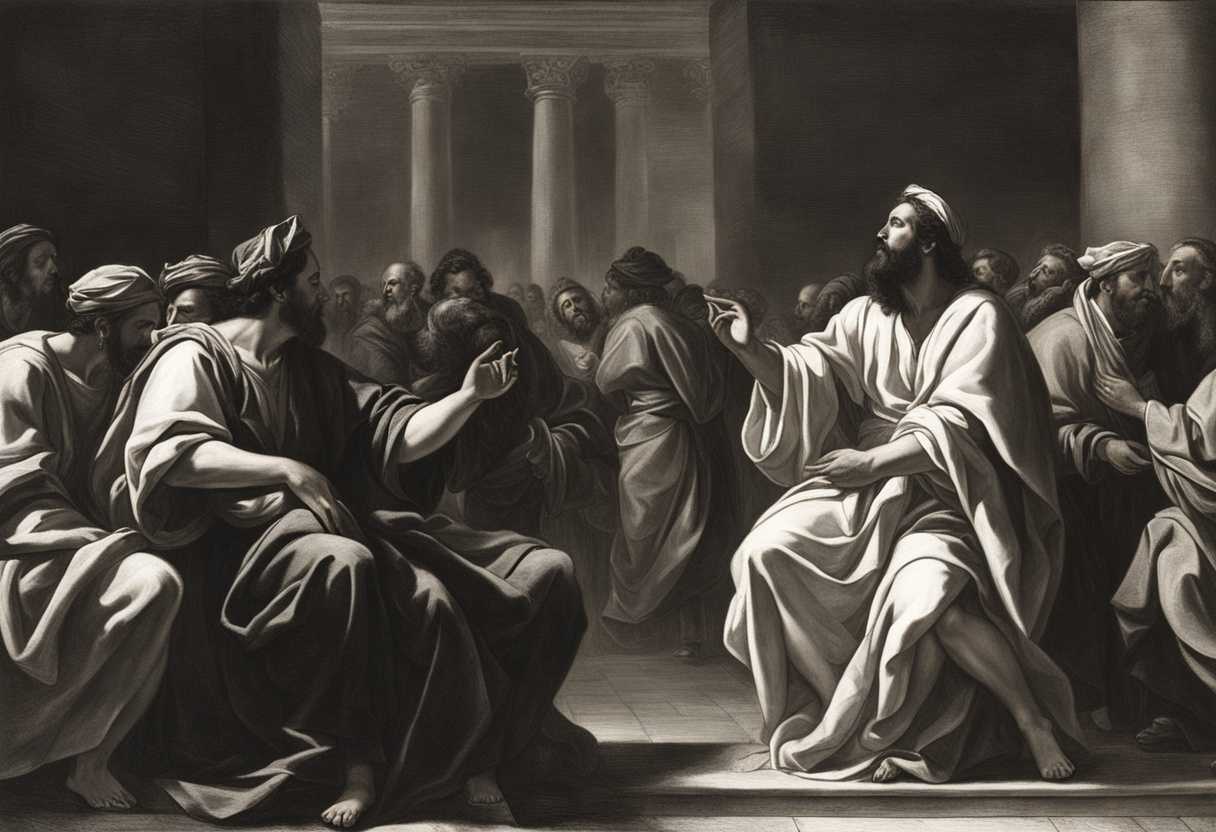
Setting the Scene for Numbers 14:1-4
The scene in Numbers 14:1-4 takes place in the wilderness of Paran, where the Israelites had been wandering after their exodus from Egypt. The Israelites had just received a report from twelve spies who had scouted out the land of Canaan, the promised land that God had told them about. However, instead of focusing on God’s promise and faithfulness, the majority of the spies brought back a negative report, causing fear and doubt to spread among the people.
In this scene, we see the Israelites gathered together, murmuring and complaining against Moses and Aaron. The atmosphere is tense and filled with anxiety as the people express their fear of entering the land of Canaan. Their lack of faith in God’s promises leads to rebellion and a desire to return to Egypt, where they had been enslaved. Despite the efforts of Joshua and Caleb to encourage the people to trust in God, the majority of the Israelites are swayed by fear and choose to reject God’s plan for them.
The surroundings are likely dusty and barren, typical of a wilderness setting. The people are weary from their journey and the challenges they have faced along the way. Moses and Aaron stand before the congregation, trying to calm the growing unrest and remind the people of God’s faithfulness. However, the seeds of doubt have been sown, and the Israelites find themselves on the brink of a pivotal moment in their journey towards the promised land.
What is Numbers 14:1-4 about?
The Israelites’ reaction to the negative report brought back by the spies who surveyed the land of Canaan is witnessed in this verse. Instead of trusting in God’s promise to deliver them into the land, the Israelites respond with fear and complaints. They choose to focus on the obstacles and challenges ahead of them rather than on God’s faithfulness and power.
This verse serves as a powerful reminder of the dangers of doubt and unbelief. When we allow fear and negativity to cloud our faith, we can easily lose sight of God’s provision and promises for us. The Israelites’ reaction shows us the consequences of lacking trust in God and the importance of maintaining faith even in the face of challenges. It prompts us to reflect on our own attitudes and responses during difficult times and to consider how we can strengthen our faith and reliance on God.
Understanding what Numbers 14:1-4 really means
The Israelites, on the cusp of entering the Promised Land, found themselves engulfed in fear and doubt upon hearing the spies’ report. Their collective despair and rebellion against God’s plan are vividly captured in Numbers 14:1-4. “The whole community began weeping aloud, and they cried all night,” painting a poignant picture of their despair and lack of faith, showcasing how fear can grip an entire community. The lament, “If only we had died in Egypt, or even here in the wilderness!” reveals a longing for the past, no matter how arduous, over an uncertain and daunting future.
“Why is the Lord taking us to this country only to have us die in battle?” This question exposes their crisis of faith, doubting God’s promise and protection. The stark declaration, “We should choose a leader and go back to Egypt!” signifies a complete rejection of God’s leadership, opting for bondage over the unknown. This passage echoes a recurring theme in the Bible where doubt and fear lead to rebellion against God’s plan, as seen in Exodus 16:3 and Hebrews 3:12-19.
In today’s world, people often grapple with uncertainty and fear akin to the Israelites. This narrative reminds us of the paramount importance of trusting in God’s plan, even when it appears daunting. The Israelites’ collective despair underscores the influence of community attitudes on individual faith, urging us to be mindful of the voices we heed and the impact we wield on others. Moreover, the desire to choose a new leader and return to Egypt highlights humanity’s inclination to seek control and revert to familiar yet detrimental circumstances, challenging us to place our trust in divine leadership.
Consider a team facing setbacks in a challenging project, contemplating abandoning it for familiar but less fulfilling roles. Some advocate perseverance, reminding the team of their initial vision and potential rewards. This scenario mirrors the Israelites’ plight, emphasizing the significance of faith and persistence amidst adversity. Numbers 14:1-4 serves as a poignant reminder of the repercussions of doubt and the essence of faith. It beckons us to rely on God’s promises and uphold one another during times of trepidation and uncertainty.
How can we respond with faith in hardships?
When facing hardships, we can respond with faith by remembering the promises and faithfulness of God. Instead of focusing on the obstacles or difficulties in front of us, we can choose to fix our eyes on God’s strength and provision. We can find hope and courage to persevere through the challenges by trusting in His sovereignty and believing in His abilities.
Additionally, we can respond with faith in hardships by seeking guidance and direction through prayer and seeking His will. We can pour out our hearts, express our fears and concerns, and seek His wisdom and guidance in navigating the difficult circumstances by coming to God in prayer. Through prayer, we can also find peace and comfort in His presence, knowing that He is with us every step of the way.
Lastly, responding with faith in hardships means staying rooted in the Word of God and clinging to His promises. We can find strength, encouragement, and hope to help us endure through the trials by immersing ourselves in Scripture. The Word of God serves as a source of comfort and guidance, reminding us of God’s love, faithfulness, and His promises to never leave us nor forsake us.
Application
In the intricate web of life, faith and obedience are the threads that bind us to our purpose. When life’s storms rage, will you anchor yourself in trust and follow the divine compass unwaveringly? Like a skilled conductor orchestrating a symphony, will you heed the call of faith and march forward with unwavering resolve? Know that amidst the chaos, your unwavering trust will guide you to calmer shores. Will you dare to take that leap of faith, knowing that with God, all paths lead to redemption?

Reverend Michael Johnson is an experienced Church Minister with a profound expertise in spirituality and guidance. With a serene presence and a compassionate heart, he has faithfully served his congregation for over 20 years, leading them on a spiritual journey towards inner peace and enlightenment. Reverend Johnson’s extensive knowledge of religious philosophies and profound understanding of human nature have made him a trusted confidant and mentor to many, as he seamlessly weaves his profound wisdom into life teachings. Reverend Johnson’s calming demeanor and empathetic nature continue to uplift and heal souls, nurturing a sense of unity and tranquility within his community.