
Numbers 14:22-24 is about God’s declaration of judgment against the Israelites for their lack of faith and rebellion, emphasizing that only those who demonstrate trust and loyalty to Him, like Caleb, will be rewarded with entry into the Promised Land.
22 none of the men who have seen my glory and my signs that I did in Egypt and in the wilderness, and yet have put me to the test these ten times and have not obeyed my voice,
23 shall see the land that I swore to give to their fathers. And none of those who despised me shall see it.
24 But my servant Caleb, because he has a different spirit and has followed me fully, I will bring into the land into which he went, and his descendants shall possess it.
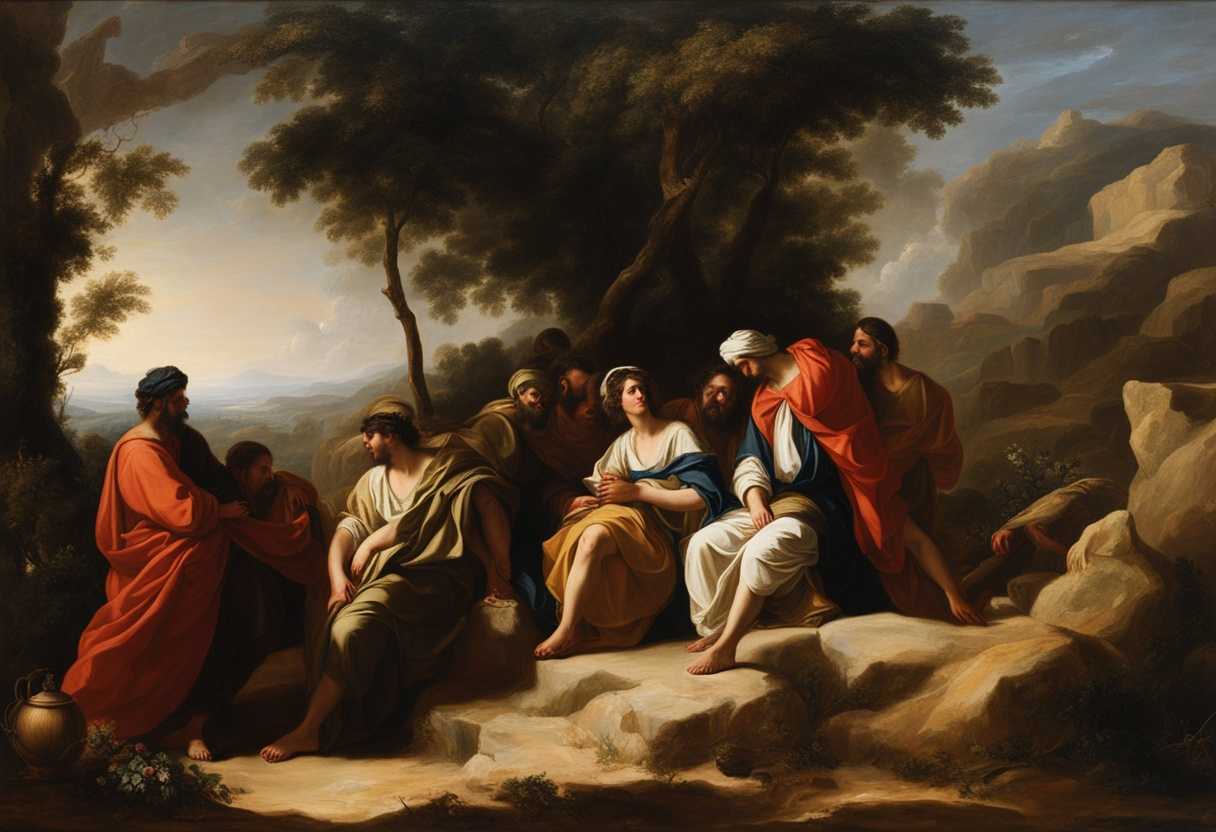
Setting the Scene for Numbers 14:22-24
In the arid wilderness of Sinai, the air is thick with tension and uncertainty. The Israelites, a vast multitude of men, women, and children, have been wandering for nearly forty years, their journey marked by trials and tribulations. They stand at the edge of the Promised Land, a land flowing with milk and honey, yet their hearts are heavy with fear and doubt. The recent report from the twelve spies sent to scout the land has left them in turmoil. Ten of the spies returned with tales of giants and fortified cities, instilling dread among the people. Only Caleb and Joshua, two of the spies, dared to speak of the land’s abundance and the possibility of conquering it with God’s help. The scene is set for a pivotal moment in their history, as the Israelites grapple with their faith and the consequences of their choices.
Moses, the revered leader, stands before the assembly, his face a mixture of concern and determination. He has led these people through the Red Sea, provided them with manna from heaven, and interceded for them time and again. Yet, he knows that their rebellion against God’s promise could lead to dire consequences. The elders and leaders of the tribes are gathered around him, their expressions reflecting the fear that has gripped the hearts of the people. The sound of murmurs and cries fills the air as the crowd debates whether to return to Egypt or to trust in the Lord’s promise. Caleb and Joshua, filled with the Spirit, attempt to quell the unrest, urging the people to remember the faithfulness of God who has brought them this far. The tension is palpable, as the Israelites stand at a crossroads, their future hanging in the balance.
As the sun begins to set, casting a golden hue over the rugged landscape, the mountains loom in the distance, a reminder of the challenges that lie ahead. The camp is surrounded by the stark beauty of the desert, with sparse vegetation and the occasional acacia tree providing shade. The flickering flames of campfires illuminate the faces of the weary travelers, revealing a mix of hope and despair. In this moment, God’s voice echoes through the wilderness, declaring the fate of those who have chosen to rebel against His command. The promise of a new generation, one that would rise to inherit the land, hangs in the air, a bittersweet reminder of the consequences of disbelief. The scene is a powerful testament to the struggle between faith and fear, as the Israelites stand on the brink of a new chapter in their journey, uncertain of what lies ahead but called to trust in the God who has led them thus far.
What is Numbers 14:22-24 about?
This verse holds significant weight in the context of faith, obedience, and the consequences of doubt. When God declared that those who doubted Him would not enter the Promised Land, it served as a stark reminder of the importance of trust in His promises. Caleb, in contrast, emerged as a figure of unwavering faith and courage, demonstrating that it is possible to stand firm amid uncertainty. What does this say about our own lives? How often do we hesitate to trust in something greater because of our doubts and fears?
The Promised Land symbolizes a place of fulfillment and divine blessing, representing the rewards that come from loyalty and faithfulness. God poignantly illustrates the profound implications of our attitudes towards Him by limiting entry to those who believed, except for Caleb. Those who doubted not only missed out on a physical destination but also on a transformative spiritual journey. This raises an important question for us: Are we, like Caleb, willing to take a stand for what we believe in, even when faced with challenges that may provoke our insecurities?
Furthermore, Caleb’s inclusion amidst a sea of doubt serves as a powerful testament to the idea that individual faith can have extraordinary impact. It encourages us to reflect on moments in our own lives when our beliefs may have faced skepticism, whether from within ourselves or from those around us. Are we ready to embody the spirit of Caleb, championing faith and hope in the face of adversity? This prompts us to think about the choices we make today and how they will shape our territory tomorrow. This verse ultimately invites us into a deeper understanding of faith—not just as blind adherence, but as a courageous and active engagement with God’s promises.
Understanding what Numbers 14:22-24 really means
In Numbers 14:22-24, we find ourselves at a pivotal moment in the Israelites’ journey through the wilderness. After witnessing God’s miraculous acts, the people are faced with a choice: to trust in His promises or to succumb to fear and doubt. This passage serves as a powerful reminder of the consequences of our choices, particularly when it comes to faith versus fear. The Israelites’ rebellion against God not only leads to divine judgment but also highlights the mercy that allows a remnant to enter the Promised Land.
The key theme of faith versus fear resonates deeply in this narrative. The Israelites had seen God’s glory and power firsthand, yet they allowed fear to cloud their judgment. This lack of faith resulted in a tragic outcome, as God declared that none of those who doubted would enter His rest. How often do we find ourselves in similar situations? Faced with uncertainty, do we lean into our fears or trust in God’s unwavering promises? The passage challenges us to reflect on our own responses to life’s challenges.
God’s response to the Israelites illustrates both His justice and mercy. While He punishes the disobedient, He also preserves a remnant—those who, like Caleb, possess a different spirit. This duality of judgment and grace is a recurring theme throughout Scripture. It reminds us that while our choices have consequences, God’s mercy is always available to those who choose to trust Him. How can we cultivate a spirit that aligns with God’s will in our own lives?
Related passages, such as Hebrews 3:19 and Psalm 95:10-11, further emphasize the importance of faith. The author of Hebrews reflects on the Israelites’ unbelief, underscoring that it was their lack of faith that barred them from entering God’s rest. Similarly, Psalm 95 warns against the hardened hearts that lead to disobedience. These texts invite us to consider the state of our own hearts. Are we open to God’s leading, or are we allowing fear to harden us against His promises?
In today’s world, where uncertainty and challenges abound, the message of Numbers 14:22-24 remains relevant. Many of us face moments where we must choose between faith and fear. Consider the story of Sarah, a young woman who faced a significant career decision. Her journey mirrors that of the Israelites. After much prayer, she chose to trust in her abilities and God’s guidance, leading her to a fulfilling career. Like Sarah, we too must confront our fears and choose faith over doubt.
The phrases within this passage carry profound meaning. “Not one of those who saw my glory” serves as a stark reminder that witnessing God’s power does not guarantee faithfulness. It challenges us to examine our own responses to God’s presence in our lives. Conversely, “I will bring them into the land” reflects God’s unwavering commitment to His people, offering hope and assurance that He fulfills His promises. Finally, “a different spirit” highlights the importance of cultivating a mindset of trust and obedience, encouraging us to align our hearts with God’s will.
In conclusion, the message of Numbers 14:22-24 is timeless and calls us to examine our lives. Are we allowing fear to dictate our choices? By embracing faith and trusting in God’s promises, we can navigate our wilderness experiences and step into the abundant life He has prepared for us. Let us choose faith over fear, remembering that our decisions today shape our tomorrows. How will you respond to the challenges before you?
Am I trusting God despite my circumstances?
Trusting God despite your circumstances involves recognizing that faith often requires looking beyond immediate situations and challenges. The central theme in the provided passage is about the consequences of disbelief and the experience of God’s promises being fulfilled for those who maintain their faith and obedience. When you actively trust the divine, you embrace the assurance that there is a larger plan at work, which transcends the difficulties you may face.
This faith is not merely about acknowledging God’s existence but involves a deep-seated confidence in His character and intentions. Even amidst trials, trusting in God’s goodness means choosing to see His broader purpose and remaining steadfast in belief, even when circumstances might suggest otherwise. Aligning yourself with this trust allows you to experience God’s grace and providence in ways that may not be immediately evident. Your actions and responses towards challenges ultimately reflect true trust. When you remain hopeful and obedient in the face of adversity, you demonstrate a commitment to faith that mirrors the promise of reward for those who endure. It’s about finding peace and strength through reliance on God, affirming that He will guide and protect you through all trials, much like how the faithful were assured of their inheritance in promising circumstances.
Application
Think of your life like a challenging project at work or supporting your family through tough times. Just like keeping faith in a plan, you need to trust in that higher purpose even when obstacles arise. Every choice you make, every moment you stand firm, shapes not just your path but also influences those around you. Are you ready to channel your inner Caleb and chase after the promises that await you? What legacy will your faith create for those who come after you?

Reverend Michael Johnson is an experienced Church Minister with a profound expertise in spirituality and guidance. With a serene presence and a compassionate heart, he has faithfully served his congregation for over 20 years, leading them on a spiritual journey towards inner peace and enlightenment. Reverend Johnson’s extensive knowledge of religious philosophies and profound understanding of human nature have made him a trusted confidant and mentor to many, as he seamlessly weaves his profound wisdom into life teachings. Reverend Johnson’s calming demeanor and empathetic nature continue to uplift and heal souls, nurturing a sense of unity and tranquility within his community.