
Numbers 14:33-34 is about the consequences of the Israelites’ lack of faith and disobedience in the wilderness, where they were sentenced to wander for forty years, corresponding to the forty days the spies had explored the land.
33 And your children shall be shepherds in the wilderness forty years and shall suffer for your faithlessness, until the last of your dead bodies lies in the wilderness.
34 According to the number of the days in which you spied out the land, forty days, a year for each day, you shall bear your iniquity forty years, and you shall know my displeasure.’
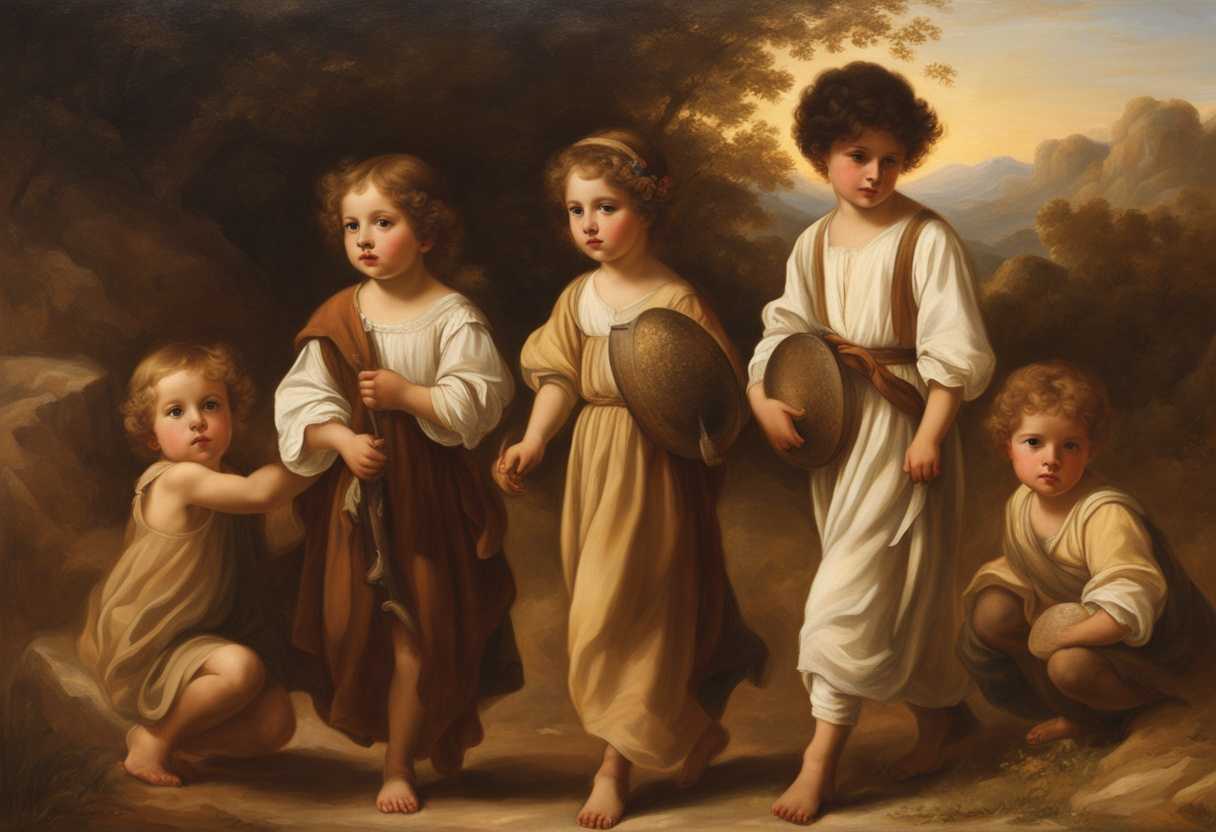
Setting the Scene for Numbers 14:33-34
The scene in Numbers 14:33-34 takes place in the wilderness of Paran, where the Israelites have been wandering for forty years as a consequence of their lack of faith and disobedience towards God. The group includes Moses, Aaron, Joshua, Caleb, and the rest of the Israelites who were part of the original exodus from Egypt. They find themselves in this situation because they had doubted God’s promise to give them the land of Canaan and had even considered returning to Egypt.
The surroundings are described as a vast and desolate wilderness, with the scorching sun beating down on the weary travelers. The Israelites are filled with regret and sorrow for their lack of trust in God, realizing the gravity of their actions. As they continue to wander, they are reminded of the consequences of their disobedience, with the knowledge that none of the adults who left Egypt would enter the promised land except for Joshua and Caleb. The scene is one of solemn reflection and a stark reminder of the importance of faith and obedience in their relationship with God.
What is Numbers 14:33-34 about?
This verse from the Bible speaks of the consequences of disobedience and lack of trust in God among the Israelites. The Israelites were instructed to send spies into the Promised Land to scout it out, but their lack of faith and fear led them to give a negative report, causing the people to rebel against God’s plan. They were condemned to wander in the wilderness for forty years because each day of their disobedience corresponded to a year of punishment.
Think about how powerful this message is – it demonstrates the importance of faith, trust, and obedience in God’s plan. The Israelites could have achieved great things if they had followed God’s instructions with faith and without fear. Reflect on your own life and think about moments where you may have struggled with obedience or trust. How can you learn from the Israelites’ story and strive to have faith and trust in God’s plan for your own life? Let us reflect on this verse and remember the importance of remaining faithful, obedient, and trusting in God’s plan, even when we face challenges or uncertainties. Having faith and trusting God’s guidance, let us use this story as a reminder that obedience to His will ultimately leads to blessings and fulfillment in our lives.
Understanding what Numbers 14:33-34 really means
In Numbers 14:33-34, we witness a pivotal moment in the journey of the Israelites through the desert. After receiving a discouraging report from the spies about the Promised Land, the people respond with fear and rebellion against God. As a consequence of their lack of faith and disobedience, God declares that their children will wander as shepherds in the wilderness for forty years. This period of waiting symbolizes the consequences of the parents’ disbelief, highlighting the direct correlation between their actions and the hardships they will face. The severity of their punishment is emphasized as God states that none of the current generation will enter the Promised Land; their bodies will lie in the wilderness.
This passage resonates with themes of faith, obedience, and consequences that are relevant to us today. Just as the Israelites faced repercussions for their lack of faith, we are also called to trust in God’s plan, even when it seems challenging or unclear. Our actions and faith, or lack thereof, can have lasting impacts on future generations. This narrative serves as a cautionary tale, reminding us of the importance of remaining faithful and obedient to God’s guidance.
In Deuteronomy 1:35-36, we find further reinforcement of the consequences faced by the Israelites. Only Caleb and Joshua, who demonstrated faith in God, are exempt from the judgment pronounced on the rest of the generation. Hebrews 3:16-19 reflects on the Israelites’ disobedience and unbelief, serving as a warning for Christians to remain steadfast in their faith. Psalm 95:10-11 expresses God’s frustration with the Israelites’ continual testing and disobedience, leading to their exclusion from His rest.
Consider a family business passed down through generations, where one generation strays from the foundational principles that once made it successful. The consequences are felt, and it takes years of dedication and adherence to those original principles by the next generation to restore the business to its former glory. This analogy mirrors the Israelites’ situation; their lack of faith led to a period of hardship, but subsequent generations had the opportunity to learn and grow from these experiences.
In conclusion, Numbers 14:33-34 serves as a poignant reminder of the significance of faith and obedience in our relationship with God. It prompts us to reflect on the long-term implications of our actions and to place our trust in God’s plan, even when we may not fully comprehend it. Let us heed the lessons from the Israelites’ journey and strive to walk in faith, knowing that while God is patient, there are consequences for persistent disobedience.
How can we show gratitude for God’s faithfulness?
One way to show gratitude for God’s faithfulness as highlighted in Numbers 14:33-34 is through obedience and trust. We demonstrate our appreciation for His steadfastness by following God’s commands and having faith in His promises even in the face of challenges. This can be done by aligning our actions with His will and relying on His guidance in all aspects of our lives.
Another way to show gratitude is through praise and thanksgiving. Expressing gratitude through worship, prayer, and thanksgiving acknowledges God’s faithfulness and sovereignty in our lives. It is important to recognize and appreciate the ways in which God has remained faithful despite our shortcomings and failures, and to give Him the honor and glory He deserves.
Additionally, reflecting on past situations where God has been faithful can also help us show gratitude. Remembering and recounting instances of God’s provision, protection, and guidance can serve as a reminder of His faithfulness and encourage us to trust Him more in the present and future. By acknowledging and being thankful for God’s faithfulness in our lives, we not only show gratitude but also strengthen our relationship with Him.
Application
Will you let your faith be your compass, guiding you through the twists and turns of life’s journey? Take a moment to reflect on your actions and beliefs, are they in harmony with your deepest values? Remember, just like in work or family life, staying true to your faith requires dedication and trust. Let us be like sturdy ships braving the stormy seas, anchored by our unwavering faith in God’s promises. Will you choose to navigate through life’s challenges with faith as your guiding light?

Reverend Michael Johnson is an experienced Church Minister with a profound expertise in spirituality and guidance. With a serene presence and a compassionate heart, he has faithfully served his congregation for over 20 years, leading them on a spiritual journey towards inner peace and enlightenment. Reverend Johnson’s extensive knowledge of religious philosophies and profound understanding of human nature have made him a trusted confidant and mentor to many, as he seamlessly weaves his profound wisdom into life teachings. Reverend Johnson’s calming demeanor and empathetic nature continue to uplift and heal souls, nurturing a sense of unity and tranquility within his community.