
Numbers 16:8-11 is about the rebellion of Korah, Dathan, and Abiram against Moses and Aaron’s leadership, highlighting the consequences of challenging God’s chosen leaders and the importance of humility and respect for divine authority.
8 And Moses said to Korah, “Hear now, you sons of Levi:
9 is it too small a thing for you that the God of Israel has separated you from the congregation of Israel, to bring you near to himself, to do service in the tabernacle of the Lord and to stand before the congregation to minister to them,
10 and that he has brought you near him, and all your brothers the sons of Levi with you? And would you seek the priesthood also?
11 Therefore it is against the Lord that you and all your company have gathered together. What is Aaron that you grumble against him?”
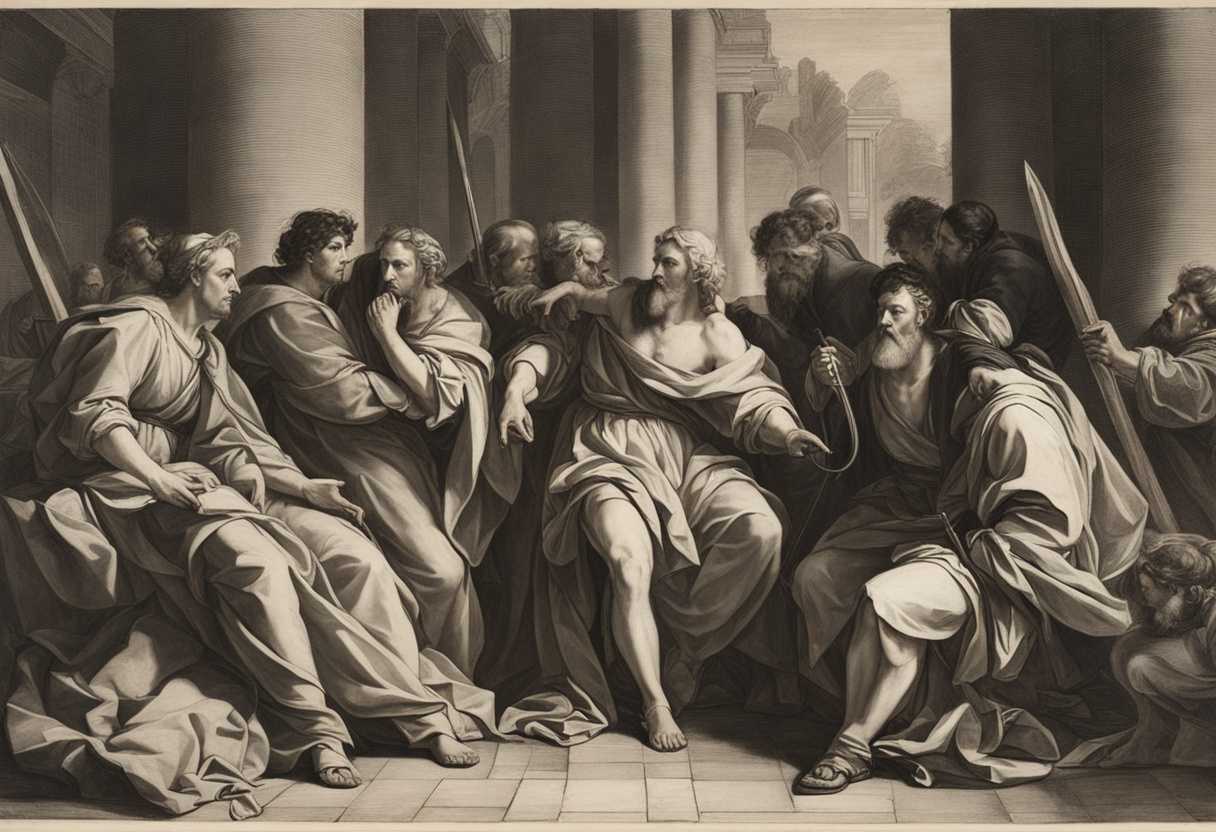
Setting the Scene for Numbers 16:8-11
In the book of Numbers, we find a dramatic scene unfolding in the wilderness. Korah, a Levite, along with Dathan, Abiram, and On, who were from the tribe of Reuben, have gathered against Moses and Aaron. They accuse Moses and Aaron of exalting themselves above the rest of the congregation, claiming that all the people are holy, and the Lord is among them. This rebellion has caused a stir among the Israelites, with many questioning the leadership of Moses and Aaron.
The setting is a vast desert landscape, with the Israelite camp spread out in the distance. The sun beats down on the group gathered, highlighting the tension in the air. Moses, the humble leader chosen by God, stands firm in his faith, while Korah and his followers challenge his authority. The scene is charged with emotion as the fate of these men hangs in the balance. As the confrontation escalates, the ground beneath them begins to shake, signaling the divine intervention about to take place. The stage is set for a powerful display of God’s judgment and the reaffirmation of Moses and Aaron’s leadership.
What is Numbers 16:8-11 about?
Ah, the story of Korah’s rebellion, a tale of pride, challenge, and the consequences of questioning authority. Korah, along with a group of fellow rebels, dared to challenge the leadership of Moses and Aaron, claiming they were just as qualified to lead the community. However, their arrogance and lack of respect for the established leadership led to a swift and severe punishment from a higher power. The ground opened up and swallowed Korah and his followers, a stark reminder of the dangers of disobedience and hubris.
This verse serves as a powerful lesson about the importance of humility, respect for authority, and the consequences of rebellion. It prompts us to reflect on our own attitudes towards leadership and authority figures in our lives. Are we respectful and obedient, or do we harbor feelings of dissent and rebellion? The story of Korah reminds us of the need to trust in the appointed leaders and to avoid the temptation of challenging their authority. It urges us to be humble and mindful of the potential repercussions of questioning those in positions of power.
Understanding what Numbers 16:8-11 really means
The Book of Numbers, a part of the Pentateuch attributed to Moses, recounts the rebellion of Korah, Dathan, and Abiram against the leadership of Moses and Aaron. In Numbers 16:8-11, Moses confronts Korah and his followers, questioning their motives and reminding them of their unique roles as Levites. The phrase “Is it too small a thing for you” challenges their ingratitude for their significant responsibilities. “The God of Israel has separated you” emphasizes the sanctification of the Levites for holy duties. “To bring you near to himself” highlights the privilege of closeness to God that they are taking for granted. Moses reminds them that their entire tribe, not just individuals, has a special role, asking if they seek the priesthood out of ambition.
In Exodus 28:1, God appoints Aaron and his sons to the priesthood, establishing the roles of the Levites. Leviticus 10:1-2 recounts Nadab and Abihu’s fate for offering unauthorized fire, illustrating the seriousness of respecting God’s appointed roles. 1 Samuel 15:22 emphasizes obedience over personal ambition, stating “To obey is better than sacrifice.” This passage resonates today, urging contentment, gratitude, and respect for divine order in a world driven by ambition.
Consider a workplace scenario where an employee covets their superior’s role despite holding a significant position. Consumed by ambition, they neglect their current responsibilities, leading to discord. This mirrors Korah’s rebellion, cautioning against discontent and highlighting the value of one’s current role. Numbers 16:8-11 serves as a poignant reminder of gratitude, humility, and respect for God’s order. It prompts reflection on appreciating our roles, serving faithfully where called, and avoiding the pitfalls of discontent and ambition.
What does it mean to truly seek God’s holiness?
To truly seek God’s holiness means to recognize His supreme authority and righteousness, acknowledging that He is the source of true purity and perfection. It involves aligning oneself with His will and obeying His commandments wholeheartedly, striving to live a life that reflects His character and values. Seeking God’s holiness also entails humbling oneself before Him, surrendering one’s own desires and ego to His guidance, and constantly seeking to grow in spiritual maturity and understanding. Understanding that God has chosen certain individuals to carry out specific roles or tasks within His divine plan involves seeking God’s holiness in the context of Numbers 16:8-11. It requires trusting in God’s wisdom and sovereignty, even when His choices may not align with human expectations or desires. Seeking God’s holiness means accepting His authority and submitting to His will with faith and obedience, recognizing that He alone knows what is best for each person and situation.
Application
In the journey of life, humility and obedience are the compass guiding us through the maze of challenges. Let’s pause and ponder the repercussions of defiance in our own narrative. It’s time to surrender to the divine blueprint and embrace it fervently. Let’s steer clear of the temptations of ego and selfish cravings, and stay true to the path illuminated by the Almighty. Will you pledge to heed His words and tread humbly in faith?

Reverend Michael Johnson is an experienced Church Minister with a profound expertise in spirituality and guidance. With a serene presence and a compassionate heart, he has faithfully served his congregation for over 20 years, leading them on a spiritual journey towards inner peace and enlightenment. Reverend Johnson’s extensive knowledge of religious philosophies and profound understanding of human nature have made him a trusted confidant and mentor to many, as he seamlessly weaves his profound wisdom into life teachings. Reverend Johnson’s calming demeanor and empathetic nature continue to uplift and heal souls, nurturing a sense of unity and tranquility within his community.