
Numbers 19:20 is about the purification ritual involving the ashes of a red heifer, symbolizing the cleansing from sin and the need for spiritual purity in approaching God.
20 But the man who is unclean and does not cleanse himself, that person shall be cut off from the midst of the assembly, because he has defiled the sanctuary of the Lord. The water for impurity has not been thrown on him; he is unclean.
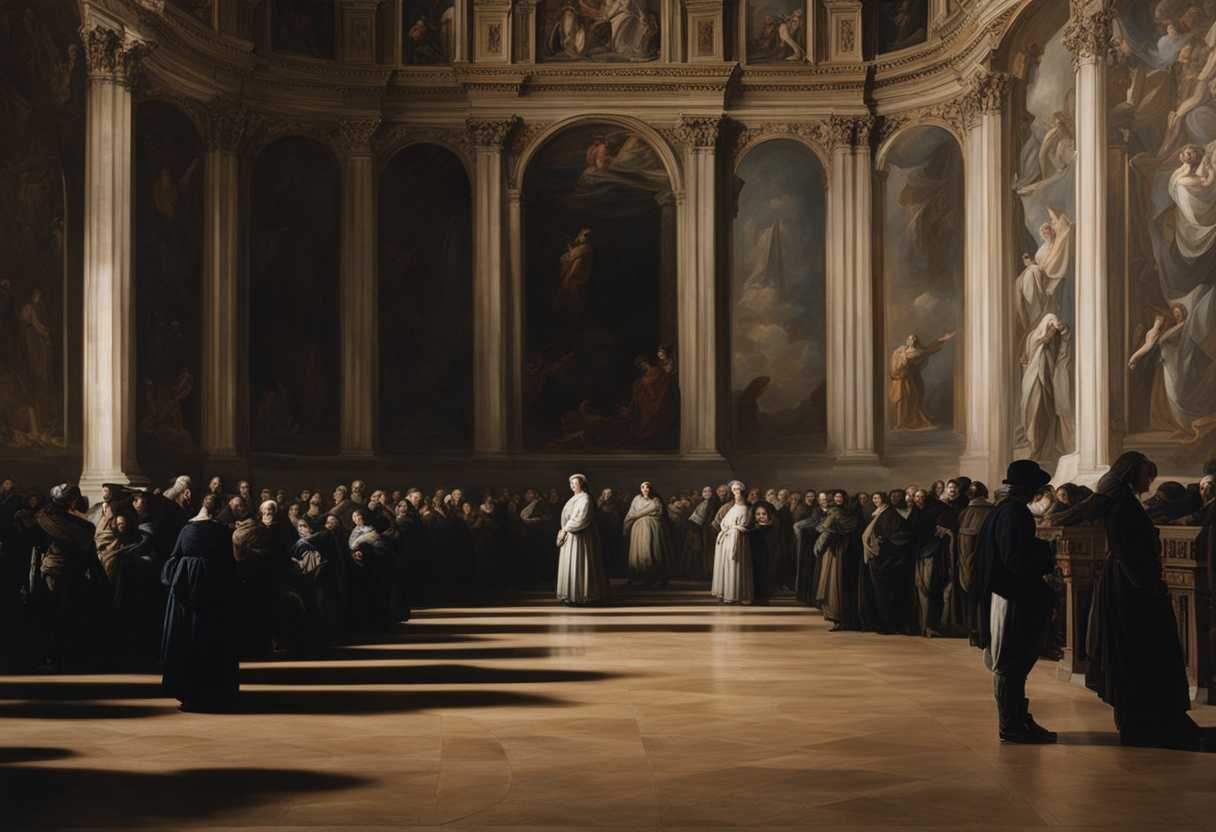
Setting the Scene for Numbers 19:20
In Numbers chapter 19, we find the Israelites in the wilderness, journeying towards the Promised Land under the leadership of Moses. The scene described in Numbers 19:20 takes place at the entrance of the Tabernacle, the sacred tent where God’s presence dwelt among the people.
Moses, the revered prophet and leader of the Israelites, is standing at the entrance of the Tabernacle along with Aaron, the high priest, and Eleazar, Aaron’s son. They are overseeing the purification rituals outlined in this chapter, which involve the sacrifice of a red heifer to create the water of cleansing. This water was used to purify those who had come into contact with death, ensuring they remained ceremonially clean before God.
The surroundings are filled with the sights and sounds of the Tabernacle – the golden altar, the bronze laver, and the cloud of God’s presence hovering above the tent. The people are gathered around, watching as the rituals are carried out with reverence and awe. This scene serves as a powerful reminder of the importance of purity and holiness in approaching the Almighty God.
What is Numbers 19:20 about?
The verse sees the act of touching a dead body as a source of ritual impurity that requires a specific purification process. When someone comes into contact with death, whether by accident or necessity, they are considered ritually impure in many cultures and religions. This impurity is not a moral judgment, but rather a recognition of the transformative nature of death and the need to cleanse oneself before re-entering sacred spaces or activities.
Have you ever thought about the symbolic weight of death and its impact on our spiritual well-being? The purification ritual described in this verse serves as a reminder of our mortality and the need to address the spiritual effects of encountering death. It prompts us to reflect on the cycle of life and death, and the ways in which these experiences shape our inner selves. Individuals engaging in this ritual seek purification from physical impurity and acknowledge the emotional and spiritual weight of death on their being.
So, as you ponder upon this verse, consider the deeper meanings behind purification rituals and the significance of addressing spiritual impurities. How can this practice help us navigate the complexities of life and death, and cultivate a deeper understanding of our own existence? Let this verse serve as a reminder of the interconnectedness between life and death, and the importance of tending to our spiritual well-being in the face of mortality.
Understanding what Numbers 19:20 really means
The Book of Numbers, a part of the Pentateuch attributed to Moses, delves into laws of purification, notably using the ashes of a red heifer for cleansing. In Numbers 19:20, failing to purify oneself after becoming unclean is highlighted. The phrase “But the man that shall be unclean, and shall not purify himself” stresses personal accountability in seeking purification and maintaining spiritual cleanliness. The consequence of being “cut off from among the congregation” signifies both physical and spiritual separation from the community due to impurity.
Moreover, the verse mentions defiling the sanctuary of the Lord, emphasizing the broader impact of individual impurity on the community’s holiness. It underscores the sanctity of the place where God dwells and the need for reverence. Referring to the ritual of sprinkling water of separation, the verse symbolizes following God’s prescribed methods for cleansing and restoration. Leviticus 15:31 reinforces the need for purity to avoid defiling God’s tabernacle, while Psalm 24:3-4 and 1 John 1:9 stress the importance of purity to be in God’s presence and the assurance of purification through confession and grace, respectively.
The relevance of maintaining spiritual cleanliness in contemporary faith practices is evident. It calls for regular self-examination, confession of sins, and seeking spiritual renewal. The timeless concept of personal responsibility for one’s spiritual state encourages ongoing self-reflection and growth. An anecdote of a community garden illustrates how neglecting one’s spiritual health can impact the collective well-being of a faith community, akin to the Israelites’ responsibility in Moses’ time.
In conclusion, Numbers 19:20 serves as a poignant reminder of the significance of spiritual cleanliness and the repercussions of neglecting it. It urges individuals to take personal responsibility for their spiritual state and adhere to God’s purification methods. By doing so, we uphold the sanctity of our faith community and nurture our connection with God.
How can we be cleansed from defilement?
According to the verse, we can be cleansed from defilement by using the ashes of a red heifer, which is a symbol of purification in the Old Testament. The ashes are mixed with water and sprinkled on the unclean person or object in order to cleanse them from defilement. This ritual is seen as a way to remove impurity and restore purity within the community.
Through the process described in the verse, the defiled individual could be cleansed and restored to a state of purity in the eyes of God. This act of purification was essential for maintaining holiness and ensuring the spiritual cleanliness of the people. The Israelites were able to address their impurities and be reconciled with God by following the prescribed ritual.
The use of the ashes of a red heifer highlights the importance of following God’s commands and seeking purification in order to maintain a close relationship with Him. This process served as a tangible reminder of the need for spiritual cleanliness and the consequences of defilement. The verse ultimately emphasizes the importance of seeking purity and holiness in order to be in right standing with God.
Application
Just as we clean up our work desk or declutter our homes to create a harmonious space, let’s cleanse our souls to maintain a close connection with God. It’s time to declutter our minds and hearts, removing any obstacles that hinder our spiritual growth and intimacy with Him. Let’s make a conscious effort to follow His guidance and align our actions with His teachings every day. Are you ready to step into a brighter, purer spiritual journey today?

Reverend Michael Johnson is an experienced Church Minister with a profound expertise in spirituality and guidance. With a serene presence and a compassionate heart, he has faithfully served his congregation for over 20 years, leading them on a spiritual journey towards inner peace and enlightenment. Reverend Johnson’s extensive knowledge of religious philosophies and profound understanding of human nature have made him a trusted confidant and mentor to many, as he seamlessly weaves his profound wisdom into life teachings. Reverend Johnson’s calming demeanor and empathetic nature continue to uplift and heal souls, nurturing a sense of unity and tranquility within his community.