
Numbers 20:11 is about Moses striking the rock twice in anger instead of speaking to it as God commanded, symbolizing the consequence of allowing frustration to guide actions rather than faith and obedience.
11 And Moses lifted up his hand and struck the rock with his staff twice, and water came out abundantly, and the congregation drank, and their livestock.
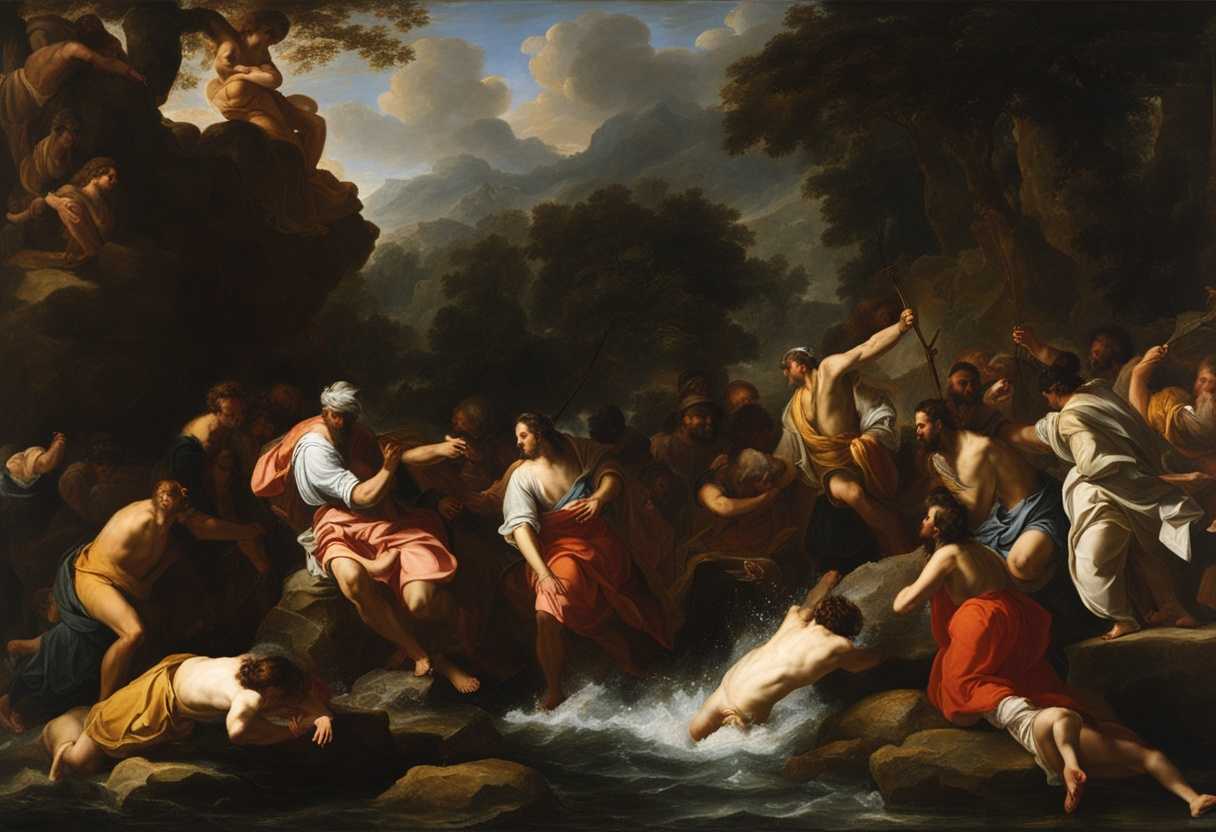
Setting the Scene for Numbers 20:11
In Numbers chapter 20, we find the Israelites wandering in the wilderness after leaving Egypt. The scene described in Numbers 20:11 takes place at the beginning of their fortieth year in the desert. The Israelites, led by Moses and Aaron, are facing a dire situation as they are once again grumbling due to the lack of water.
The group has gathered near the rock at Horeb, where God instructs Moses to speak to the rock so that water may flow from it. However, in a moment of frustration and anger, Moses strikes the rock twice with his staff instead of speaking to it as commanded. Despite his disobedience, water miraculously gushes forth from the rock, quenching the thirst of the entire community.
The surroundings are described as a barren and desolate desert, with the scorching sun beating down on the weary travelers. The Israelites, numbering in the hundreds of thousands, are visibly exhausted and desperate for sustenance. Moses and Aaron stand before the rock, their faces etched with worry and weariness as they try to provide for the needs of the people under their care.
What is Numbers 20:11 about?
We witness a critical moment in the journey of the Israelites led by Moses in this verse. It serves as a cautionary tale about the consequences of disobedience, even by those who are highly favored or in positions of great responsibility. Despite Moses’s long and faithful leadership, this act of striking the rock out of frustration rather than speaking to it as instructed by God shows a lapse in his trust and obedience.
Think about the weight of expectations placed upon Moses as a leader chosen by God, entrusted to guide the Israelites to the Promised Land. Consider the importance of following divine commands precisely, even when they may seem challenging or unnecessary, that this incident imparts. Reflect on how Moses’s exclusion from the Promised Land serves as a sobering reminder of the gravity of our actions and the need for unwavering faith and obedience in our own journeys of faith and leadership.
Understanding what Numbers 20:11 really means
In Numbers 20:11, we witness a pivotal moment in the journey of the Israelites through the wilderness. Moses, their leader, faced with the complaints of the people about the lack of water, took action. However, instead of speaking to the rock as God had instructed, Moses struck it with his staff. This act of disobedience highlights the tension between human fallibility and divine command.
The phrase “Moses lifted up his hand” signifies not just a physical action but also an assertion of authority. As a leader, Moses made a decisive choice, albeit not the one aligned with God’s specific command. By striking the rock twice, Moses displayed a lack of faith and obedience. This disobedience serves as a cautionary tale about the consequences of deviating from God’s instructions.
Despite Moses’ misstep, water gushed forth abundantly from the rock. This act of God’s provision underscores His mercy and care for His people even in the face of human error. It serves as a powerful reminder of God’s faithfulness and grace, even when we fall short of His expectations.
The story of Moses striking the rock resonates with themes of faith, obedience, and leadership that are relevant even today. It prompts us to reflect on the importance of following God’s guidance faithfully, regardless of our circumstances. Leaders, in particular, are reminded of the weight of their actions and the impact they can have on those they lead.
Consider a parent instructing a child to clean their room in a specific way. If the child takes shortcuts and disobeys, the outward appearance may seem fine, but the lack of trust in the parent’s method is evident. Similarly, Moses’ actions, though seemingly effective in providing water, revealed a lack of trust in God’s explicit command.
In our lives, we are called to trust in God’s instructions, even when they may seem unconventional or challenging. We are reminded of God’s abundant grace in our failures and His unwavering provision for our needs. Whether in our families, workplaces, or communities, we are encouraged to align our actions with God’s will and consider how they impact those around us.
By delving into the story of Moses striking the rock, we can glean valuable insights into faith, obedience, and leadership that can guide us in our daily walk with God. Let us heed the lessons from this passage and strive to trust in God’s guidance, rely on His grace in our shortcomings, and lead with integrity and faithfulness in all aspects of our lives.
Are we relying on God’s guidance in decisions?
The verse reminds us of the importance of seeking and relying on God’s guidance in our decisions. We are encouraged to turn to God for direction and wisdom in our own lives, just as God instructed Moses to speak to the rock for water. When faced with challenges or uncertainties, we can trust in God’s plan and guidance to lead us in the right direction. We demonstrate our faith and dependence on God by following His guidance. Seeking His counsel allows us to make decisions that align with His will and bring about outcomes that are in line with His purpose for our lives. When we acknowledge God’s supremacy and sovereignty in our decision-making process, we can be assured that He will lead us on the right path and provide for our needs according to His perfect plan.
Application
Just as Moses relied on God for water in the desert, we too can lean on Him for support in our daily struggles. Trust in His provision and see how He can work miracles in your life. Let go of your worries and hand them over to the One who can provide the strength you need. Will you take the leap of faith and allow God to guide you through your challenges?

Reverend Michael Johnson is an experienced Church Minister with a profound expertise in spirituality and guidance. With a serene presence and a compassionate heart, he has faithfully served his congregation for over 20 years, leading them on a spiritual journey towards inner peace and enlightenment. Reverend Johnson’s extensive knowledge of religious philosophies and profound understanding of human nature have made him a trusted confidant and mentor to many, as he seamlessly weaves his profound wisdom into life teachings. Reverend Johnson’s calming demeanor and empathetic nature continue to uplift and heal souls, nurturing a sense of unity and tranquility within his community.