
Numbers 21:21-24 is about the Israelites’ interactions with the Amorite king Sihon, highlighting themes of territorial conquest and divine guidance as the Israelites seek to establish themselves in the Promised Land, ultimately demonstrating God’s support in their journey despite the challenges they face.
35 So they defeated him and his sons and all his people, until he had no survivor left. And they took possession of his land.
22 “Let me pass through your land. We will not turn aside into field or vineyard; we will not drink the water of a well. We will go by the King’s Highway until we have passed through your territory.”
32 And Moses sent to spy out Jazer, and they captured its villages and dispossessed the Amorites who were there.
24 And Israel defeated him with the edge of the sword and took possession of his land from the Arnon to the Jabbok, as far as to the Ammonites, for the border of the Ammonites was strong.
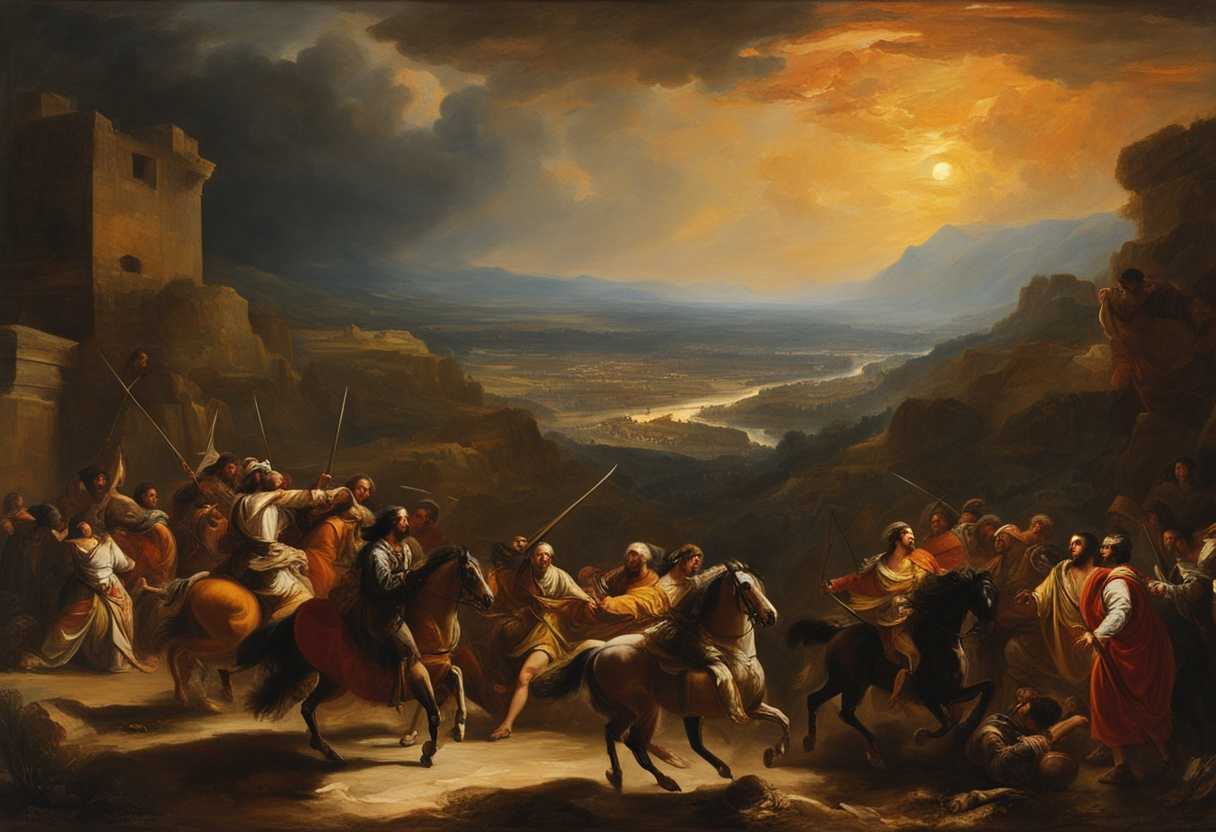
Setting the Scene for Numbers 21:21-24
In the arid wilderness of the Sinai Peninsula, the Israelites found themselves journeying through a landscape that was both harsh and unforgiving. The sun beat down relentlessly, casting long shadows over the rocky terrain as the people moved in a large, weary procession. Among them was Moses, the steadfast leader, who had guided them through countless trials since their exodus from Egypt. His face, weathered and lined with the burdens of leadership, reflected both determination and concern as he navigated the challenges of leading a nation of former slaves toward the Promised Land. The air was thick with dust, and the sounds of shuffling feet and murmurs of discontent filled the atmosphere, as the people were often restless and anxious about their uncertain future.
As they approached the territory of the Amorites, a powerful and formidable tribe, the Israelites sought permission to pass through their land. The leaders of the Israelites, including Moses and Aaron, sent messengers to Sihon, the king of the Amorites, requesting safe passage. However, Sihon, filled with pride and a fierce desire to protect his territory, refused their request and instead mobilized his army to confront the Israelites. The tension in the air was palpable as the two groups prepared for conflict. The Israelites, though weary from their long journey, were resolute in their faith and unity, ready to defend their right to traverse the land that lay before them.
The scene was set for a confrontation that would determine the fate of the Israelites as they sought to continue their journey. The rugged hills surrounding the valley echoed with the sounds of clashing swords and the cries of warriors, as the Israelites, under Moses’ leadership, engaged in battle with Sihon’s forces. The dust rose in clouds, obscuring the sun, and the cries of both sides filled the air, creating a cacophony of chaos. Yet, amidst the turmoil, the Israelites emerged victorious, a testament to their faith and resilience. They claimed the land of the Amorites, marking a significant moment in their journey toward the Promised Land, as they began to establish their presence in a territory that would soon become a part of their history and identity.
What is Numbers 21:21-24 about?
This verse illustrates a pivotal moment in the relationship between Israel and Edom, highlighting themes of conflict, negotiation, and the struggles inherent in seeking passage or acceptance. Have you ever found yourself in a situation where you needed support or cooperation from someone but were met with resistance? This is precisely what Israel experienced as they sought a passage through Edom’s territory. Rather than extending an olive branch and allowing their passage, Edom’s refusal escalated tensions. One could argue this refusal not only represents a physical hindrance but also symbolizes the deeper societal and political rifts that can arise between neighboring communities or nations.
When we consider the implications of conflict stemming from this denial, we must ask ourselves: What drives communities to refuse cooperation? Why do some relationships devolve into hostility over seemingly simple requests? The refusal to allow passage in the case of Edom could suggest a desire for autonomy, a fear of invasion, or perhaps long-standing enmities. Israel sought to advance, not just by traversing territory, but by seeking a way forward in their journey, a path toward security and stability. The ensuing conflict serves as a reminder of the complexities of human relations, particularly those rooted in historical grievances.
This narrative compels us to reflect on our own interactions and decisions. How do we respond when faced with requests from others? Do we instinctively protect our boundaries, or do we consider pathways for cooperation? The rejection of Israel’s request by Edom is not merely a historical fact but a lesson about the importance of diplomacy, empathy, and understanding one another’s positions. The dynamics of refusal and acceptance can shape not just relationships on an international scale but also our daily interactions in life as you contemplate this verse. How can we foster better dialogue and cooperation in our own communities to prevent unnecessary conflict?
Understanding what Numbers 21:21-24 really means
In Numbers 21:21-24, we find the Israelites in a pivotal moment during their wilderness journey. They are seeking passage through the land of the Amorites, specifically addressing King Sihon. This context is crucial; the Israelites are not just wandering aimlessly but are navigating a path filled with challenges and potential conflicts. Their request for safe passage highlights their reliance on God’s guidance and their desire to avoid unnecessary confrontation. How often do we find ourselves in situations where we must choose between conflict and peace?
The key themes in this passage revolve around divine guidance and the importance of faith and obedience. The Israelites’ approach to Sihon is not one of aggression but rather a humble request: “Let me pass through your land.” This phrase encapsulates their desire for peaceful coexistence and respect for authority. It prompts us to reflect on our own interactions. Are we approaching others with humility, or do we often demand our way?
Moreover, the Israelites’ commitment to not encroach on the fields or vineyards of the Amorites speaks volumes about their integrity. They are not only seeking permission but also pledging to respect the land of others. This principle of stewardship is vital in our modern context. In a world where personal gain often overshadows respect for others, how can we embody this commitment to integrity in our daily lives?
The phrase “We will go by the King’s Highway” further emphasizes their willingness to follow a designated path, symbolizing obedience to God’s direction. It serves as a reminder that there is a right way to navigate life’s journey, often marked by God’s guidance. Are we attentive to the paths God lays before us, or do we forge our own way, potentially leading to conflict and strife?
Reflecting on this passage, we can draw parallels to our own lives. Consider a time when you faced a challenging relationship or situation. Did you seek God’s wisdom, or did you react impulsively? Just as the Israelites sought peace with Sihon, we too can find strength in approaching our conflicts with grace and a desire for resolution.
In conclusion, Numbers 21:21-24 encourages us to seek God’s guidance in our lives, to approach others with humility and respect, and to remain committed to integrity in our actions. As we navigate our own journeys, may we remember the lessons from the Israelites and trust in God’s plan for us. How can we apply these principles today, fostering peace and understanding in our interactions?
How can we seek God’s guidance in challenges?
Seeking God’s guidance in facing challenges involves recognizing our reliance on His wisdom and direction when navigating difficult situations. We should approach God with humility and a desire to understand His will, just as the Israelites sought permission and direction from a higher authority before engaging in their endeavors. This is essential in urban decision-making aspects of our lives, whether personal, communal, or spiritual.
Acknowledge that God’s guidance often comes through prayer, scripture, and reflection. Engaging in sincere prayer allows us to open our hearts to divine insight, while immersing ourselves in scripture helps us find foundational truths that apply to our specific circumstances. When confronted with obstacles, clarity often emerges from seeking God through honest dialogue, reinforcing our commitment to align our actions with His teachings.
Furthermore, the importance of community cannot be overlooked. Connecting with fellow believers can offer support and wisdom that reflects God’s voice, just as the Israelites were part of a larger narrative. Surrounding ourselves with those who share our faith can provide counsel and encouragement, facilitating clearer insights while guiding us through challenges. We create a holistic approach to discern God’s guidance amid life’s difficulties by combining individual prayer, scriptural engagement, and community support.
Application
Life is like a challenging job; sometimes you face tough projects and deadlines that feel overwhelming. Just as the Israelites confronted foes on their way to a better future, you too can tackle the obstacles in your life with God by your side. Don’t let fear hold you back; each challenge is a chance to grow stronger and reach your goals, like climbing the corporate ladder or nurturing your family’s future. It’s time to take that first step—embrace your struggles as part of a greater plan. Are you ready to face your challenges head-on and harness God’s strength to transform your journey?

Reverend Michael Johnson is an experienced Church Minister with a profound expertise in spirituality and guidance. With a serene presence and a compassionate heart, he has faithfully served his congregation for over 20 years, leading them on a spiritual journey towards inner peace and enlightenment. Reverend Johnson’s extensive knowledge of religious philosophies and profound understanding of human nature have made him a trusted confidant and mentor to many, as he seamlessly weaves his profound wisdom into life teachings. Reverend Johnson’s calming demeanor and empathetic nature continue to uplift and heal souls, nurturing a sense of unity and tranquility within his community.