
Numbers 26:5-51 is about the census of the Israelite tribes conducted in the wilderness, emphasizing the importance of maintaining order, identity, and inheritance among the people as they prepare to enter the Promised Land, while also serving as a reminder of God’s faithfulness to His promises.
5 Reuben, the firstborn of Israel; the sons of Reuben: of Hanoch, the clan of the Hanochites; of Pallu, the clan of the Palluites;
6 Of Hezron, the clan of the Hezronites; of Carmi, the clan of the Carmites.
7 These are the clans of the Reubenites, and those listed were 43,730.
8 And the sons of Pallu: Eliab.
9 The sons of Eliab: Nemuel, Dathan, and Abiram. These are the Dathan and Abiram, chosen from the congregation, who contended against Moses and Aaron in the company of Korah, when they contended against the Lord,
10 and the earth opened its mouth and swallowed them up together with Korah, when that company died, when the fire devoured 250 men, and they became a warning.
11 But the sons of Korah did not die.
12 The sons of Simeon according to their clans: of Nemuel, the clan of the Nemuelites; of Jamin, the clan of the Jaminites; of Jachin, the clan of the Jachinites;
13 among these the clans of the people of Reuben: the clan of the Hanochites, the clan of the Palluites, the clan of the Hezronites, and the clan of the Carmites.
14 These are the clans of the Simeonites, twenty-two thousand five hundred.
15 The sons of Gad according to their clans: of Zephon, the clan of the Zephonites; of Haggi, the clan of the Haggites; of Shuni, the clan of the Shunites;
16 These were the ones chosen from the congregation, the chiefs of their ancestral tribes, the heads of the clans of Israel.
17 These are the clans of Reuben, and those listed were 43,730.
18 These are the clans of the people of Gad, as they were listed, 40,500.
19 The sons of Judah were Er and Onan; and Er and Onan died in the land of Canaan.
20 The sons of Judah according to their clans were: of Shelah, the clan of the Shelanites; of Perez, the clan of the Perezites; and of Zerah, the clan of the Zerahites.
21 The sons of Perez: Hezron, and Hamul.
22 These are the clans of Judah as they were listed, 76,500.
23 The sons of Issachar according to their clans: of Tola, the clan of the Tolaites; of Puvah, the clan of the Punites;
24 These are the clans of Naphtali, and those listed were 45,400.
25 These are the clans of Issachar as they were listed, 64,300.
26 The sons of Zebulun according to their clans: of Sered, the clan of the Seredites; of Elon, the clan of the Elonites; of Jahleel, the clan of the Jahleelites.
27 The sons of Ezer: Bilhan, Zaavan, and Akan.
28 The sons of Joseph according to their clans: Manasseh and Ephraim.
29 The sons of Manasseh: of Machir, the clan of the Machirites; and Machir was the father of Gilead; of Gilead, the clan of the Gileadites.
30 These are the sons of Gilead: of Iezer, the clan of the Iezerites; of Helek, the clan of the Helekites;
31 But Nadab and Abihu died when they offered unauthorized fire before the Lord.
32 Now the sons of Jokshan were Sheba and Dedan.
33 Now Zelophehad the son of Hepher had no sons, but daughters. And the names of the daughters of Zelophehad were Mahlah, Noah, Hoglah, Milcah, and Tirzah.
34 These are the clans of Manasseh, and those listed were 52,700.
35 These are the sons of Ephraim according to their clans: of Shuthelah, the clan of the Shuthelahites. Of Becher, the clan of the Becherites. Of Tahan, the clan of the Tahanites.
36 These are the sons of Shuthelah: of Eran, the clan of the Eranites.
37 These are the clans of the sons of Ephraim as they were listed, 32,500.
38 The sons of Benjamin according to their clans: of Bela, the clan of the Belaites; of Ashbel, the clan of the Ashbelites; of Ahiram, the clan of the Ahiramites;
39 The sons of Shuthelah: of Eran, the clan of the Eranites.
40 The sons of Bela were Ard and Naaman: of Ard, the clan of the Ardites; of Naaman, the clan of the Naamites.
41 These are the sons of Benjamin according to their clans: of Bela, the clan of the Belaites; of Ashbel, the clan of the Ashbelites; of Ahiram, the clan of the Ahiramites;
42 These are the sons of Dan by their clans: of Shuham, the clan of the Shuhamites. These are the clans of Dan by their clans.
43 All the families of the Shuthelahites, the families of the Shuthelahites, were listed at 64,400.
44 The sons of Asher according to their clans: of Imnah, the clan of the Imnites; of Ishvi, the clan of the Ishvites; of Beriah, the clan of the Beriites.
45 The sons of Beriah: Heber, and Malchiel, the father of Birzaith.
46 The name of the daughter of Asher was Serah.
47 The sons of Jahdai: Regem, Jotham, Geshan, Pelet, Ephah, and Shaaph.
48 The sons of Naphtali by their clans: Jahzeel, Guni, Jezer, and Shillem.
49 The sons of Bela were Ard and Naaman: of Ard, the clan of the Ardites; of Naaman, the clan of the Namites.
50 These are the clans of Naphtali according to their clans. And those listed were 45,400.
51 These were the registered men of the people of Israel: 601,730.
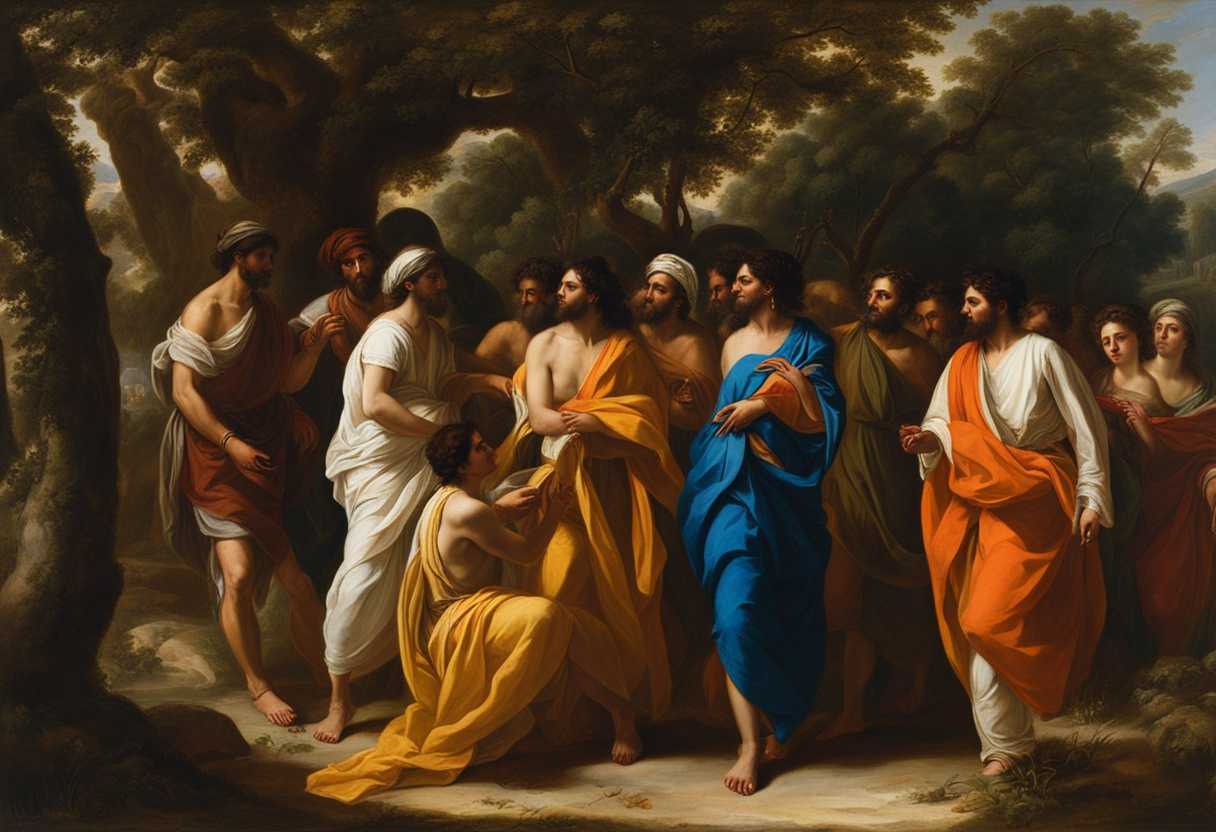
Setting the Scene for Numbers 26:5-51
In the arid wilderness of the Sinai Peninsula, the air is thick with anticipation as the Israelites gather in a vast, open space, surrounded by rugged mountains and the distant sound of a crackling campfire. The sun hangs low in the sky, casting long shadows across the dusty ground, where thousands of men, women, and children have assembled. This is a pivotal moment for the community, as Moses, the revered leader, stands before them, ready to conduct a census that will determine the future of the Israelite tribes. The atmosphere is charged with a mix of anxiety and hope, as each family unit is called forth to be counted, their identities and legacies woven into the fabric of the nation.
Among the crowd, the descendants of Reuben, Simeon, and Levi stand with a sense of pride and trepidation. Each tribe has its own unique history and story, and as Moses calls out their names, the echoes of their ancestors resonate in the hearts of the people. The tribe of Reuben, the firstborn of Jacob, is represented by its leaders, who recall the struggles and triumphs of their forefathers. The Simeonites, known for their fierce loyalty, stand shoulder to shoulder with the Levites, who have been set apart for sacred duties. As the census unfolds, the Israelites reflect on their journey from slavery in Egypt to their current state of wandering, each tribe’s number a testament to their survival and resilience.
The surroundings are a stark reminder of their trials; the dry, cracked earth beneath their feet and the sparse vegetation tell the story of a people who have endured hardship. Yet, there is a sense of unity in the air, as families come together, recounting tales of their lineage and the promises made to them by God. The sound of children laughing and the smell of roasted meat from nearby fires create a sense of community amidst the uncertainty of their future. As Moses meticulously records the numbers, the Israelites are reminded that they are not just a collection of individuals, but a chosen people, destined to inherit the land promised to their ancestors. This moment of counting is not merely administrative; it is a reaffirmation of their identity and purpose as they prepare to enter the Promised Land.
What is Numbers 26:5-51 about?
The census of the Israelites in Numbers 26:5-51 serves a critical function in the broader narrative of the Book of Numbers and, indeed, the entire Pentateuch. This passage deepens our understanding of the importance of lineage and organization within the Israelite community. The text underscores the significance of identity and collective heritage by meticulously counting each tribe and recording their familial lines. Have you ever thought about how much a community’s structure relies on knowing who belongs where? This ‘census’ isn’t just a list of names and numbers; it speaks to the question of identity itself—who we are as individuals and as part of a larger community. This census informs the distribution of land, a vital aspect for the Israelites as they prepare to enter the Promised Land. Each tribe’s population is directly linked to its share of land, which underscores the fairness and order that God establishes among His people. Do you see how this highlights not only divine justice but also provides a practical means of maintaining balance and equity within the community? The allocation of resources, particularly land, becomes symbolic of each tribe’s role and responsibility in the unfolding narrative of the Israelites’ journey. Reflecting on this, we might ask ourselves: What do our communal structures tell us about our values and priorities? How are our own identities shaped by our communal affiliations, just as the Israelites’ were defined by their tribes? Thus, Numbers 26 invites us to consider the importance of belonging and accountability within our own communities today.
Understanding what Numbers 26:5-51 really means
In Numbers 26:5-51, we encounter the second census of the Israelites, a significant moment that prepares them for their entry into the Promised Land. This passage is not merely a list of names and numbers; it is a testament to God’s unwavering faithfulness and the vital role of community and identity among His people. As we delve into this text, we are invited to reflect on what it means to belong to a community that is rooted in God’s promises.
The context of this census is crucial. The first census, found in Exodus 30:11-16, was conducted before the Israelites’ journey through the wilderness. Now, after a generation has passed due to disobedience, this second census marks a transition. It highlights God’s continued guidance and provision, reminding us that even in our failures, He remains steadfast. How often do we forget that God is still at work in our lives, even when we feel lost or disconnected?
Several key themes emerge from this passage. First, the idea of identity and belonging is paramount. Each name recorded in the census represents a family, a history, and a future. This reinforces the notion that we are not isolated individuals but part of a larger community. Second, God’s faithfulness shines through. The act of counting the people signifies that God has not forgotten His covenant with Israel, despite their wandering. Lastly, this census serves as preparation for inheritance, symbolizing the fulfillment of God’s promise to give the Israelites a homeland. What does it mean for us today to prepare for our own inheritance in Christ?
Related biblical passages further illuminate these themes. In Exodus 12:37-38, we see the initial count of the Israelites as they left Egypt, showcasing the growth of their community. Deuteronomy 1:34-36 reflects on the consequences of disobedience while affirming the promise of inheritance to the faithful. In the New Testament, Matthew 10:30 reminds us that God knows each of us intimately, just as He knew each Israelite by name. How does this knowledge of being known by God shape our understanding of our identity?
In our contemporary context, where individualism often overshadows community, this passage serves as a poignant reminder of the importance of belonging. It encourages us to recognize our place within the body of Christ and the unique roles we play in God’s plan. Consider a church that recently conducted a membership drive. As new members joined, the pastor took time to introduce each person, sharing their stories and backgrounds. This act of recognition fostered a sense of belonging and unity, much like the census did for the Israelites. How can we create similar spaces of belonging in our own communities?
Several meaningful phrases in this passage warrant reflection. The phrase “according to their families” emphasizes the significance of family and community ties. It reflects how God values each individual within the context of their relationships and heritage. Additionally, the mention of “the tribe of…” highlights the unique identities and purposes of each tribe. This diversity within unity is crucial for the body of Christ today. Lastly, the phrase “the number of the men” invites us to consider the roles of women and children in the community, reminding us that everyone has a part to play in God’s plan.
In conclusion, Numbers 26:5-51 serves as a powerful reminder of God’s faithfulness, the importance of community, and our individual roles within that community. As we reflect on this passage, let us embrace our identity in Christ and recognize the value of each person in our lives and churches today. How can we actively participate in fostering a sense of belonging and purpose within our communities?
How do my actions reflect my spiritual heritage?
Your actions reflect your spiritual heritage in numerous ways, particularly through the emphasis on community and accountability. You contribute to a collective identity that is rooted in shared values and beliefs by actively engaging with your family and community. This sense of belonging is essential, as it underscores the importance of heritage and continuity in your spiritual journey. Each decision you make resonates within a larger narrative, reminding you of where you come from and the lessons passed down through generations. Your respect for traditions and rituals can significantly highlight your spiritual lineage. When you participate in cultural or religious practices, you acknowledge the significance of your ancestry and honor the commitments made by those before you. This participation reinforces the bonds of faith that connect you to your heritage, fostering a sense of responsibility to uphold these customs for future generations. It also demonstrates a commitment to the teachings and principles that have guided your forebears.
Additionally, your understanding of individual roles within a larger framework speaks volumes about your spiritual heritage. The awareness that every person has a unique contribution to make encourages you to act with intention and purpose. This perspective not only shapes your actions but also influences how you view others, recognizing the value of each role in the community. Your choices ultimately reflect the teachings and values instilled in you by your ancestors, creating a living testament to the legacy you carry forward.
Application
Just like a team at work needs every member to bring their best to succeed, you have a vital role to play in your community. Take a moment to think about your purpose—how can you contribute to the bigger picture, just like the Israelites found their place in God’s plan? This is your chance to jump in and make a difference, whether it’s in your church or among your family. Embrace the call to serve and unite with others, and watch how your actions can create a lasting impact. So, are you ready to step up and claim your unique spot in this incredible journey?

Reverend Michael Johnson is an experienced Church Minister with a profound expertise in spirituality and guidance. With a serene presence and a compassionate heart, he has faithfully served his congregation for over 20 years, leading them on a spiritual journey towards inner peace and enlightenment. Reverend Johnson’s extensive knowledge of religious philosophies and profound understanding of human nature have made him a trusted confidant and mentor to many, as he seamlessly weaves his profound wisdom into life teachings. Reverend Johnson’s calming demeanor and empathetic nature continue to uplift and heal souls, nurturing a sense of unity and tranquility within his community.