
Numbers 27:12-23 is about God appointing Joshua as the leader of the Israelites to succeed Moses, signifying a transition of authority and the importance of faithfully carrying out God’s plans despite challenges and uncertainties.
12 The Lord said to Moses, “Go up into this mountain of Abarim and see the land that I have given to the people of Israel.
13 And when you have seen it, you also shall be gathered to your people, as your brother Aaron was,
14 for when the congregation quarreled in the wilderness of Zin, you rebelled against my command to treat me as holy before their eyes at the waters.” (These are the waters of Meribah of Kadesh in the wilderness of Zin.)
15 Moses spoke to the Lord, saying,
16 “Let the Lord, the God of the spirits of all flesh, appoint a man over the congregation”
17 who shall go out before them and come in before them, who shall lead them out and bring them in, that the congregation of the Lord may not be as sheep that have no shepherd.”
18 So the Lord said to Moses, “Take Joshua the son of Nun, a man in whom is the Spirit, and lay your hand on him.
19 and set him before Eleazar the priest and before all the congregation, and you shall commission him in their sight.
20 You shall invest him with some of your authority, that all the congregation of the people of Israel may obey.
21 And he shall stand before Eleazar the priest, who shall inquire for him by the judgment of the Urim before the Lord. At his word they shall go out, and at his word they shall come in, both he and all the people of Israel with him, the whole congregation.”
22 And Moses did as the Lord commanded him. He took Joshua and made him stand before Eleazar the priest and the whole congregation,
23 And he laid his hands on him and commissioned him as the Lord directed through Moses.
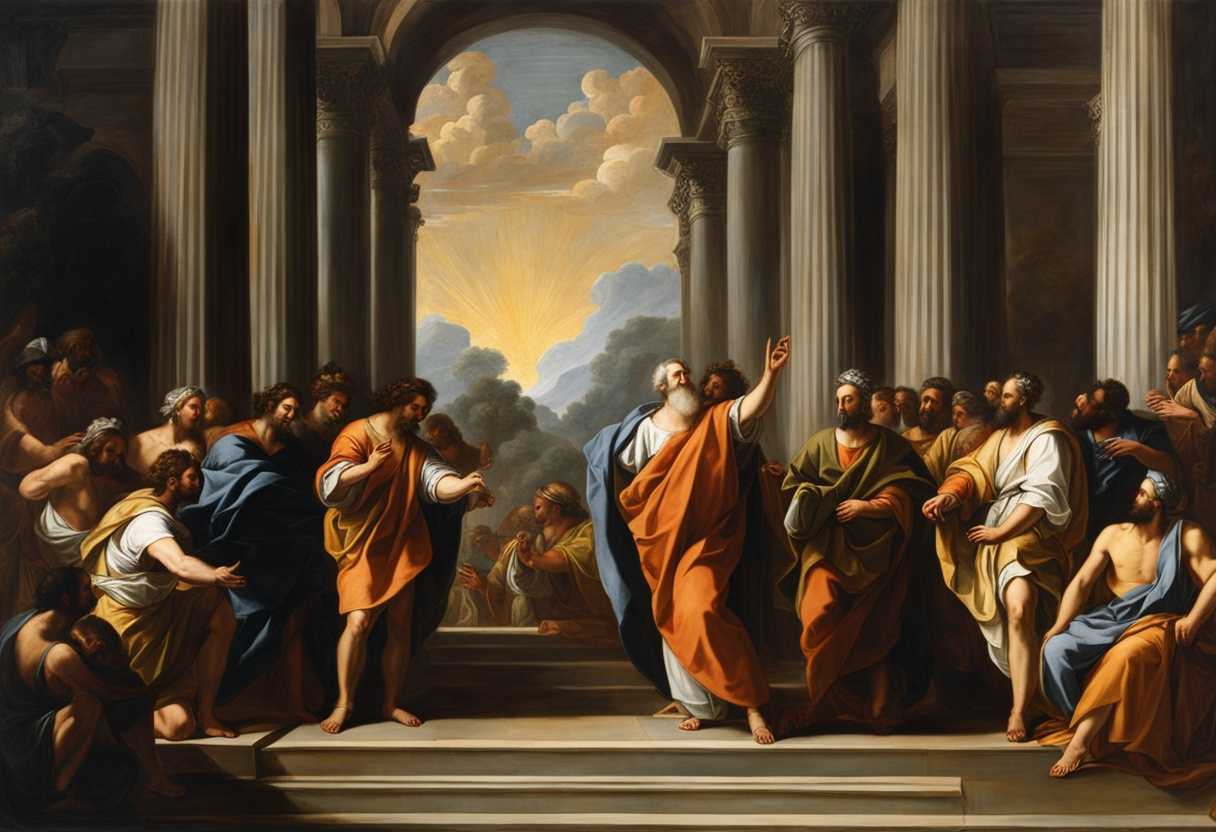
Setting the Scene for Numbers 27:12-23
In Numbers chapter 27, we find ourselves in the wilderness of Zin, a vast and arid desert landscape where the Israelites have been wandering for years after their exodus from Egypt. The scene is set near the entrance of the Tabernacle, a sacred tent where the Israelites gather for worship and to seek guidance from God. The air is filled with a sense of anticipation and reverence as the community awaits a decision from the Lord.
Moses, the revered leader of the Israelites, stands at the forefront, flanked by Eleazar the priest and the tribal leaders. Among them are the daughters of Zelophehad – Mahlah, Noah, Hoglah, Milcah, and Tirzah. These brave and determined women have come before Moses and the assembly to plead their case for inheritance rights, as their father had died without leaving any sons to inherit his portion of land.
As the sun beats down on the desert sands, Moses listens intently to the women’s petition, seeking guidance from the Lord on this matter of justice and equity. Through divine revelation, God affirms the women’s right to inherit their father’s land, setting a precedent for future generations. The scene is a powerful testament to the courage and faith of these women, and a reminder of God’s justice and compassion for all His people.
What is Numbers 27:12-23 about?
This verse from the Book of Numbers holds profound significance in the history of the Israelites. It marks a crucial moment when Moses, the revered leader who guided the Israelites out of Egypt and through the wilderness for years, passes on the mantle of leadership to Joshua. This act of succession embodies the concept of leadership transition and the continuity of the divine mission entrusted to the people of Israel. It showcases the importance of following God’s guidance in leadership decisions, ensuring a seamless transfer of authority and direction.
Reflect on the journey of Moses and Joshua. Moses, a steadfast leader who stood before Pharaoh and led the Israelites through trials and triumphs. Joshua, a faithful disciple who learned from Moses and now steps into the role of leading the people towards the promised land. Both leaders display trust and obedience as they follow God’s plan for the Israelite nation. This verse teaches us about the essence of humility, obedience, and preparation in leadership transitions, emphasizing the continuity of God’s purpose in the hands of faithful stewards. We should reflect on our own roles in leadership transitions as we meditate on this passage, seeking guidance from above and trusting in His perfect timing.
Understanding what Numbers 27:12-23 really means
In Numbers 27:12-23, we witness a pivotal moment in the history of the Israelites as leadership transitions from Moses to Joshua. God instructs Moses to ascend a mountain to behold the Promised Land, a symbolic act of fulfillment despite Moses not entering it himself. Moses, displaying his care for the community, petitions God to appoint a new leader, leading to the selection of Joshua, a man endowed with the spirit of leadership. The laying on of hands by Moses signifies the transfer of authority and blessing, marking Joshua as the chosen successor.
This passage resonates with themes of transition, trust, and community support that remain relevant today. It serves as a reminder of the importance of preparing and empowering new leaders in various spheres of life. Just as Moses entrusted the leadership to Joshua, individuals and organizations must invest in succession planning to ensure continuity and growth. Moreover, it underscores the need to trust in God’s timing and plan, even when our own desires may not come to fruition as we expect.
The act of laying hands on Joshua in front of the assembly highlights the significance of community support and public affirmation in leadership roles. This communal endorsement not only validates the new leader but also fosters unity and confidence within the group. It emphasizes the idea that leadership is not a solitary endeavor but one that thrives on the foundation of shared values and collective encouragement.
Drawing parallels to contemporary scenarios, envision a retiring CEO who diligently prepares a successor, ensuring a seamless transition for the company and its stakeholders. On the final day, the outgoing leader publicly endorses the new CEO, instilling trust and assurance in the organization. This narrative echoes Moses’ actions, showcasing the timeless principles of wise and compassionate leadership, characterized by foresight, mentorship, and communal support.
In conclusion, Numbers 27:12-23 imparts valuable lessons on leadership, transition, and community solidarity. It prompts us to reflect on the significance of preparing future leaders, trusting in divine guidance, and fostering a supportive environment for those stepping into new roles. Like Moses, may we act selflessly for the greater good, entrusting the future to capable hands while standing united as a community of faith and encouragement.
What does it mean to be a good leader?
Being a good leader, as mentioned in Numbers 27:12-23, means being a source of guidance, direction, and support for those you lead. It involves having a strong sense of responsibility towards the people under your care and making decisions with fairness and wisdom. A good leader is also someone who upholds justice and acts in accordance with the values and principles they stand for.
Furthermore, being a good leader also means being willing to listen to the concerns and needs of those you lead, taking into account their perspectives and feedback. It involves being approachable and open to communication, fostering a sense of trust and unity within the group. A good leader leads by example, demonstrating integrity, humility, and a genuine concern for the well-being of others, thus inspiring and empowering others to reach their full potential.
Application
Let’s be the CEOs of our lives, leading with faith and passing on wisdom to those who come after us. Like a loyal employee following their boss’s directives, let’s trust in God’s vision for us and seek His guidance in every decision. Will you join me in dedicating ourselves to a life that reflects God’s love and diligently seeks His purpose in everything we do?

Reverend Michael Johnson is an experienced Church Minister with a profound expertise in spirituality and guidance. With a serene presence and a compassionate heart, he has faithfully served his congregation for over 20 years, leading them on a spiritual journey towards inner peace and enlightenment. Reverend Johnson’s extensive knowledge of religious philosophies and profound understanding of human nature have made him a trusted confidant and mentor to many, as he seamlessly weaves his profound wisdom into life teachings. Reverend Johnson’s calming demeanor and empathetic nature continue to uplift and heal souls, nurturing a sense of unity and tranquility within his community.