
Numbers 28:11 is about the instructions for the offerings that the Israelites are to present during their monthly festivals, emphasizing the importance of regular worship and the necessity of dedicating time and resources to God as part of their covenant relationship with Him.
11 “At the beginnings of your months, you shall offer a burnt offering to the Lord: two bulls from the herd, one ram, seven male lambs a year old without blemish;”
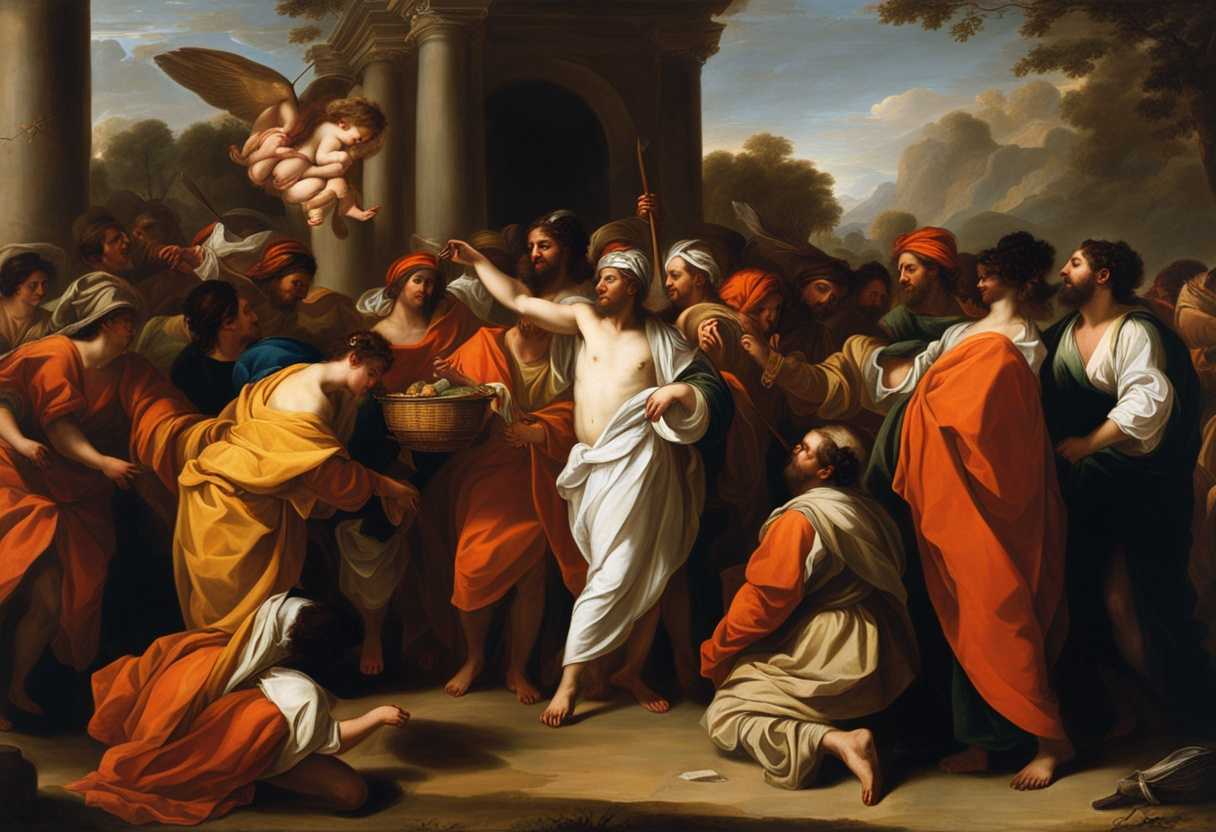
Setting the Scene for Numbers 28:11
In the heart of the Israelite camp, a vibrant scene unfolds as the community gathers for a sacred occasion. The sun hangs high in the azure sky, casting warm rays over the tents that dot the landscape, each one a temporary home for families who have journeyed through the wilderness. The air is filled with the mingling scents of roasted grains and fresh herbs, as the people prepare for the offerings that are central to their worship. Among them are Aaron, the high priest, and his sons, who have been entrusted with the sacred duties of the tabernacle. Their garments, adorned with intricate designs and symbols, glisten in the sunlight, signifying their holy calling.
As the people assemble, a sense of reverence permeates the atmosphere. Families gather around, their faces reflecting a mixture of anticipation and devotion. The elders, wise and seasoned, share stories of their ancestors’ journey from Egypt, reminding the younger generation of the covenant made with God. Children, with their innocent curiosity, dart between the adults, their laughter a joyful contrast to the solemnity of the occasion. The sound of a ram’s horn echoes through the camp, signaling the beginning of the offerings. It is a time for the community to come together, to express gratitude and seek favor from the Lord, as prescribed in their sacred laws.
As the rituals commence, Aaron steps forward, holding a ceremonial bowl filled with fine flour mixed with oil, ready to present the grain offering. The people watch in silence, their hearts united in prayer and expectation. The surrounding landscape, with its rugged hills and distant mountains, serves as a reminder of the trials they have faced and the promise of the land that lies ahead. The tabernacle, a magnificent structure at the center of the camp, stands as a testament to their faith and obedience. It is here, in this sacred space, that the Israelites reaffirm their commitment to God, offering their sacrifices and seeking His guidance as they continue their journey toward the Promised Land.
What is Numbers 28:11 about?
Numbers 28:11 presents us with a significant reminder of the importance of worship and the role that offerings play in our spiritual lives. When we consider the context in which this verse was written, it becomes clear that the Israelites were tasked with maintaining a close relationship with God through acts of devotion and obedience. Can you imagine the atmosphere during these offerings? There was a communal spirit, a sense of collective gratitude, and a focused intention to honor the divine. The Sabbath was not merely a day of rest; it was woven into the fabric of their faith practice, allowing them to dedicate time to reflect and express their reverence to God.
From a contemporary perspective, what can we glean from such a ritual? We often fail to pause in our busy lives to recognize the importance of setting aside time for worship. The offerings mentioned can be seen not just as physical acts but as profound gestures of surrender and acknowledgment of God’s sovereignty in our lives. They reflect a mindset centered on gratitude and a desire to cultivate a deeper relationship with the divine. Beyond the historical context, we must ask ourselves: how do we honor our sacred time today? Are we intentional about our worship? We can begin to bridge the gap between ancient practices and our modern-day expressions of faith by reflecting on these questions.
Understanding what Numbers 28:11 really means
Numbers 28:11 presents a compelling directive for the Israelites, instructing them to bring offerings during their monthly gatherings. This verse underscores the significance of worship and the communal act of giving back to God. It invites us to consider how our own practices of worship reflect our relationship with the divine.
To fully appreciate this verse, we must understand its context within the Book of Numbers. This book outlines the laws and regulations that guided the Israelites during their wilderness journey. Numbers 28 is particularly focused on the various offerings and sacrifices that were to be made, emphasizing that worship is not limited to special occasions but is a continuous act. The monthly offerings serve as a reminder that our devotion to God should be a regular part of our lives.
Several related biblical passages enhance our understanding of this theme. For instance, Exodus 23:19 highlights the importance of bringing the first fruits of the land to God, reinforcing the idea of offering our best. Similarly, Malachi 3:10 challenges believers to bring their tithes, promising blessings in return. This principle of reciprocity is echoed in 1 Corinthians 16:2, where Paul encourages the early church to set aside funds regularly. Together, these verses illustrate a consistent biblical call to prioritize giving as an expression of faith.
In today’s world, where materialism often takes precedence, Numbers 28:11 serves as a vital reminder of the need to dedicate our time and resources to God. Many struggle with the concept of giving, whether it be financial contributions, time, or talents. This verse encourages us to reflect on our priorities and to engage in acts of worship and generosity consistently. How can we incorporate this practice into our lives?
I recall a member of our congregation who faced financial hardships yet chose to continue giving a portion of their income to the church and local charities. This act of faith not only deepened their relationship with God but also inspired others in the community to support one another. Their story exemplifies the principle that when we give, we often receive blessings in unexpected ways. It challenges us to consider how our own acts of generosity can impact those around us.
The phrases within Numbers 28:11 carry profound meaning. “On the first day of the month” signifies the importance of prioritizing God at the beginning of each cycle, encouraging us to start our month with worship and gratitude. “A burnt offering” symbolizes total dedication and surrender to God, reminding us that our lives should be living sacrifices committed to His service. Lastly, “a pleasing aroma” indicates that our offerings are not merely about the act of giving but about the heart behind it. God desires genuine worship and devotion, which brings joy to Him.
In conclusion, Numbers 28:11 serves as a powerful reminder of the importance of regular worship and giving in our lives. It challenges us to reflect on our priorities and encourages us to cultivate a heart of generosity. As we engage in these practices, we not only honor God but also deepen our relationship with Him and our community. How might you respond to this call in your own life?
How can I honor my commitments to God daily?
To honor your commitments to God daily, consider establishing a routine that incorporates dedicated moments for worship and reflection. This includes setting aside time each day for prayer and meditation, allowing for a personal connection with God. Being intentional about this practice helps reinforce your commitment, reminding you of the importance of prioritizing your spiritual life amidst daily distractions.
Another meaningful way to fulfill your commitments is by engaging in acts of service and kindness toward others. This reflects your devotion and adherence to God’s teachings. Whether through volunteering your time, offering support to someone in need, or simply showing love and compassion in your interactions, these actions can serve as a testament to your commitment to live in accordance with divine principles.
Finally, regularly studying scripture and applying its teachings to your life can deepen your understanding and commitment to God’s will. You can align your daily choices and behaviors with what you know to be true and good by reflecting on the lessons and values presented. This ongoing process of learning and adjusting your life accordingly honors your relationship with God and keeps you accountable to your commitments.
Application
Just like your family needs regular check-ins to thrive, your relationship with God flourishes with consistent devotion. Numbers 28:11 reminds us that making time for worship and offerings isn’t just a duty—it’s an opportunity to show gratitude and deepen your faith. Think about how you can weave these acts into your daily life, whether it’s lending a hand to a neighbor or supporting your church. So, are you ready to take that step and make honoring God a priority in all areas of your life?

Reverend Michael Johnson is an experienced Church Minister with a profound expertise in spirituality and guidance. With a serene presence and a compassionate heart, he has faithfully served his congregation for over 20 years, leading them on a spiritual journey towards inner peace and enlightenment. Reverend Johnson’s extensive knowledge of religious philosophies and profound understanding of human nature have made him a trusted confidant and mentor to many, as he seamlessly weaves his profound wisdom into life teachings. Reverend Johnson’s calming demeanor and empathetic nature continue to uplift and heal souls, nurturing a sense of unity and tranquility within his community.