
Numbers 28:3-8 is about the instructions given to the Israelites concerning the daily and Sabbath offerings, emphasizing the importance of regular worship and the continuous act of dedicating their lives and resources to God as a form of devotion and acknowledgment of His provision.
3 And you shall say to them, This is the food offering that you shall offer to the Lord: two male lambs a year old without blemish, day by day, as a regular offering.
4 The one lamb you shall offer in the morning, and the other lamb you shall offer at twilight;
5 also a tenth of an ephah of fine flour for a grain offering, mixed with a quarter of a hin of beaten oil.
6 It is a regular burnt offering, which was ordained at Mount Sinai for a pleasing aroma, a food offering to the Lord.
7 “Its drink offering shall be a quarter of a hin for each lamb. In the Holy Place you shall pour out a drink offering of strong drink to the Lord.”
8 The other lamb you shall offer at twilight; as the grain offering of the morning and as its drink offering, you shall offer it, a food offering with a pleasing aroma to the Lord.
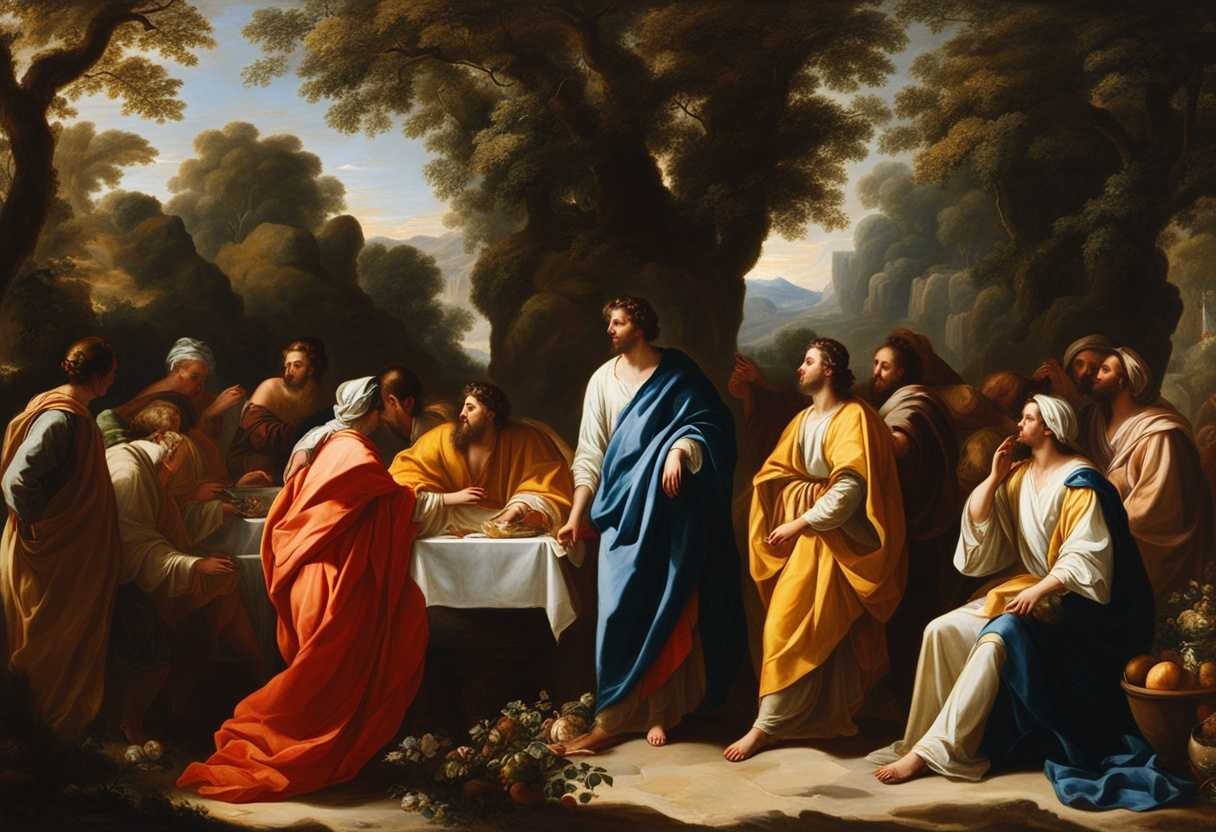
Setting the Scene for Numbers 28:3-8
In the arid wilderness of Sinai, the Israelites have been journeying for years, guided by the cloud by day and the fire by night. The air is thick with anticipation as the people gather around the newly erected tabernacle, a magnificent tent that serves as the dwelling place of God among them. The sun casts a warm glow over the camp, illuminating the vibrant colors of the tents and the flickering flames of the sacrificial altars. Among the throng, Moses stands at the forefront, his face weathered yet resolute, embodying the leadership bestowed upon him by God. Beside him is Aaron, the high priest, adorned in his priestly garments, a symbol of holiness and authority, ready to perform the sacred duties that have been commanded.
As the people settle into a reverent hush, the atmosphere is charged with a sense of solemnity and devotion. The Israelites, weary from their wanderings yet hopeful for the future, have come to offer their sacrifices as prescribed by the Lord. The instructions for these offerings echo in their minds, a reminder of their covenant with God. Moses, with a voice that carries over the crowd, begins to relay the divine commands regarding the daily offerings, the burnt offerings, and the special offerings for the Sabbath. The people listen intently, their hearts aligned with the rhythm of worship, as they prepare to present their best to the Lord—a lamb without blemish, a symbol of their faith and commitment.
Surrounding the tabernacle, the camp is alive with the sounds of preparation. Families gather their offerings, children darting between tents, and the scent of roasted meat wafts through the air. The Levites, set apart for service, move with purpose, ensuring that everything is in order for the sacred rituals. The golden altar gleams in the sunlight, a focal point of worship, while the smoke from the sacrifices rises toward the heavens, a fragrant offering to God. In this moment, the Israelites are not just a wandering people; they are a community bound by faith, tradition, and the promise of a land flowing with milk and honey, united in their devotion to the God who has led them thus far.
What is Numbers 28:3-8 about?
The Israelite community was commanded to present a systematic detailing of the daily and Sabbath offerings before the Lord in Numbers 28:3-8. This passage highlights the importance of worship and devotion in their spiritual lives. Why, you might ask, did the Israelites need to adhere to such specific rituals? It seems essential to understand that these offerings were not just ritualistic practices; they were expressions of reverence, gratitude, and dependence on God. Each offering served to acknowledge God’s sovereignty and provision, creating a rhythm of worship that wove together the fabric of their daily existence. We might consider the significance of dedicating a portion of our lives to God each day as we reflect on the daily offerings mentioned, consisting of a lamb and accompanying grain and drink offerings. How often do we carve out moments in our busy lives for gratitude and worship? The Sabbath offering, which was even more substantial, called for an additional lamb and the same accompanying offerings. This observance wasn’t just a routine; it was a reminder of the sacredness of rest and the need to nurture our relationship with the divine. Wouldn’t it be beneficial for us to think about how we honor days of rest in our own lives? Numbers 28:3-8 signifies that worship should permeate our everyday lives. It encourages us to recognize that our offerings—whether literal or metaphorical—can take many forms, expressing our devotion and love in tangible ways. How can we more intentionally integrate worship into our daily rhythms? We can ensure that, like the ancient Israelites, we create space for God in our lives and acknowledge His presence in all that we do by taking time to reflect on our blessings and spiritual practices.
Understanding what Numbers 28:3-8 really means
In Numbers 28:3-8, we encounter a profound directive regarding the offerings the Israelites were to present to God. This passage not only outlines the daily and Sabbath offerings but also underscores the significance of worship and the role of sacrifices in fostering a relationship with the Divine. As we delve into this text, we are invited to reflect on what it means to offer our lives to God in a meaningful way.
The Book of Numbers, situated within the Torah, serves as a historical account of the Israelites’ journey through the wilderness. It is rich with laws and regulations that were essential for maintaining spiritual and social order within the community. Understanding this context helps us appreciate the gravity of the instructions given in this passage. The Israelites were not merely following a set of rules; they were engaging in a covenant relationship with God, one that required intentionality and commitment.
Key phrases in this passage warrant our attention. When God refers to “My offering,” it emphasizes that these acts of devotion are personal and intentional. They are not mere rituals but expressions of the heart. Similarly, the metaphor of “a pleasing aroma” suggests that God delights in genuine worship. It prompts us to consider: Are our offerings to God sincere, or have they become mere formalities? The mention of “On the Sabbath” serves as a reminder of the importance of rest and worship, urging us to carve out sacred time in our busy lives.
This theme of sacrifice resonates throughout Scripture. Romans 12:1 encourages believers to present their bodies as living sacrifices, extending the principle of offering beyond the Old Testament rituals. Hebrews 13:15 further enriches this understanding by highlighting that worship includes our expressions of gratitude and praise. These connections remind us that our relationship with God is dynamic and requires active participation in our daily lives.
In today’s fast-paced world, the call to prioritize our spiritual lives is more relevant than ever. Many of us grapple with balancing work, family, and social obligations, often neglecting our relationship with God. Numbers 28:3-8 serves as a timely reminder to intentionally set aside time for worship and to offer our lives in service and devotion. How can we create space for God amidst our busy schedules?
I recall a member of my congregation who felt overwhelmed by their responsibilities. They made a commitment to dedicate one evening a week to prayer and reflection, treating it as sacred time. This decision transformed their perspective, leading to a deeper connection with God and a sense of peace. Their experience illustrates the power of setting aside time for God and how it can lead to spiritual renewal and purpose.
In conclusion, Numbers 28:3-8 teaches us about the significance of our offerings and the heart behind them. It calls us to be intentional in our worship and to recognize that our relationship with God is nurtured through acts of devotion. As we reflect on this passage, may we strive to offer our lives as living sacrifices, creating a pleasing aroma to our Creator. How might you respond to this call in your own life?
How can I offer my best to God daily?
To offer your best to God daily, you can start by dedicating intentional time for worship and reflection each day. This could involve setting aside moments in the morning, afternoon, or evening to pray, meditate, or read scriptural passages that inspire and uplift you. You create a space to express gratitude, seek guidance, and acknowledge His presence in your life by centering your thoughts and actions around God.
Additionally, consider making service a core component of your daily life. Offering your talents, skills, and resources to help others is a practical way of honoring God. Engage in acts of kindness or volunteer in your community. These actions reflect a heart aligned with the principles of love and service, reinforcing your commitment to living out your faith in tangible ways.
Lastly, cultivate a mindset of gratitude and mindfulness throughout your day. Pay attention to the blessings and challenges you encounter, recognizing them as opportunities to grow spiritually. Embrace a posture of generosity, not just in material aspects but also in your thoughts and attitudes towards others. You continually align your life with values that resonate with divine principles, ensuring that each day is an offering of your best to God.
Application
Just like we set aside time for family dinners or work projects, it’s crucial to dedicate moments to nurture your relationship with God. Think of your offerings—be it time, resources, or love—as investments that yield deeper faith and fulfillment. Establish a routine for prayer and gratitude, and watch how it transforms your daily existence into a sacred journey. The rhythm of worship can become as natural as your morning coffee or evening wind-down. Are you ready to prioritize this connection and elevate your everyday life to something extraordinary?

Reverend Michael Johnson is an experienced Church Minister with a profound expertise in spirituality and guidance. With a serene presence and a compassionate heart, he has faithfully served his congregation for over 20 years, leading them on a spiritual journey towards inner peace and enlightenment. Reverend Johnson’s extensive knowledge of religious philosophies and profound understanding of human nature have made him a trusted confidant and mentor to many, as he seamlessly weaves his profound wisdom into life teachings. Reverend Johnson’s calming demeanor and empathetic nature continue to uplift and heal souls, nurturing a sense of unity and tranquility within his community.