
Numbers 29:32-34 is about the representation of the sacrifices made by the people to God, acknowledging His provision and blessings, as well as their commitment to follow His instructions.
32 And on the seventh day you shall have a holy convocation. You shall not do any ordinary work.
33 On the fifteenth day of the seventh month, you shall have a holy convocation. You shall not do any ordinary work, and you shall keep a feast to the Lord seven days.
34 and you shall offer a burnt offering, a food offering, with a pleasing aroma to the Lord: one bull from the herd, one ram, and seven male lambs a year old; they shall be without blemish.
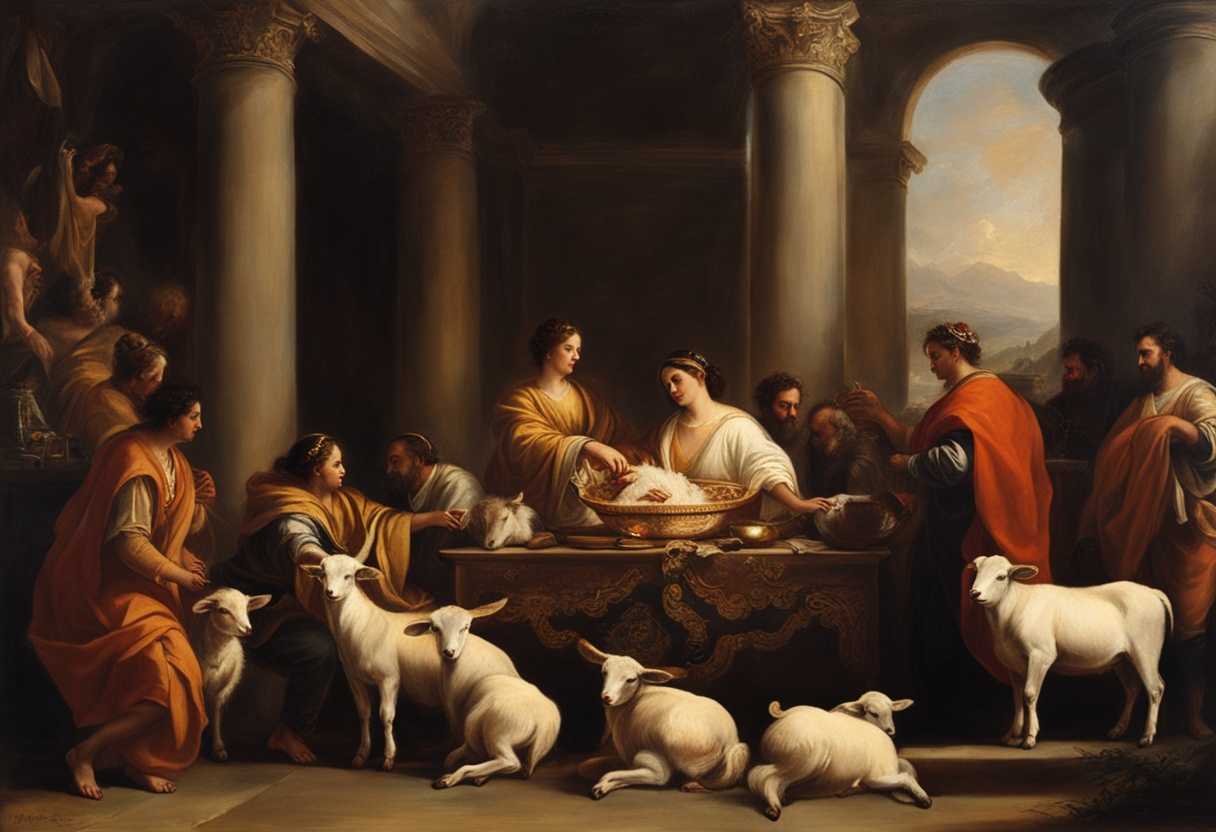
Setting the Scene for Numbers 29:32-34
The scene in Numbers 29:32-34 takes place during the Feast of Tabernacles, also known as Sukkot, a significant Jewish holiday. The Israelites have gathered in the wilderness, having traveled from Egypt under the leadership of Moses. The atmosphere is one of reverence and celebration as the people come together to worship and offer sacrifices to the Lord.
In this particular moment, we see Moses, Aaron, and the rest of the Israelite community standing before the altar. The air is filled with the sound of prayers and the aroma of burnt offerings. The scene is set against the backdrop of the vast desert landscape, with the tabernacle in the center, its curtains billowing gently in the breeze. The people are dressed in their finest garments, their faces reflecting a mixture of awe and joy as they participate in this sacred observance.
As the priests present the offerings before the Lord, the people join in singing hymns of praise and thanksgiving. The scene is a powerful reminder of the faithfulness of God and the covenant He has made with His people. It is a moment of unity and devotion, as the Israelites come together to honor and glorify the Lord in the midst of their journey through the wilderness.
What is Numbers 29:32-34 about?
The verse provides us with instructions on the offerings that were to be presented during the Feast of Tabernacles. The Feast of Tabernacles, also known as Sukkot, was a significant festival in the Jewish calendar, commemorating the Israelites’ journey through the wilderness and their dependence on God for sustenance. The offerings mentioned here – animals, grain, and drink offerings – were a way for the Israelites to express their gratitude to God for His provision and blessings.
The inclusion of various types of offerings highlights the idea of offering one’s best to God. The Israelites symbolically presented the fruits of their labor and the abundance that God had provided for them by presenting animals, grain, and drink offerings. This verse serves as a reminder for us to reflect on the importance of gratitude and giving back to God from our blessings. It prompts us to consider what offerings we can bring to God in our own lives – whether it be our time, talents, resources, or even acts of kindness and love towards others. We are encouraged to contemplate the ways in which we can show our thankfulness to God in our daily lives as we ponder on the significance of these offerings. How can we present our best to God, just as the Israelites did with their offerings during the Feast of Tabernacles? How can we express our gratitude for the blessings and provisions we have received? This verse invites us to consider the importance of generosity, thanksgiving, and devotion in our relationship with God, urging us to offer our hearts wholeheartedly in worship and praise.
Understanding what Numbers 29:32-34 really means
The Book of Numbers, a part of the Pentateuch attributed to Moses, provides a detailed account of the offerings and sacrifices prescribed for the Israelites during their festivals. In Numbers 29, the focus shifts to the Feast of Tabernacles, specifically outlining the offerings for the seventh day of the festival. This emphasis on the seventh day symbolizes completeness and perfection, reflecting the culmination of the celebration. The offerings of seven bulls, two rams, and fourteen male lambs without blemish underscore the importance of purity and perfection in worship, highlighting the reverence the Israelites were to show towards God.
The meticulous instructions regarding the grain and drink offerings further emphasize the obedience and devotion required in worship. This attention to detail serves as a reminder of the Israelites’ commitment to following God’s commands with precision and reverence. The Feast of Tabernacles, as detailed in Numbers 29, finds its significance not only in the offerings made but also in the communal aspect of the celebration. Gathering together for worship, fellowship, and celebration strengthens the faith of the community and fosters a sense of unity in their devotion to God.
Drawing parallels to our lives today, the themes of obedience, purity, and community remain relevant. Just as the Israelites were called to offer unblemished sacrifices, we are called to present ourselves as living sacrifices, holy and pleasing to God. Our worship is not confined to rituals but extends to our daily actions, reflecting our commitment to living lives that honor God. The communal nature of the Feast of Tabernacles reminds us of the importance of gathering with fellow believers, sharing in worship, fellowship, and celebration to strengthen our faith and encourage one another in our spiritual journey.
Consider a family diligently preparing for a significant holiday, meticulously planning every detail of the celebration. This preparation reflects their love and respect for the tradition and those they are celebrating with. Similarly, the Israelites’ detailed offerings were a tangible expression of their love and reverence for God. Today, our dedication to honoring God can be seen in how we prepare our hearts and actions, demonstrating our love and reverence for Him. Understanding the significance of the offerings in Numbers 29:32-34 deepens our appreciation for the depth of our relationship with God and inspires us to live lives that honor Him in all we do.
How can we honor God with our sacrifices today?
We can honor God with our sacrifices today by presenting them to Him with a heart of obedience and gratitude. We can offer our sacrifices with a sincere desire to please and glorify Him, just as the Israelites were commanded to bring their offerings before the Lord as a pleasing aroma. We demonstrate our love and devotion to God by doing so, acknowledging His authority in our lives.
Furthermore, we can honor God with our sacrifices by giving our best to Him. We can present our sacrifices with excellence and excellence in mind, just as the Israelites were instructed to offer the finest of their flocks and herds. Whether it is our time, resources, talents, or acts of service, offering our best to God shows our commitment to honoring Him above all else.
Lastly, we can honor God with our sacrifices by understanding the significance of what we are giving up. Sacrifices require a level of surrender and humility, as we willingly give something of value to us to honor and worship Him. When we offer our sacrifices with a spirit of humility and reverence, we demonstrate our trust in God’s provision and sovereignty, acknowledging that He is worthy of our everything.
Application
Just as we strive to excel in our work and provide for our families, let us also give our best to the Lord as a form of worship. Reflect on the importance of offering your sacrifices with a willing heart and a spirit of humility, just as Numbers 29:32-34 teaches. How can you commit to giving your best to God in all areas of your life? Will you rise to the challenge and present your offerings with sincerity and devotion?

Reverend Michael Johnson is an experienced Church Minister with a profound expertise in spirituality and guidance. With a serene presence and a compassionate heart, he has faithfully served his congregation for over 20 years, leading them on a spiritual journey towards inner peace and enlightenment. Reverend Johnson’s extensive knowledge of religious philosophies and profound understanding of human nature have made him a trusted confidant and mentor to many, as he seamlessly weaves his profound wisdom into life teachings. Reverend Johnson’s calming demeanor and empathetic nature continue to uplift and heal souls, nurturing a sense of unity and tranquility within his community.