
Numbers 2:1-34 is about the specific organization and arrangement of the Israelite tribes around the Tabernacle during their journey in the wilderness, reflecting the importance of community, order, and divine guidance in their collective identity as God’s chosen people.
1 The Lord spoke to Moses and Aaron, saying,
2 The people of Israel shall camp each by his own standard, with the banners of their fathers’ houses. They shall camp facing the tent of meeting on every side.
3 Those to camp on the east side toward the sunrise shall be of the standard of the camp of Judah by their companies, the chief of the people of Judah being Nahshon the son of Amminadab,
4 And his division, the tribe of Gad, and the chief of the people of Gad shall be Eliasaph the son of Reuel.
5 Those who camp on the east side toward the sunrise shall be of the standard of the camp of Judah by their companies, the chief of the people of Judah being Nahshon the son of Amminadab,
6 Those who will camp on the east side toward the sunrise shall be of the standard of the camp of Judah by their companies, the chief of the people of Judah being Nahshon the son of Amminadab,
7 Then the tribe of Zebulun, the chief of the people of Zebulun being Eliab the son of Helon,
8 And his company as listed were 57,400.
9 All those listed of the camp of Judah, by their companies, were 186,400. They shall set out first on the march.
10 “On the south side shall be the standard of the camp of Reuben by their companies, the chief of the people of Reuben being Elizur the son of Shedeur,
11 and his army as listed were 46,500.
12 Those listed of the tribe of Simeon were 59,300.
13 and his army as listed were 59,300.
14 Then the tribe of Gad, the people of Gad, by their fathers’ houses, and the number of their men of war, who could draw the sword, was 45,650.
15 “The standard of the camp of the people of Judah set out first by their companies, and over their company was Nahshon the son of Amminadab.”
16 All those listed of the camp of Reuben, by their companies, were 151,450.
17 Then the tent of meeting shall set out, with the camp of the Levites in the midst of the camps; as they camp, so shall they set out, each in position, standard by standard.
18 On the west side shall be the standard of the camp of Ephraim by their companies, the chief of the people of Ephraim being Elishama the son of Ammihud,
19 Then the tribe of Manasseh, the chief of the people of Manasseh being Gamaliel the son of Pedahzur,
20 “On the south side shall be the standard of the camp of Reuben by their companies, the chief of the people of Reuben being Elizur the son of Shedeur,
21 Then the tribe of Naphtali, the chief of the people of Naphtali being Ahira the son of Enan,
22 Then the tribe of Benjamin, the chief of the people of Benjamin, being counted, their generations, by their clans, by their fathers’ houses, according to the number of names, from twenty years old and upward, every man able to go to war,
23 Those listed of the tribe of Simeon were 59,300.
24 All those listed of the camp of Ephraim, by their companies, were 108,100.
25 On the north side shall be the standard of the camp of Dan by their companies, the chief of the people of Dan being Ahiezer the son of Ammishaddai.
26 and his army as listed by their companies, the chief of all the people of Gad being Eliasaph the son of Reuel,
27 and those who camp next to him shall be the tribe of Asher, the chief of the people of Asher being Pagiel the son of Ochran.
28 This was the order of march of the people of Israel by their companies, when they set out.
29 Then the tribe of Naphtali, the chief of the people of Naphtali being Ahira the son of Enan, – Numbers 2:29
30 On the south side shall be the standard of the camp of Reuben by their companies, the chief of the people of Reuben being Elizur the son of Shedeur,
31 All those listed of the camp of Dan were 157,600. They shall set out last, standard by standard.”
32 These are the people of Israel as listed by their fathers’ houses. All those listed in the camps by their companies were 603,550.
33 but the Levites were not listed among the people of Israel, as the Lord commanded Moses.
34 So the people of Israel did according to all that the Lord commanded Moses; so they camped by their standards, and so they set out, each one in his clan, according to his father’s house.
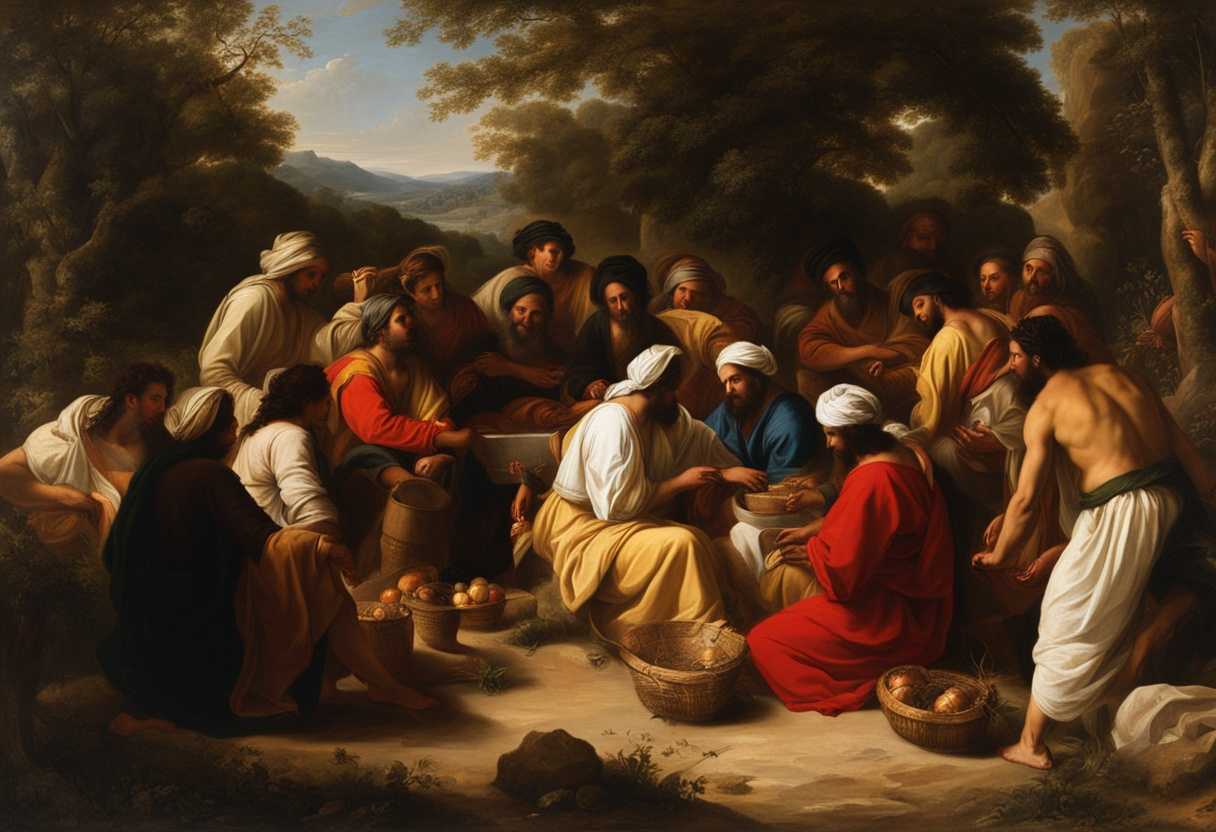
Setting the Scene for Numbers 2:1-34
In the vast wilderness of Sinai, the air is thick with anticipation and the scent of dry earth mingles with the faint aroma of campfires. The Israelites, a multitude of families and tribes, have gathered in a sprawling encampment, their tents forming a vibrant tapestry against the backdrop of rugged mountains. Each tribe, distinct in its colors and symbols, is preparing for the next phase of their journey toward the Promised Land. The sun hangs high in the sky, casting long shadows as the people bustle about, organizing their belongings and discussing the plans laid out by Moses and Aaron. The atmosphere is charged with a mix of hope and uncertainty, as they have been wandering for years, seeking a land flowing with milk and honey.
At the center of this scene stands Moses, the revered leader, his face weathered by the sun and his heart burdened with the weight of his people’s expectations. Beside him is Aaron, his brother and the high priest, adorned in his priestly garments that shimmer in the sunlight. They have just received instructions from God on how to arrange the camp, a divine order that reflects both structure and community. The tribes are to be positioned around the Tabernacle, the sacred dwelling place of God among them, with the Levites encamped closest to it, serving as guardians of the holy space. Each tribe, from Judah to Dan, is assigned its specific location, creating a sense of order amidst the chaos of their nomadic life.
As the tribes begin to take their places, the sound of laughter and chatter fills the air, mingling with the occasional bleat of sheep and the rustle of children playing. The banners of each tribe flutter in the gentle breeze, displaying their unique insignias—Judah’s lion, Ephraim’s ox, and Dan’s eagle—symbols of their heritage and strength. The Levites, tasked with the care of the Tabernacle, move with purpose, setting up the sacred tent and preparing the offerings. The scene is one of unity and diversity, a community bound together by faith and the promise of a future, as they prepare to embark on the next leg of their journey, guided by the presence of God in their midst.
What is Numbers 2:1-34 about?
The instructions regarding the Israelites’ camp arrangement around the Tabernacle emphasize order and community profoundly. Imagine being part of a large family; the way we arrange ourselves can create feelings of belonging or disconnection. God is instilling a sense of identity and unity among the Israelites by detailing the specific locations for each tribe. Have you ever thought about how our environments influence our relationships? Their camp’s physical structure not only facilitated organization but also symbolized their collective commitment to worship and to each other, centered around the Tabernacle as the focal point of God’s presence.
Furthermore, this arrangement demonstrates the value of diversity within unity. Each tribe had distinct roles and responsibilities, akin to different individuals contributing their unique strengths to a group project. This diversity didn’t undermine their identity as the people of Israel; rather, it enriched their community and highlighted the importance of each person’s contribution. Have you considered how your own unique traits and talents fit into the larger tapestry of your community? Through the command to arrange the camp in such a deliberate manner, God was teaching the Israelites that they were part of something far greater than themselves—an intentional community dedicated to following Him. It’s a compelling reminder for us today of the beauty of unity amid diversity and the importance of having a central purpose that binds us together.
Understanding what Numbers 2:1-34 really means
The Book of Numbers provides a fascinating glimpse into the life of the Israelites as they journey through the wilderness. In Numbers 2, we see a detailed account of how the tribes of Israel were to arrange their camp around the Tabernacle. This organization is not merely logistical; it reflects a deeper spiritual truth about community and divine order. As we explore this passage, we can uncover valuable lessons that resonate with our lives today.
One of the key themes in this chapter is divine order. The specific instructions given for how the tribes are to camp highlight God’s desire for structure within the community. Why do you think God emphasized such order? Perhaps it is because chaos can lead to confusion and disunity. In our own lives, we often find that when we have a clear structure—whether in our families, workplaces, or churches—we experience greater harmony and purpose. The Israelites’ arrangement around the Tabernacle serves as a reminder that God values order and wants us to reflect that in our communities.
Another significant theme is identity and belonging. Each tribe has a designated place, reinforcing their unique identity within the larger community of Israel. This speaks to our own need for belonging. In a world where many feel isolated, the reminder that we are part of a larger body is crucial. Just as the tribes had their roles, we too have unique gifts and responsibilities within our communities. How can we better recognize and celebrate the diversity of roles in our own congregations?
The central positioning of the Tabernacle is also noteworthy. It signifies that God is at the heart of the community and their journey. This is a powerful image for us today. In our lives, is God at the center of our decisions and relationships? The Tabernacle was not just a physical structure; it represented God’s presence among His people. When we prioritize God’s presence in our lives, we can navigate challenges with a sense of peace and direction.
Reflecting on related biblical passages, we see a consistent theme of order and community. Exodus 25:8-9 speaks of building a sanctuary for God’s presence, while 1 Corinthians 14:33 reminds us that God is not a God of confusion but of peace. These verses echo the importance of gathering together and supporting one another, much like the tribes of Israel did. In our modern context, how can we foster this sense of community and support in our churches?
As we consider the meaningful phrases in this passage, “Each man by his own standard” stands out. It emphasizes individuality within the community. Each tribe had its own banner, yet they were all part of the same nation. This teaches us that while we are unique, we are called to work together for a common purpose. Additionally, the mention of “the camp of the Levites” reminds us that some are called to specific roles within the community. Everyone has a part to play in God’s plan, whether in leadership, service, or support.
In conclusion, Numbers 2:1-34 serves as a powerful reminder of the importance of community, order, and divine presence in our lives. As we reflect on this passage, let us seek to find our place within our communities, embrace our unique roles, and remember that God is at the center of our journey. How can we better align our lives with these principles? The call to order and community is not just an ancient directive; it is a timeless invitation to live in harmony with one another and with God.
How can I find my place in community service?
Finding your place in community service involves recognizing the unique contributions each individual can make within a larger framework. Understanding your strengths and interests can help you identify where you fit in, just as the passage organizes the community into distinct groups. Your self-awareness of the skills, experiences, or resources you bring to the table will guide you to roles that align with your abilities and passions, whether in leadership, support, or hands-on service. Engaging with your community and actively listening to its needs can give you insight into areas where you can have the most impact. This collaborative approach fosters a sense of belonging and ensures that your service work is relevant and beneficial to those around you. You can find a niche that resonates with your values while helping to support the community’s overall goals by participating in local initiatives, volunteering at organizations, or even starting your own projects.
Lastly, forming connections with others in your community can enhance your service experience. Networking with different groups allows for a sharing of ideas and resources, helping you to better fulfill your role. You can create a more cohesive and effective service effort that brings about greater change by collaborating with others who have complementary skills and aspirations. Embracing this journey as part of a collective mission not only enriches your experience but also strengthens community bonds.
Application
Think of your role in your community like a piece of a jigsaw puzzle; without you, the picture isn’t complete. Just as each family member has tasks that keep the household running smoothly, you have unique gifts to offer the church that can help fulfill its mission. Imagine the impact you can make by stepping into your purpose and supporting others on this journey. It’s time to discover where you fit in and how you can help lift up those around you. Are you ready to take that first step and make your mark?

Reverend Michael Johnson is an experienced Church Minister with a profound expertise in spirituality and guidance. With a serene presence and a compassionate heart, he has faithfully served his congregation for over 20 years, leading them on a spiritual journey towards inner peace and enlightenment. Reverend Johnson’s extensive knowledge of religious philosophies and profound understanding of human nature have made him a trusted confidant and mentor to many, as he seamlessly weaves his profound wisdom into life teachings. Reverend Johnson’s calming demeanor and empathetic nature continue to uplift and heal souls, nurturing a sense of unity and tranquility within his community.