
1 The Lord spoke to Moses, saying,
2 Avenge the people of Israel on the Midianites. Afterward you shall be gathered to your people.
3 So Moses spoke to the people, saying, “Arm men from among you for the war, that they may go against Midian to execute the Lord’s vengeance on Midian.
4 And there were 12,000 men who were killed.
5 And they warred against the Midianites, as the Lord commanded Moses, and killed every male.
6 And Moses sent them to the war, a thousand from each tribe, together with Phinehas the son of Eleazar the priest, with the vessels of the sanctuary and the trumpets for the alarm in his hand.
7 They warred against Midian, as the Lord commanded Moses, and killed every male.
8 They killed the kings of Midian with the rest of their slain, Evi, Rekem, Zur, Hur, and Reba, the five kings of Midian. And they also killed Balaam the son of Beor with the sword.
9 And the people of Israel took captive the women of Midian and their little ones, and they took as plunder all their cattle, their flocks, and all their goods.
10 And they burned all their cities where they lived, and all their encampments with fire.
11 They captured all the spoil and all the plunder, both of man and of beast.
12 Then they brought the captives and the plunder and the spoil to Moses, and to Eleazar the priest, and to the congregation of the people of Israel, at the camp on the plains of Moab by the Jordan at Jericho.
13 Moses and Eleazar the priest and all the chiefs of the congregation went to meet them outside the camp.
14 And Moses was angry with the officers of the army, the commanders of thousands and the commanders of hundreds, who had come from service in the war.
15 Moses said to them, “Have you let all the women live?
16 Behold, these, on Balaam’s advice, caused the people of Israel to act treacherously against the Lord in the incident of Peor, and so the plague came among the congregation of the Lord.
17 Now therefore, kill every male among the little ones, and kill every woman who has known man by lying with him.
18 But all the young girls who have not known man by lying with him keep alive for yourselves.
19 Encamp outside the camp seven days. Whoever of you has killed any person and whoever has touched any slain, purify yourselves and your captives on the third day and on the seventh day.
20 And purify every garment, all that is made of skin, all work of goats’ hair, and every article of wood.”
21 Then Eleazar the priest said to the men of war who had gone to battle: “This is the statute of the law that the Lord has commanded Moses:
22 Only the gold, the silver, the bronze, the iron, the tin, and the lead,
23 everything that can stand the fire, you shall pass through the fire, and it shall be clean. But it shall also be purified with the water of purification. And all that cannot stand the fire you shall pass through the water.
24 And you shall wash your clothes on the seventh day and be clean, and afterward you may come into the camp.
25 And the Lord spoke to Moses, saying,
26 “Take the count of the plunder that was taken, both of man and of beast, you and Eleazar the priest and the heads of the fathers’ houses of the congregation,”
27 and divide the plunder into two parts between the warriors who went out to battle and all the congregation.
28 levy a tax for the Lord from the men of war who went out to battle, one out of five hundred, of the people and of the oxen and of the donkeys and of the flocks.
29 take it from their half and give it to Eleazar the priest as a contribution to the Lord.
30 And from the people of Israel’s half you shall take one drawn out of every fifty, of the people, of the oxen, of the donkeys, and of the flocks, of all the cattle, and give them to the Levites who keep guard over the tabernacle of the Lord.”
31 And Moses and Eleazar the priest did as the Lord commanded Moses.
32 Now the plunder remaining of the spoil that the army took was 675,000 sheep,
33 half, the portion of those who had gone out in the army, numbered 337,500 sheep;
34 And thirty-two thousand persons in all, women who had not known man by lying with him.
35 and 32,000 persons in all, women who had not known man by lying with him.
36 The half, the portion of those who had gone out in the army, numbered 337,500 sheep,
37 and the Lord’s tribute of sheep was 675
38 The oxen were thirty-six thousand, of which the Lord’s tribute was seventy-two.
39 and the donkeys were 30,500, of which the LORD’s tribute was 61.
40 And the persons were sixteen thousand, of which the Lord’s tribute was thirty-two persons.
41 and the human beings were sixteen thousand, of whom the Lord’s tribute was thirty-two persons.
42 And of the people of Israel’s half, which Moses separated from that of the men who had served in the army—
43 (Now the congregation’s half was 337,500 sheep,
44 and 36,000 cattle, 45 and the half, the portion of those who had gone out in the army, numbered 337,500 sheep, 46 and the Lord’s tribute of sheep was 675.
45 and 32,000 persons in all, women who had not known man by lying with him.
46 and sixteen thousand persons,
47 and the congregation gave the Levites 23,000 sheep and goats, of which the Lord’s tribute was 73.
48 Then the officers who were over the thousands of the army, the commanders of thousands and the commanders of hundreds, came near to Moses,
49 and they said to Moses, “Your servants have counted the men of war who are under our command, and there is not a man missing from us.
50 We have brought the Lord’s offering, what each man found, articles of gold, armlets and bracelets, signet rings, earrings, and beads, to make atonement for ourselves before the Lord.”
51 And Moses and Eleazar the priest took the gold from them, all crafted articles.
52 And all the gold of the contribution that they presented to the Lord, from the commanders of thousands and the commanders of hundreds, was 16,750 shekels.
53 (the men of war had taken spoil), every man for himself.
54 So Moses and Eleazar the priest received the gold from the commanders of thousands and of hundreds, and brought it into the tent of meeting, as a memorial for the people of Israel before the Lord.
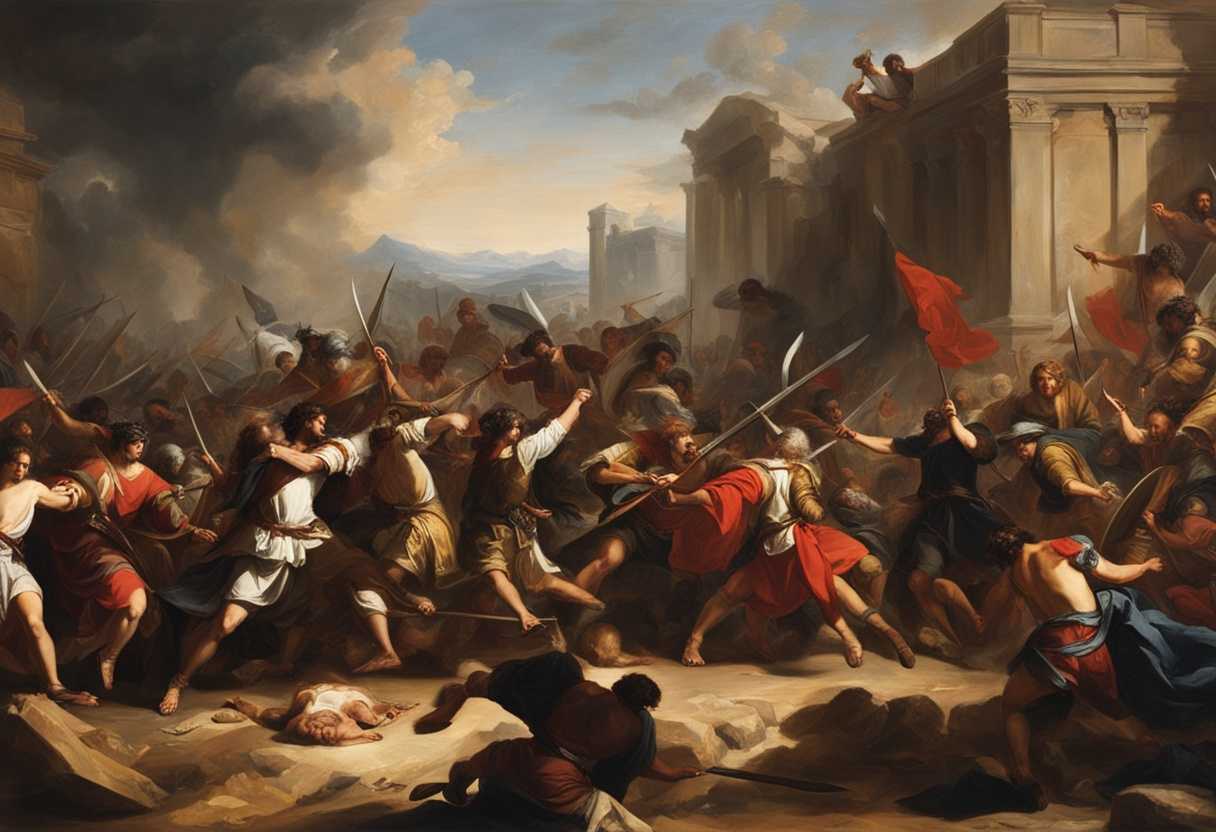
The True Meaning of Numbers 31
The Book of Numbers, the fourth book of the Pentateuch, was written by Moses, the great prophet and leader of the Israelites. The aftermath of the Israelites’ conflict with the Midianites, a neighboring nation that had led the Israelites astray with idolatry and immorality, is witnessed in this chapter.
The chapter begins with God’s command to Moses to take vengeance on the Midianites, a directive that would have profound implications for the Israelites’ journey towards the Promised Land. God’s instructions would shape the course of Israelites’ history as foretold in Deuteronomy 32:35, “Vengeance is mine, and recompense,” as we delve into the events that unfold.”
The chapter’s narrative provides a glimpse into the complexities of warfare and the challenges faced by the Israelites as they sought to maintain their devotion to God amidst the temptations of the surrounding nations. Through this account, we can gain a deeper understanding of the importance of heeding God’s commands and the consequences of straying from His path, as echoed in Proverbs 16:7, “When a man’s ways please the Lord, he makes even his enemies to be at peace with him.”
Numbers 31:1-6
The key sections of the verse in Numbers 31:1-6 can be broken down as follows: “The Lord said to Moses”: This highlights the authority behind the upcoming commands and instructions. Whenever the Lord speaks to Moses in the Bible, it signifies a key moment in which divine guidance is provided to steer the Israelites in the right direction. Moses was not just a leader but also a mediator between the people and God.
-
“Avenge the people of Israel on the Midianites”: This reveals a specific directive given by God to the Israelites, commanding them to take revenge on the Midianites. The Midianites were involved in leading the Israelites to sin and idolatry. This command is a reminder of the seriousness of following God’s laws and the consequences of turning away from Him.
-
“Afterward you shall be gathered to your people”: This is a significant statement as it hints at Moses’ impending death. The mention of being “gathered to your people” is a common euphemism in the Bible for passing away and joining one’s ancestors in death. This serves as a poignant moment in Moses’ journey as the leader of the Israelites, knowing that his time on earth is coming to an end.
-
“So Moses spoke to the people, saying, ‘Arm men from among you for the war, that they may go against Midian to execute the Lord’s vengeance on Midian.’”: Here, Moses conveys God’s command to the Israelites, instructing them to prepare for war against the Midianites. This act illustrates the idea that there are times when God commands His people to engage in battles, whether physical or spiritual, to uphold His righteousness and bring justice.
This passage holds timeless messages about the importance of remaining faithful to God’s laws, the consequences of straying from His path, and the necessity of obedience even in difficult and challenging situations. It also highlights the role of leaders like Moses in communicating God’s will to the people and the need for them to act accordingly. The concept of divine justice and the idea of consequences for actions resonate throughout the Bible, emphasizing the importance of living in alignment with God’s principles to avoid His wrath.
Numbers 31:7-12
The Israelites, under the command of Moses, carried out the Lord’s vengeance against the Midianites in Numbers 31:7-12. This section of the verse highlights the military campaign that the Israelites waged against the Midianites. The Israelites were instructed to avenge the Lord by attacking the Midianites for their role in leading the Israelites into sin and immorality through their relationship with the Moabite women. The Midianites had seduced the Israelites into idolatry and sexual immorality, leading many Israelites astray from their faith in God.
This act of vengeance against the Midianites serves as a reminder of the consequences of leading others astray from the path of righteousness. The Lord expects His people to remain faithful and committed to Him, and those who deliberately lead others into sin will face judgment. This event also underscores the importance of maintaining purity and holiness in one’s faith, guarding against influences that may lead us away from God.
The involvement of Phinehas, the son of Eleazar the priest, is significant in this passage. Phinehas was known for his zeal for the Lord and his actions to preserve the holiness of the Israelites. Phinehas took decisive action in Numbers 25 to stop the plague afflicting the Israelites due to their sin with the Moabite women. His faithfulness and zeal for God’s commands earned him a special place among the people of Israel. Phinehas symbolizes the importance of standing up for righteousness and taking action to uphold God’s standards, even in the face of opposition or temptation.
Furthermore, the spoils of war that the Israelites acquired from their victory over the Midianites are also mentioned in these verses. The soldiers were instructed to divide the spoils among themselves, with a portion set aside for the Lord as a tribute. This practice of dedicating a portion of the spoils of war to the Lord emphasizes the principle of giving back to God from the blessings He has bestowed upon us. It reminds us of the importance of gratitude and acknowledging God’s provision in our lives, recognizing that all that we have ultimately comes from Him. Numbers 31:7-12 conveys the message of maintaining faithfulness to God, avoiding influences that lead us astray, standing up for righteousness, and being grateful for God’s provision in our lives. It serves as a reminder of the consequences of disobedience and the importance of upholding God’s commands in a world filled with temptations and distractions.
Numbers 31:13-18
Numbers 31:13-18 reads, “Moses, Eleazar the priest, and all the leaders of the community went to meet them outside the camp. But Moses was furious with all the military commanders who had returned from the battle. ‘Why have you let all the women live?’ he demanded. ‘These are the very ones who followed Balaam’s advice and caused the people of Israel to rebel against the Lord at Mount Peor. They are the ones who caused the plague to strike the Lord’s people. So kill all the boys and all the women who have had intercourse with a man. Only the young girls who are virgins may live; you may keep them for yourselves. The Israelites’ victory over the Midianites reveals a significant moment in this section. Moses, along with Eleazar the priest and the community leaders, confront the military commanders who returned from battle. Moses is filled with anger as he questions the decision to spare the women, considering their role in leading the Israelites astray through idolatry and sexual immorality. This passage sheds light on the severity of sin and the consequences that follow disobedience to God’s commands.
Moses’s reaction depicts the serious consequences of allowing sin to go unpunished. It highlights the importance of accountability and the need to address sin promptly to prevent further corruption within the community. The mention of Balaam, the false prophet who attempted to curse the Israelites at the request of Balak, serves as a reminder of the dangers of disobedience and the influence of individuals who lead others away from God.
The instruction to kill all the male children and non-virgin women may seem harsh, but it is a reflection of the seriousness of sin and the need for purification. The commandment to spare only the young virgin girls raises questions about the fate of these girls and their future within the Israelite community. This raises ethical considerations and challenges regarding the treatment of captives in times of war.
This passage in Numbers 31 echoes themes of accountability, obedience, and the consequences of sin that resonate throughout the Bible. It serves as a reminder of the importance of upholding God’s commands and the dangers of allowing sinful influences to persist. The story of the Israelites and their battles against the Midianites also reflects the ongoing spiritual warfare faced by believers, emphasizing the need for vigilance and adherence to God’s truth (Ephesians 6:12).
Numbers 31:19-24
To understand the depth of the passage in Numbers 31:19-24, one needs to expound upon several crucial sections. Verse 19 states, “And do ye abide without the camp seven days: whosoever hath killed any person, and whosoever hath touched any slain, purify both yourselves and your captives on the third day, and on the seventh day.””
Firstly, the instruction to remain outside the camp for seven days after returning from battle reflects the importance of purification and sanctification. This period of isolation and cleansing was necessary to ensure that the Israelites were spiritually clean before rejoining the community. It also symbolizes the importance of taking time to reflect on the violence and bloodshed that occurred in battle, emphasizing the seriousness of taking another person’s life.
The command to purify those who had killed someone or had contact with the slain highlights the significance of atonement and repentance for shedding blood. This act of purification was not only a physical cleansing but also a spiritual one, signifying the need to seek forgiveness and restoration with God after being involved in such a violent act. It echoes the broader biblical theme of seeking forgiveness for sins and the importance of repentance in maintaining a right relationship with God. The specific mention of purifying both themselves and their captives underscores the idea that even those who were enemies in battle were not beyond the reach of God’s mercy and grace. This act of purification extended not just to the Israelites but also to their captives, demonstrating that God’s offer of forgiveness and redemption is available to all, regardless of their past actions or allegiances.
This passage also reminds us of the importance of taking responsibility for our actions and seeking reconciliation with both God and others. The Israelites were demonstrating their commitment to righteousness and justice by acknowledging their role in the violence of war and undergoing a process of purification. This reflects the biblical teaching of seeking peace and reconciliation, as seen in verses such as Matthew 5:9, which says, “Blessed are the peacemakers, for they will be called children of God. Numbers 31:19-24 emphasizes the themes of purification, atonement, and reconciliation. It serves as a reminder of the need for repentance and forgiveness, both individually and communally, and highlights the universal offer of God’s grace to all who seek it. Through this passage, we are encouraged to reflect on our actions, seek restoration with God, and work towards reconciliation with others, embodying the principles of peace and justice that are central to the message of the Bible.
Numbers 31:25-30
The verses in Numbers 31:25-30 describe the division of the plunder that the Israelites took after their victory over the Midianites. Let’s break down the important sections of these verses for a more in-depth look at their meaning and significance. Four groups share the spoils of war in these verses: the fighting men who participated in the battle, the congregation of Israel, the Levites who were involved in the service of the tabernacle, and finally, Eleazar the priest, who oversaw the distribution of the plunder as a “heave offering” to the Lord.
Firstly, the fighting men who went to battle were allotted a portion of the spoils. This demonstrates the recognition and reward given to those who had actively engaged in the physical warfare against the enemy. This importance of spiritual warfare in the life of a believer can symbolize in a broader sense. “It says in Ephesians 6:12 that we do not wrestle against flesh and blood, but against principalities, against powers, against the rulers of the darkness of this age, against spiritual hosts of wickedness in the heavenly places.”” This verse reinforces the idea that Christians are engaged in a spiritual battle, and just as the Israelite soldiers were rewarded for their physical battle, believers can expect rewards for their spiritual battles.
Secondly, a portion of the spoils was allocated to the congregation of Israel. This distribution served as a reminder that the victory over the Midianites was not just for the warriors, but for the entire community of Israel. It emphasized the communal aspect of faith and the importance of unity in facing trials and celebrating victories together. This communal sharing of the spoils can also be seen as a reflection of the concept of sharing blessings with fellow believers, as seen in Acts 2:44-45 where it says, “All the believers were together and had everything in common. They sold property and possessions to give to anyone who had need.”
Thirdly, a share of the plunder was given to the Levites who were involved in the service of the tabernacle. The Levites were set apart for the ministry of the Lord and did not receive a land inheritance like the other tribes, so this provision from the spoils of war helped sustain them. This highlights the principle of supporting and providing for those who are devoted to serving God’s people. God commanded the people of Israel in Deuteronomy 18:1-2 to take care of the Levites, saying, “The Levitical priests—all the tribe of Levi—shall have no part nor inheritance with Israel; they shall eat the offerings of the Lord made by fire, and His portion.”.. they shall have no inheritance among their brethren; the Lord is their inheritance.”
Finally, Eleazar the priest received a portion of the plunder as a heave offering to the Lord. This act acknowledges God’s sovereignty over the victory and the recognition that all blessings and victories ultimately come from Him. This offering symbolizes giving back to God a portion of what He had allowed them to acquire, in recognition of His provision and guidance in the battle. This act reflects the principle of tithing and giving offerings to honor God as seen in Proverbs 3:9-10, which says, “Honor the Lord with your possessions and with the firstfruits of all your increase; so your barns will be filled with plenty, and your vats will overflow with new wine. Numbers 31:25-30 not only details the division of spoils after a military victory but also provides valuable lessons on reward, community, support for ministry, and giving back to God. These principles remain relevant today, reminding believers of the importance of unity, supporting those in ministry, and acknowledging God’s sovereignty in our victories and blessings.
Numbers 31:31-47
A detailed account of the spoils of war after the Israelites’ victory over the Midianites is seen in Numbers 31:31-47. This passage outlines how the plunder was to be divided among the warriors who had fought in the battle, as well as for the Levites and the congregation of Israel. The division was very specific: half of the spoils went to the soldiers who had fought in the battle, while the other half was to be shared among the rest of the people, including non-combatants such as women and children.
This division of the spoils was not just about distributing material wealth but also served to highlight the idea of communal responsibility and solidarity among the Israelites. It emphasized the idea that everyone, regardless of their role in the battle, had a part to play in supporting and benefiting from the victories of the community as a whole. This concept of shared responsibility and blessings is a recurring theme throughout the Bible, emphasizing the importance of unity and mutual support among God’s people.
The mention of the tribute given by the soldiers to the Lord as an offering is also significant. This act acknowledges that the victory in battle was not solely due to their own strength or prowess, but ultimately the result of God’s intervention and assistance. It reflects the idea of recognizing and honoring God as the source of their success, showing gratitude and offering a portion of the spoils back to Him. This concept of giving back to God what is rightfully His is seen in other parts of the Bible, such as in Proverbs 3:9-10 where it says, “Honor the Lord with your wealth and with the firstfruits of all your produce; then your barns will be filled with plenty, and your vats will be bursting with wine.”
Furthermore, the mention of the commanders presenting an offering to the Lord for preservation of their lives after the battle serves as a reminder of the importance of gratitude and thanksgiving in times of both triumph and trial. It shows a recognition that their lives were spared not just by their own abilities but by the grace and protection of God. This act of thanksgiving echoes the sentiment expressed in Psalm 118:21, “I will give you thanks, for you answered me; you have become my salvation. This passage in Numbers 31 sheds light on the principles of community, gratitude, and acknowledgment of God’s role in our victories. It serves as a reminder for believers to share their blessings with others, to recognize God as the ultimate source of success, and to express thankfulness and gratitude in all circumstances.
Numbers 31:48-54
Moses and Eleazar the priest receive offerings from the commanders who led the Israelite army in battle against the Midianites in Numbers 31:48-54. The commanders brought gold jewelry, armlets, rings, earrings, and necklaces as a contribution to make atonement for themselves before the Lord. The total amount of gold that was collected as an offering to the Lord was 16,750 shekels.
This passage holds several significant meanings. Firstly, the act of offering wealth, especially from spoils of war, as a way to seek atonement from God highlights the understanding of the Israelites that all they had was ultimately given to them by God, and it was their duty to offer back to Him as an act of gratitude and repentance. The concept of atonement runs deep in the Old Testament and is a bridge between the sinful nature of man and a holy God. Through the giving of these offerings, the Israelites acknowledged their need for forgiveness and sought reconciliation with God.
Furthermore, the inclusion of gold jewelry as offerings speaks to the importance of giving God our best. Gold in the Bible often symbolizes purity, divinity, and value. The Israelites were not only giving materially but also giving the best of what they had to honor God by offering their gold jewelry. This teaches us the principle of sacrificial giving, where we are called to offer not just what is convenient but what is truly valuable to us, demonstrating our love and devotion to God.
The actions of the commanders in bringing these offerings also show a sense of humility and obedience to God’s commands. They understood the importance of making things right with God after engaging in warfare. Their willingness to bring these offerings despite their leadership roles emphasizes the idea that no one is exempt from the need for repentance and seeking God’s forgiveness. This humility is a recurring theme in the Bible, where those who humble themselves are exalted by God (James 4:10). Numbers 31:48-54 serves as a reminder of the principles of atonement, sacrificial giving, humility, and obedience that are vital in our relationship with God. It shows us that giving back to God, whether in material possessions or in repentance for our sins, is a crucial aspect of our faith journey. We grow in our walk with God and deepen our understanding of His grace and mercy by offering our best and acknowledging our need for forgiveness.
After Numbers 31
The Israelites had followed the Lord’s command and defeated the Midianites. They had taken captive the women and children, and seized all their possessions and livestock. Now, as the sun began to set, the weary soldiers returned to the camp, their hearts heavy with the weight of the battle.
Yet, the Lord was not finished with them. I, as the reverend, knew that the next chapter would bring new challenges and tests of their faith. For the Lord’s ways are not our ways, and His plan for His people is often shrouded in mystery. But one thing was certain: the Israelites would need to remain steadfast in their devotion, for the road ahead would not be an easy one.

Reverend Michael Johnson is an experienced Church Minister with a profound expertise in spirituality and guidance. With a serene presence and a compassionate heart, he has faithfully served his congregation for over 20 years, leading them on a spiritual journey towards inner peace and enlightenment. Reverend Johnson’s extensive knowledge of religious philosophies and profound understanding of human nature have made him a trusted confidant and mentor to many, as he seamlessly weaves his profound wisdom into life teachings. Reverend Johnson’s calming demeanor and empathetic nature continue to uplift and heal souls, nurturing a sense of unity and tranquility within his community.