
Numbers 3:17-39 is about the organization and responsibilities of the Levite clans, outlining their roles in the service of the Tabernacle and emphasizing the importance of holiness and order in the worship of God among the Israelites.
17 These were the sons of Levi by their names: Gershon and Kohath and Merari.
18 And these are the names of the sons of Gershon by their clans: Libni and Shimei.
19 And the sons of Kohath by their clans: Amram, Izhar, Hebron, and Uzziel.
20 And the sons of Merari by their clans: Mahli and Mushi. These are the clans of the Levites by their fathers’ houses.
21 Of Gershon were the clan of the Libnites and the clan of the Shimeites; these were the clans of the Gershonites.
22 Those listed of the sons of Gershon, by their clans and their fathers’ houses,
23 The clans of the Gershonites were to camp behind the tabernacle on the west,
24 The chief of the clan of the Gershonites being Eliasaph the son of Lael.
25 And the guard duty of the sons of Gershon in the tent of meeting involved the tabernacle, the tent with its covering, the screen for the entrance of the tent of meeting,
26 and the hangings of the court, the screen for the entrance of the court that is around the tabernacle and the altar, and its cords—all the service connected with these.
27 And of Kohath was the clan of the Amramites and the clan of the Izharites and the clan of the Hebronites and the clan of the Uzzielites.
28 According to the number of all the males, from a month old and upward, there were 8,600.
29 The clans of the sons of Kohath were to camp on the south side of the tabernacle,
30 with Elizaphan the son of Uzziel as chief of the fathers’ house of the clans of the Kohathites.
31 Their guard duty involved the ark, the table, the lampstand, the altars, the vessels of the sanctuary with which they minister, and the screen; all the service connected with these.
32 and Eleazar the son of Aaron the priest shall be chief over the chiefs of the Levites, and have oversight of those who keep guard of the sanctuary.
33 from thirty years old up to fifty years old, all who can come on duty, to do the work in the tent of meeting.
34 So Moses and Aaron and the chiefs of the congregation listed the sons of the Kohathites, by their clans and their fathers’ houses,
35 and the chief of the fathers’ houses of the clans of Merari was Zuriel the son of Abihail. They were to camp on the north side of the tabernacle.
36 The appointed duty of the people of Merari as regards the frames of the tabernacle, its bars, its pillars, and its bases,
37 And the pillars of the court all around and their bases and pegs and cords.
38 Those who were to camp before the tabernacle on the east, before the tent of meeting toward the sunrise, were Moses and Aaron and his sons, guarding the sanctuary itself, to protect the people of Israel. And any outsider who came near was to be put to death.
39 All those listed among the Levites, whom Moses and Aaron listed at the command of the Lord, by clans, all the males from a month old and upward, were twenty-two thousand.
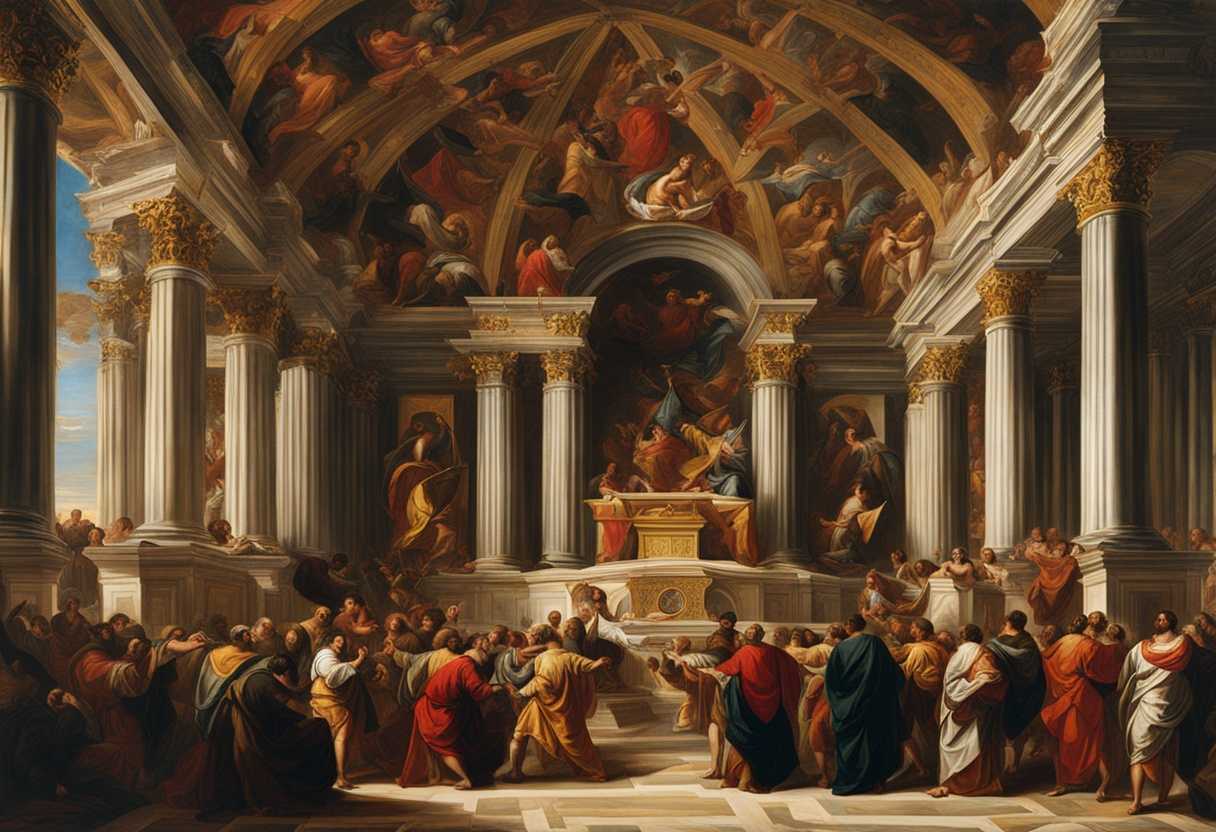
Setting the Scene for Numbers 3:17-39
In the arid wilderness of Sinai, the air is thick with anticipation as the Israelites prepare for their journey through the desert. The sun hangs high in the sky, casting long shadows across the encampment of the twelve tribes. Tents of various colors dot the landscape, each representing a different family line, while the sound of children playing mingles with the distant bleating of sheep. At the center of this bustling scene stands the Tabernacle, a magnificent structure draped in rich fabrics and adorned with intricate designs, symbolizing the presence of God among His people. It is here that the Levites, chosen for their sacred duty, gather to receive their assignments.
Among the Levites, three distinct families emerge: the Kohathites, the Gershonites, and the Merarites. Each family has been designated specific responsibilities concerning the care and transport of the Tabernacle and its furnishings. The Kohathites, led by Amram, are tasked with carrying the most sacred items, including the Ark of the Covenant, which holds the tablets of the Law. The Gershonites, under the leadership of Eliasaph, are responsible for the curtains and coverings, while the Merarites, led by Zuriel, manage the structural components, such as the frames and poles. As the leaders of these families gather, they discuss the logistics of their duties, ensuring that every detail is meticulously planned for the journey ahead.
Surrounding them, the vast expanse of the desert stretches out, a reminder of the challenges that lie ahead. The heat of the day is tempered by a gentle breeze, carrying with it the scent of dry earth and the promise of adventure. The Levites, chosen for their unique role in the community, feel a sense of pride and responsibility as they prepare to serve God and their fellow Israelites. They know that their work is not just about moving physical objects; it is about maintaining the sanctity of the worship experience and ensuring that the presence of God remains with His people as they journey toward the Promised Land. The scene is one of unity, purpose, and divine calling, as the Levites stand ready to fulfill their sacred duties in the unfolding story of Israel.
What is Numbers 3:17-39 about?
The intricate structure of the Levite clans in Numbers 3:17-39 serves a vital function in the Israelite community, particularly in their service to the Tabernacle. This passage outlines not only the genealogies of the Levites but also their specific duties, which were essential for maintaining the sanctity and functionality of the worship space. Have you ever considered how our own communities operate, with various roles and responsibilities that ensure everything runs smoothly? The Levite clans were dedicated individuals, set apart for a significant purpose—much like how we each have roles in our families or workplaces that contribute to a greater mission.
What stands out in this scripture is the emphasis on order and divine appointment. The Levites were not chosen randomly; rather, their lineage and designated tasks were established by God. This begs the question: how do we recognize our own callings within our communities? We are all invited to reflect on how we can serve our own contexts meaningfully, just as the Levites had specific roles, such as guarding the sanctuary or assisting the priests. The organization of the Levite clans reminds us of the importance of structure in spiritual practice and community service. It reinforces the idea that every role, no matter how small, is vital for the health and wellbeing of the community. Numbers 3 emphasizes the uniqueness and sacredness of these positions. The Levites were distinct from the other tribes, set apart for holiness and dedicated service. What might this mean for us as we think about our own spiritual journeys and the concept of being set apart? It serves as a reminder that everyone has a unique contribution to make. We might consider how we can embrace our own identities and roles, following the example of the Levites in faithfully fulfilling our duties as we reflect on our purposes in our places of worship, our homes, or our workplaces. With these reflections, perhaps we can better appreciate the tapestry of roles that create a harmonious community of faith and support.
Understanding what Numbers 3:17-39 really means
In Numbers 3:17-39, we encounter a detailed account of the genealogies and responsibilities of the Levite clans: the Kohathites, Gershonites, and Merarites. This passage is not merely a historical record; it underscores the significance of order and divine purpose within the Israelite community. Each clan is assigned specific duties related to the Tabernacle, illustrating how God orchestrates the roles of individuals and groups for His greater plan.
The unique functions of each Levite clan serve as a metaphor for the broader biblical theme of community. Just as the Levites had distinct responsibilities, so too does each member of the body of Christ possess a unique role. This concept is echoed in 1 Corinthians 12:12-27, where Paul emphasizes the unity and diversity within the church. Each person’s contribution is vital, and together, they form a cohesive whole that glorifies God.
In addition to 1 Corinthians, Ephesians 4:11-13 further reinforces this idea by discussing the various gifts bestowed upon believers for the edification of the church. These passages collectively highlight that God has a specific purpose for each of us, much like the Levites’ appointed duties in the service of the Tabernacle. Exodus 25:8-9 also sets the stage for this divine arrangement, revealing God’s desire to dwell among His people, fulfilled through the Levites’ dedicated service.
In our contemporary context, this passage challenges the prevalent notion of individualism. It reminds us that we are part of a larger community, where collaboration and shared responsibilities are essential. Each person has a role to play, and when we embrace our unique gifts, we contribute to a greater purpose. Reflecting on this can lead us to consider how we can better serve our communities, both in the church and beyond.
Imagine a church preparing for a significant event. Each member has a specific task—some set up chairs, others prepare food, and some welcome guests. If everyone attempted to do the same job, chaos would ensue. However, when each person fulfills their assigned role, the event runs smoothly, and the community thrives. This scenario mirrors the Levite clans’ roles in the Tabernacle, where every task was essential for worship and service to God.
Several phrases in this passage carry profound significance. “The sons of Levi” highlights the chosen lineage set apart for God’s service, reminding us that God has a specific plan for those He calls. “Their appointed duty” emphasizes the importance of obedience and faithfulness in fulfilling responsibilities, suggesting that even mundane tasks can become acts of worship when performed with the right heart. Lastly, “the service of the Tabernacle” encapsulates the idea of sacred duty, reminding us that our work, when aligned with God’s purpose, becomes a form of service to Him and His people.
In conclusion, Numbers 3:17-39 serves as a powerful reminder of the importance of community, divine purpose, and the unique roles we each play in the body of Christ. As we reflect on this passage, let us seek to understand our own roles and embrace the call to serve, knowing that every contribution is valuable in God’s kingdom. How might you discover and fulfill your unique role within your community today?
How do I fulfill my unique purpose in life?
To fulfill your unique purpose in life, it’s essential to recognize the distinct roles and responsibilities you hold within your community and within the broader tapestry of life. Understanding the specific contributions that align with your skills and passions can lead you to a more meaningful existence, just as the families described exemplify different duties and tasks. Reflect on your strengths, interests, and how they can serve others, as this alignment will pave the way for you to fulfill your purpose.
Additionally, collaboration and interdependence with others are crucial in achieving your goals. The verse highlights the importance of each group working together for a common purpose, emphasizing that no role is insignificant. Engaging with others, listening to their needs, and finding ways to support one another helps create a dynamic environment where everyone can thrive. Through teamwork, you can amplify your impact and contribute to a shared vision that enhances personal fulfillment.
Finally, embrace your journey with a sense of commitment and responsibility. Acknowledging that your actions and choices matter not only to you but also to those around you can lead to a profound sense of purpose. Approach life with a mindset geared toward service and growth, and remain open to learning from experiences along the way. You can discover and live out your unique purpose while uplifting others in the process by actively participating in the roles you’re called to and fostering strong relationships within your community.
Application
Just like each part of a well-functioning machine, every person has a vital role in our community. Think about your own unique skills and how they can make a difference in your family, workplace, or local group. Are you ready to embrace your strengths and contribute to something bigger than yourself? Step up and take action—your talents are needed now more than ever. What impact could you have if you fully engaged in your purpose?

Reverend Michael Johnson is an experienced Church Minister with a profound expertise in spirituality and guidance. With a serene presence and a compassionate heart, he has faithfully served his congregation for over 20 years, leading them on a spiritual journey towards inner peace and enlightenment. Reverend Johnson’s extensive knowledge of religious philosophies and profound understanding of human nature have made him a trusted confidant and mentor to many, as he seamlessly weaves his profound wisdom into life teachings. Reverend Johnson’s calming demeanor and empathetic nature continue to uplift and heal souls, nurturing a sense of unity and tranquility within his community.