
Numbers 6:9-12 is about the regulations surrounding the vow of a Nazirite, emphasizing the importance of consecration and commitment to the Lord through specific actions such as refraining from drinking wine, cutting one’s hair, and avoiding contact with the dead.
9 “And if any man dies very suddenly beside him and he defiles his consecrated head, then he shall shave his head on the day of his cleansing; on the seventh day he shall shave it.
10 And on the eighth day he shall bring two turtledoves or two pigeons to the priest to the entrance of the tent of meeting.
11 And the priest shall offer one for a sin offering and the other for a burnt offering, and make atonement for him, because he sinned by reason of the dead body. And he shall consecrate his head that same day,
12 And he shall separate himself to the Lord for the days of his separation and bring a male lamb a year old for a guilt offering. But the previous days shall be void, because his separation was defiled.
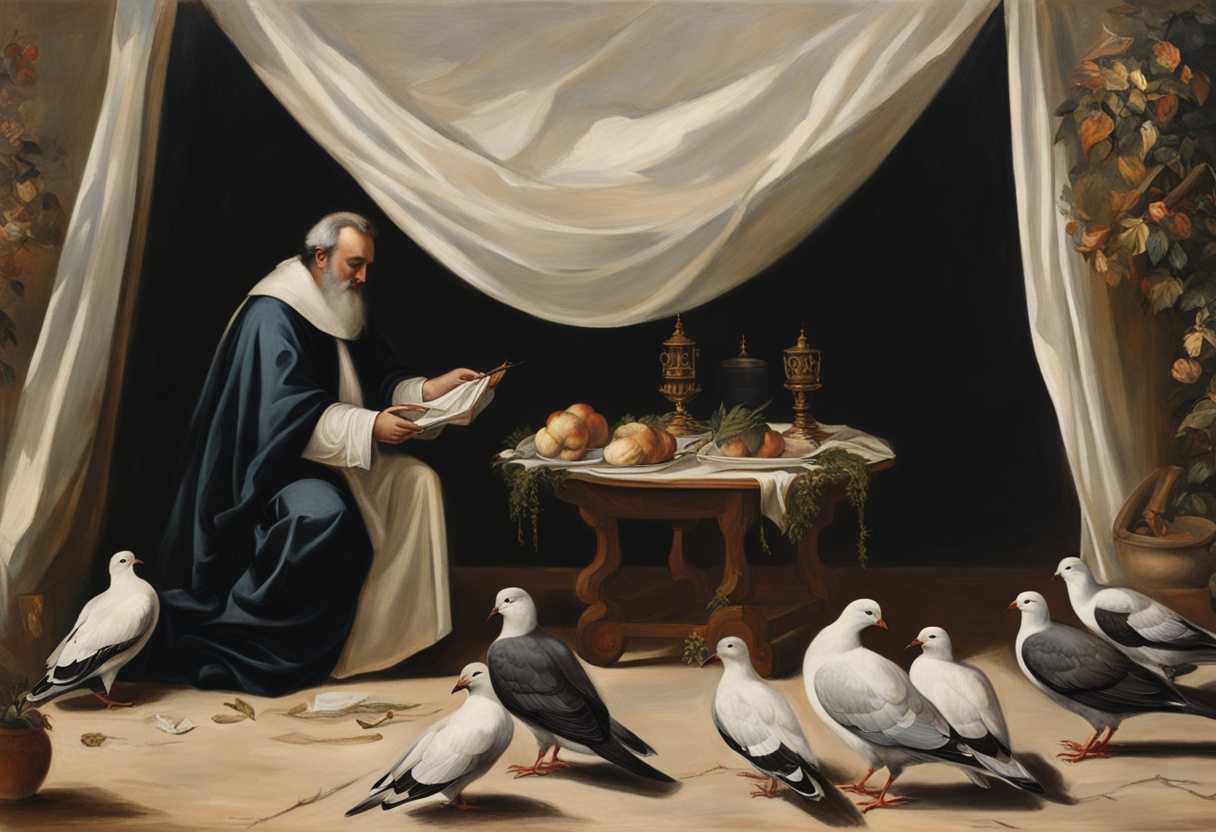
Setting the Scene for Numbers 6:9-12
In Numbers chapter 6, we find ourselves in the camp of the Israelites as they journey through the wilderness. The scene is set near the Tabernacle, the sacred tent where God’s presence dwells among His people. The air is filled with the scent of incense and the sound of prayers being lifted up to the heavens. The sun is setting, casting a warm glow over the camp as the day comes to a close.
Moses, the revered leader of the Israelites, is standing before a group of priests who have been consecrated to serve in the Tabernacle. These priests have taken a vow of dedication, committing themselves to a period of separation and holiness unto the Lord. As part of this vow, they have refrained from consuming any wine or strong drink, avoiding anything that might compromise their consecration.
The priests listen attentively as Moses imparts the instructions given to him by the Lord regarding their vow. He emphasizes the importance of their commitment to God and the need to remain pure and set apart during this time of consecration. The atmosphere is solemn yet filled with a sense of reverence and dedication as the priests prepare to fulfill their vow and serve the Lord wholeheartedly.
What is Numbers 6:9-12 about?
The verse you are referring to outlines the specific instructions for taking a Nazirite vow, a vow of dedication and separation to God. A person chooses to set themselves apart for a special purpose, often as a sign of devotion or penance, by consecrating oneself as a Nazirite. This vow includes abstaining from grape products, such as wine, to symbolize a sense of detachment from earthly pleasures and a commitment to spiritual purity. Additionally, the vow requires refraining from cutting one’s hair, which serves as a visible reminder of the vow and the separation from worldly norms. Avoiding contact with dead bodies emphasizes the importance of holiness and spiritual cleanliness in the eyes of God. We can ponder the deeper meaning behind these instructions as we reflect on them. Why do you think these specific requirements are outlined for a Nazirite vow? What do these actions symbolize in terms of one’s relationship with God and the community? Individuals can demonstrate their dedication to God and their willingness to make sacrifices for spiritual growth by following these guidelines. It’s a reminder that our actions and choices have symbolic significance and can serve as a testimony of our faith and commitment.
Understanding what Numbers 6:9-12 really means
The Book of Numbers, a foundational text in both Judaism and Christianity, contains a passage in Numbers 6:9-12 that delves into the Nazirite vow, a special commitment to God. This vow entails abstaining from wine, refraining from cutting one’s hair, and avoiding contact with the deceased. The phrase “If someone dies suddenly in his presence” underscores life’s unpredictability and the challenges of maintaining purity and dedication amidst unexpected events. Shaving one’s head on the day of cleansing symbolizes a fresh start and spiritual renewal, emphasizing the physical act’s representation of purification.
In this passage, the offering of two turtledoves or two young pigeons signifies atonement and the restoration of one’s relationship with God. Additionally, consecrating the days of separation to the Lord highlights the importance of rededicating oneself to God after a disruption. Leviticus 5:2-6 further discusses the need for atonement and offerings when one becomes unclean, reinforcing the themes of purification and restoration. Acts 21:23-24 showcases Paul’s participation in a Nazirite vow, illustrating the continuity of this practice in the New Testament and its significance in early Christian communities.
The relevance of Numbers 6:9-12 extends to modern-day individuals facing unexpected disruptions in their spiritual commitments. Life’s unpredictability can challenge our dedication, but the passage teaches the importance of seeking purification and rededication. The concept of starting anew after setbacks resonates universally, encouraging individuals not to give up but to pursue restoration and continue their spiritual journey. Consider a scenario where someone breaks their commitment to a healthier lifestyle at a family gathering. Despite feeling guilty, they can choose to start fresh the next day, akin to the Nazirite’s act of shaving the head and offering sacrifices, reaffirming their dedication to a healthier path.
In conclusion, Numbers 6:9-12 emphasizes the significance of purification, atonement, and rededication in our spiritual lives. It reminds us that setbacks are inevitable but need not define our journey with God. By seeking restoration and reaffirming our commitments, we can persist in growing our relationship with the divine, embodying the principles of renewal and dedication found in this ancient text.
How can we maintain our spiritual dedication daily?
We can maintain our spiritual dedication daily by being mindful of our actions and decisions. We can ensure that we are living in accordance with our faith by constantly seeking to align our thoughts and behaviors with our spiritual beliefs. This includes being intentional in our interactions with others, being truthful and kind, and resisting temptations that may lead us astray.
Additionally, staying connected to our spiritual community and practicing regular spiritual disciplines can help to strengthen our dedication. This can include attending religious services, participating in prayer or meditation, reading sacred texts, and seeking guidance from spiritual mentors. We can draw support and encouragement to stay dedicated to our spiritual path by surrounding ourselves with like-minded individuals who share our beliefs and values.
It is also important to continually remind ourselves of the reasons why we are committed to our faith and the values it represents. Reflecting on the teachings and principles that are important to us can serve as a source of inspiration and motivation to remain dedicated to our spiritual journey. We can cultivate a deeper sense of connection to our faith and remain steadfast in our dedication by making a conscious effort to prioritize our spiritual growth and well-being each day.
Application
Dear reader, it’s time to dedicate ourselves to a higher purpose. Let’s strive for a life filled with purity and righteousness. Embrace the path of holiness in all you do. Take a moment to reflect on your connection with the divine. How will you answer the call to consecrate yourself fully to the Lord?

Reverend Michael Johnson is an experienced Church Minister with a profound expertise in spirituality and guidance. With a serene presence and a compassionate heart, he has faithfully served his congregation for over 20 years, leading them on a spiritual journey towards inner peace and enlightenment. Reverend Johnson’s extensive knowledge of religious philosophies and profound understanding of human nature have made him a trusted confidant and mentor to many, as he seamlessly weaves his profound wisdom into life teachings. Reverend Johnson’s calming demeanor and empathetic nature continue to uplift and heal souls, nurturing a sense of unity and tranquility within his community.