
Numbers 7:10-17 is about the twelve tribal leaders presenting their offerings at the dedication of the altar, symbolizing unity, devotion, and commitment of the entire nation of Israel to God.
10 And the chiefs offered offerings for the dedication of the altar on the day it was anointed; and the chiefs offered their offering before the altar.
11 And the Lord said to Moses, “Let them bring their offerings, one leader each day, for the dedication of the altar.”
12 And the one who offered his offering on the first day was Nahshon the son of Amminadab, of the tribe of Judah.
13 and his offering was one silver plate whose weight was 130 shekels, one silver basin of 70 shekels, according to the shekel of the sanctuary, both of them full of fine flour mixed with oil for a grain offering;
14 one golden dish weighing 10 shekels, full of incense;
15 one silver plate weighing 130 shekels, one silver basin of 70 shekels, according to the shekel of the sanctuary, both of them full of fine flour mixed with oil for a grain offering;
16 one male goat for a sin offering;
17 and for the sacrifice of peace offerings, two oxen, five rams, five male goats, and five male lambs a year old. This was the offering of Nahshon the son of Amminadab.
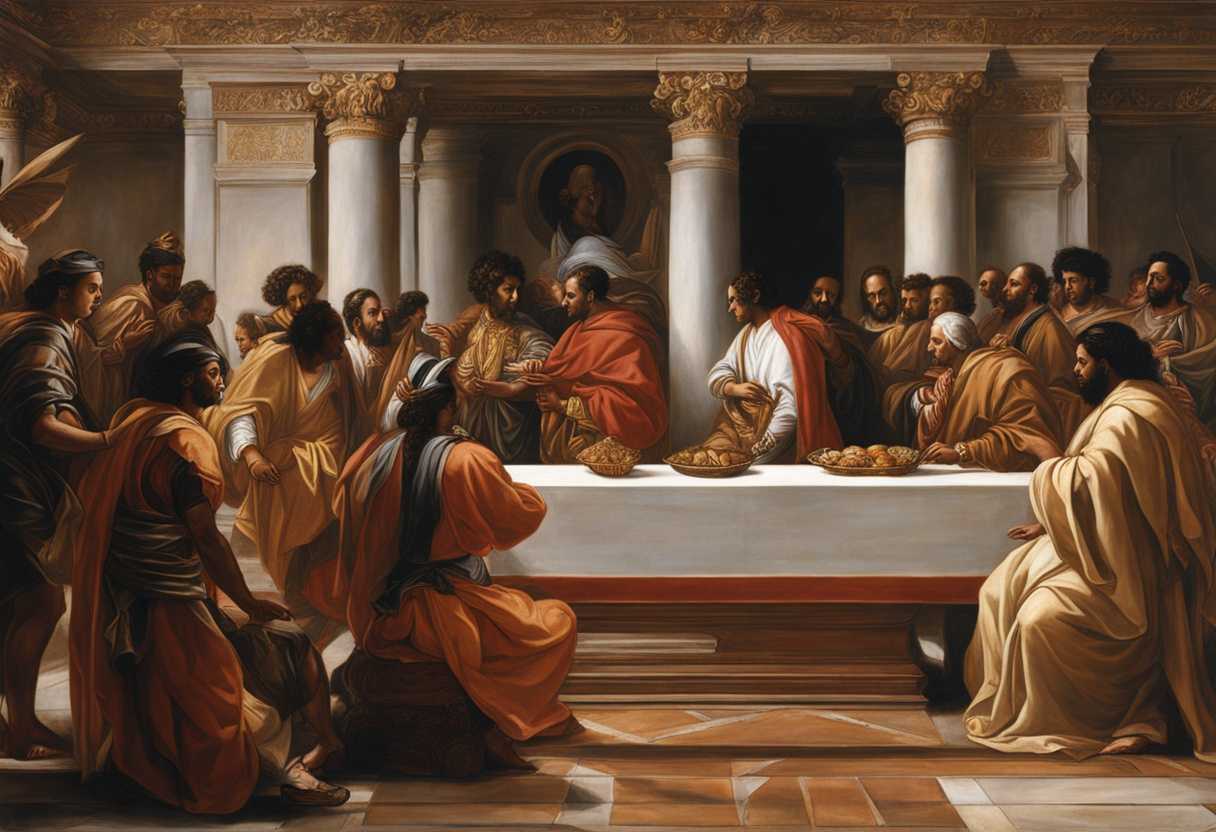
Setting the Scene for Numbers 7:10-17
In Numbers chapter 7, we find the scene set at the dedication of the altar. The leaders of the twelve tribes of Israel, including Nahshon of Judah, Nethanel of Issachar, Eliab of Zebulun, Elizur of Reuben, Shelumiel of Simeon, Eliasaph of Gad, Elishama of Ephraim, Gamaliel of Manasseh, Abidan of Benjamin, Ahiezer of Dan, Pagiel of Asher, and Ahira of Naphtali, have gathered to present their offerings to the Lord. Each leader brings the same gifts: a silver plate, a silver basin, and a gold dish filled with incense, along with a bull, a ram, and a male lamb for a burnt offering.
The leaders, along with Moses and Aaron, stand before the newly constructed altar, which is a symbol of their commitment to the Lord and their unity as the chosen people of God. The atmosphere is filled with reverence and awe as the leaders present their offerings one by one, demonstrating their dedication to the service of the Lord and their willingness to follow His commands. The camp of Israel surrounds the altar, witnessing this solemn occasion and reaffirming their covenant with God.
As the smoke from the burnt offerings rises towards the heavens, the people of Israel are reminded of the faithfulness of God and the importance of obedience and worship. The dedication of the altar serves as a powerful symbol of the unity and devotion of the Israelites to their God, setting the stage for the journey ahead and the fulfillment of God’s promises to His people.
What is Numbers 7:10-17 about?
Tribal leaders come together to make offerings for the dedication of the altar, showing a powerful act of unity and community spirit in this verse. Each leader brings their own unique contribution, symbolizing their commitment to the shared purpose and collective worship. This act highlights the importance of collaboration and coming together as a community to honor a significant event or place of worship.
Imagine the scene: tribal leaders from different backgrounds and beliefs setting aside their differences to join in this sacred ritual. They are not only dedicating the altar physically but also spiritually by offering their gifts, creating a bond that transcends individuality. This verse teaches us the value of collective action and the beauty of diversity in coming together for a common goal. It prompts us to reflect on our own communities and how we can work together towards a shared purpose, just like these tribal leaders did in dedicating the altar.
Understanding what Numbers 7:10-17 really means
In the Book of Numbers, amidst the wilderness journey of the Israelites, a significant event unfolds as the leaders of each tribe bring offerings for the dedication of the altar. This act symbolizes communal unity and devotion to God, showcasing the importance of collective worship and dedication. The meticulous descriptions of the offerings, such as silver plates filled with fine flour and olive oil, and a gold dish filled with incense, emphasize the reverence and care given to God in their worship.
These offerings in Numbers 7:10-17 serve as a reminder of the value of giving our best to God. Just as the Israelites presented their offerings with precision and excellence, we are called to offer our time, talents, and resources wholeheartedly in service to God. The passage highlights the principle of giving willingly and generously, reflecting a spirit of joyful dedication that pleases God.
Drawing parallels to other biblical passages, such as Exodus 25:1-9, 2 Corinthians 9:7, and Hebrews 13:15-16, we see a consistent theme of cheerful giving and sacrificial worship. The New Testament verses echo the sentiments of dedication and generosity found in Numbers, emphasizing the spiritual aspect of offering praise and doing good deeds as pleasing sacrifices to God.
In today’s materialistic world, where priorities often stray from spiritual matters, the message of Numbers 7:10-17 remains relevant. It challenges us to reevaluate our values and consider how we can prioritize our relationship with God above all else. By reflecting on the communal effort and dedication of the Israelites, we are encouraged to emulate their unity and generosity in our modern lives.
Consider a scenario where a community collaborates to build a new church, each member contributing their unique gifts and resources. This collective effort mirrors the unity and generosity displayed by the Israelite leaders, illustrating how communal dedication and offering can result in something sacred and beautiful. Just as the Israelites dedicated the altar in the wilderness, we too can contribute to the spiritual growth and flourishing of our communities through our offerings to God.
In conclusion, Numbers 7:10-17 teaches us about the significance of giving our best to God with a willing heart. This passage, along with related scriptures, inspires us to lead lives marked by generosity and dedication, reflecting our deep love and reverence for the Almighty. Let us heed the call to offer our best to God, not only in material gifts but also in our worship, service, and devotion, embodying the spirit of joyful dedication seen in the leaders of Israel.
How can we humble ourselves before God?
We can humble ourselves before God by presenting our offerings and gifts to Him with a sincere heart and pure intentions. This act of giving back to God and acknowledging His provision and blessings in our lives demonstrates our humility and recognition of His greatness. We show that we trust in His guidance and provision rather than relying solely on ourselves by offering our resources and possessions to Him.
Additionally, seeking forgiveness for our wrongdoings and shortcomings is another way to humble ourselves before God. We acknowledge our imperfections and our need for His forgiveness and redemption by confessing our sins and asking for His mercy and grace. This act of repentance shows our humility and contrition before God, recognizing His holiness and our dependence on His love and forgiveness to cleanse us from sin.
Furthermore, approaching God with a heart of gratitude and thankfulness is a form of humility before Him. We demonstrate our humility by recognizing that every good thing comes from Him when we express gratitude for all the blessings and goodness He has bestowed upon us. Gratitude helps us to shift our focus from ourselves to God, acknowledging His sovereignty and magnifying His greatness in our lives.
Application
Let’s mirror the passion and selflessness of the tribal leaders, offering our support wholeheartedly for the greater good. Give not just from your wallet, but also from your skills, time, and compassion to uplift those in need. Are you ready to step up and give your all in the service of others and for a brighter world?

Reverend Michael Johnson is an experienced Church Minister with a profound expertise in spirituality and guidance. With a serene presence and a compassionate heart, he has faithfully served his congregation for over 20 years, leading them on a spiritual journey towards inner peace and enlightenment. Reverend Johnson’s extensive knowledge of religious philosophies and profound understanding of human nature have made him a trusted confidant and mentor to many, as he seamlessly weaves his profound wisdom into life teachings. Reverend Johnson’s calming demeanor and empathetic nature continue to uplift and heal souls, nurturing a sense of unity and tranquility within his community.