
Proverbs 13:7 is about the contrast between the wealthy who may appear to have much but are actually poor in spirit, and the poor who may appear to have nothing but possess inner riches and contentment.
7 One pretends to be rich, yet has nothing; another pretends to be poor, yet has great wealth.
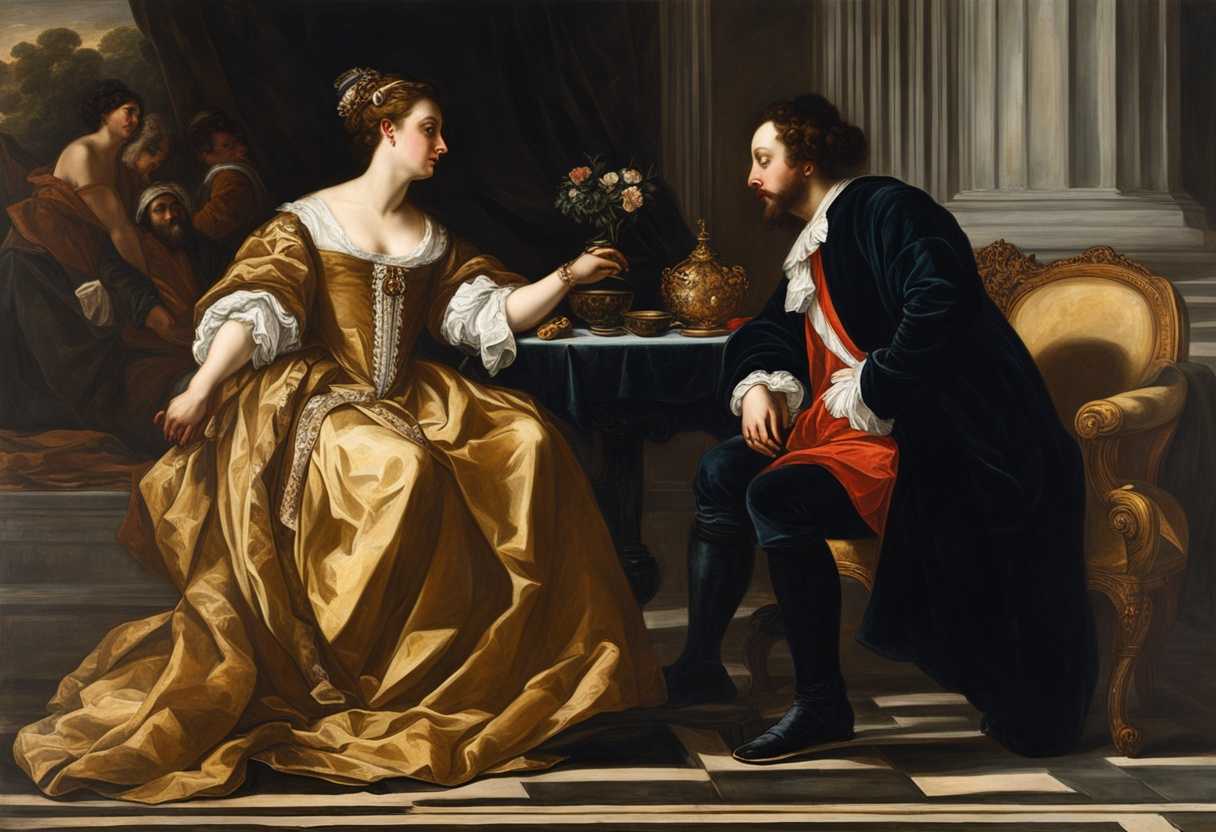
Setting the Scene for Proverbs 13:7
In the bustling marketplace of a small ancient town, a group of merchants has gathered to conduct their daily business. The sun beats down on the dusty streets, casting long shadows as the vendors set up their stalls and display their wares. Among them is a man named Jacob, known for his shrewd business acumen and sharp negotiating skills. He is surrounded by a small group of fellow traders, engaging in lively discussions about the day’s market trends and potential profits.
As the morning progresses, a young man named David approaches Jacob’s stall, eager to learn from the experienced merchant. David is a newcomer to the marketplace, hoping to make a name for himself in the competitive world of commerce. Intrigued by Jacob’s reputation, he listens intently as the older man imparts wisdom and advice, drawing from his years of experience. The scene is filled with the sounds of haggling, laughter, and the clinking of coins as the merchants go about their business, each one striving to succeed in their endeavors.
In the midst of the bustling marketplace, the words of Proverbs 13 resonate with the group gathered around Jacob’s stall. As they discuss the importance of integrity and hard work in business dealings, they are reminded of the timeless wisdom found in the scriptures. The scene serves as a reminder that success is not just measured by material wealth, but by the character and values one upholds in all aspects of life.
What is Proverbs 13:7 about?
This verse from the Book of Proverbs highlights the importance of authenticity and the deceitfulness of appearances. It challenges us to reflect on the value of material wealth versus true wealth, which encompasses qualities such as integrity, humility, and genuine character. The verse prompts us to question our own motives and the image we project to others by portraying two contrasting scenarios of individuals pretending to be something they are not. Are we prioritizing material possessions and social status over inner virtues and authenticity? Are we more concerned with how others perceive us rather than being true to ourselves? This verse serves as a powerful reminder to look beyond the facade and prioritize inner riches in a world that often values external appearances and superficial indicators of success. It urges us to cultivate qualities that truly define wealth, such as honesty, kindness, and compassion, rather than being consumed by the pursuit of material gain. It challenges us to reassess our priorities and question our own definitions of success and fulfillment. This verse ultimately calls us to strive for genuine wealth that stems from a place of authenticity, integrity, and inner abundance.
Understanding what Proverbs 13:7 really means
Proverbs 13:7 presents a paradox that challenges our understanding of wealth and poverty. This verse is part of the wisdom literature in the Bible, offering insights into human behavior and divine principles. “One pretends to be rich, yet has nothing” highlights the superficiality and deception of appearances, suggesting that some people may project an image of wealth but are actually impoverished in spirit, relationships, or true contentment. On the other hand, “Another pretends to be poor, yet has great wealth” underscores the humility and hidden richness of some individuals, implying that true wealth is not always visible and can be found in virtues, wisdom, and spiritual richness.
Related biblical passages further illuminate the themes of Proverbs 13:7. 1 Samuel 16:7 emphasizes that God values inner qualities over external appearances, while Matthew 6:19-21 teaches about the impermanence of earthly wealth and the importance of spiritual treasures. James 2:5 highlights that spiritual wealth often resides with those who are materially poor. In a society that often equates success with material wealth, this verse challenges us to reconsider our values, encouraging us to look beyond appearances and recognize the true worth of individuals. It serves as a reminder that spiritual and moral wealth are more enduring and fulfilling than material possessions.
Consider the story of a successful businessman who appeared to have everything—luxury cars, a big house, and a high-paying job. However, he felt empty and disconnected from his family and community. In contrast, a humble schoolteacher lived a modest life but was rich in relationships, community service, and inner peace. This teacher’s “great wealth” was not in material possessions but in the love and respect he garnered from those around him. Proverbs 13:7 invites us to reflect on what we consider true wealth, challenging us to seek and value the riches that come from a life of integrity, humility, and spiritual depth. By embracing these values, we can find a more meaningful and fulfilling life, regardless of our material circumstances.
How does wealth impact our moral character?
Wealth can have a significant impact on our moral character, as indicated in Proverbs 13:7. When individuals become wealthy, there is a risk that they may become proud and start to look down on others who have less than them. This can lead to attitudes of superiority and entitlement, which can erode their moral character and values. Additionally, the pursuit of wealth can sometimes lead individuals to compromise their integrity and engage in unethical behavior to achieve financial success.
The verse in Proverbs highlights the potential dangers of wealth on our moral character. It suggests that wealth obtained through dishonest or immoral means can be fleeting and ultimately detrimental to the individual’s well-being. The pursuit of wealth at the expense of ethical principles can corrupt one’s character and lead to a loss of integrity. The verse ultimately serves as a warning against prioritizing material wealth over the development of strong moral character.
Application
Take a moment to ponder Proverbs’ wise words about money and character. Reflect on how you handle your finances and what that reveals about you. Are you striving for honesty and accountability in all areas, even your wallet? Let this verse ignite a fire in you to match your deeds with your beliefs and live authentically. Will you seize this guidance and reshape your financial path to show reverence for your faith?

Reverend Michael Johnson is an experienced Church Minister with a profound expertise in spirituality and guidance. With a serene presence and a compassionate heart, he has faithfully served his congregation for over 20 years, leading them on a spiritual journey towards inner peace and enlightenment. Reverend Johnson’s extensive knowledge of religious philosophies and profound understanding of human nature have made him a trusted confidant and mentor to many, as he seamlessly weaves his profound wisdom into life teachings. Reverend Johnson’s calming demeanor and empathetic nature continue to uplift and heal souls, nurturing a sense of unity and tranquility within his community.