
Proverbs 19:26 is about the importance of children honoring and respecting their parents, recognizing that such behavior is fitting and beneficial.
26 He who does violence to his father and chases away his mother is a son who brings shame and reproach.
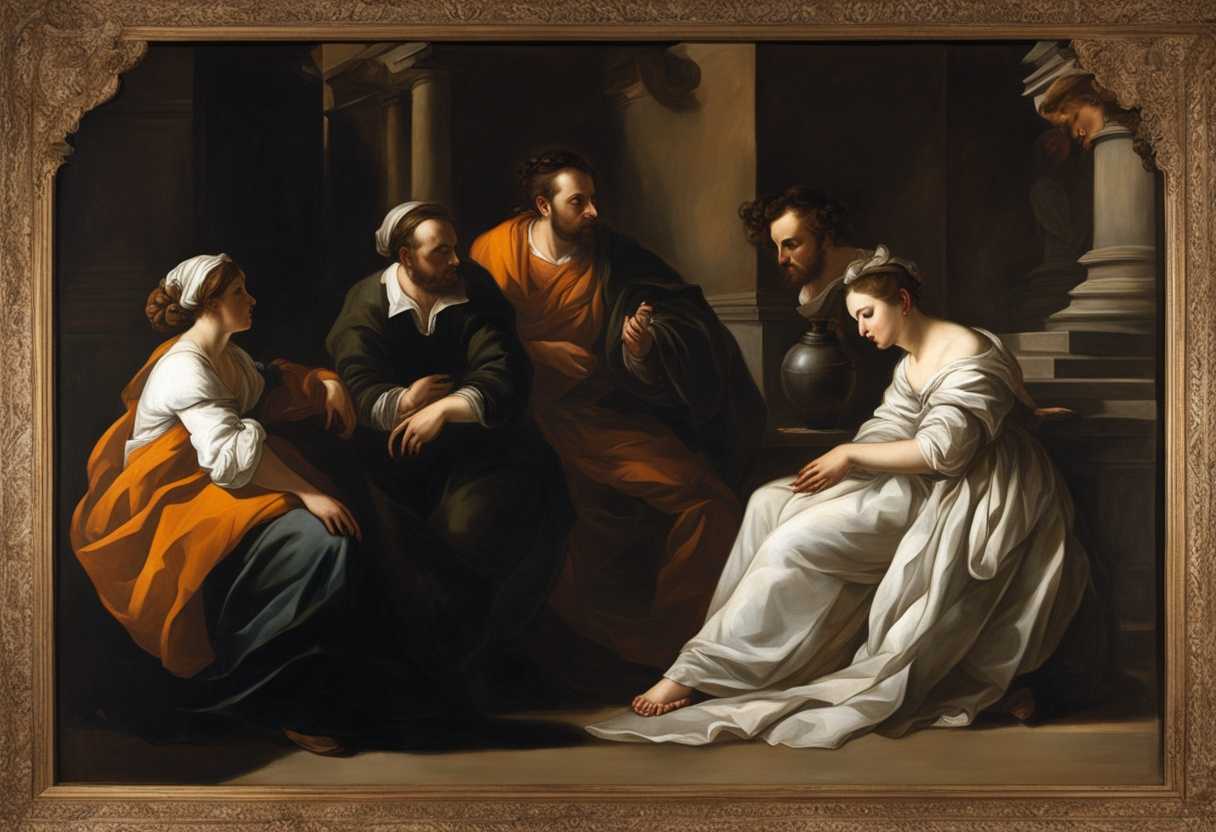
Setting the Scene for Proverbs 19:26
In the scene referred to in Proverbs 19:26, we find a family gathered around a table in a modest home. The father, a wise and elderly man named Jacob, sits at the head of the table, his weathered hands holding a well-worn Bible. His children, Sarah and David, sit across from him, eager to hear the wisdom he imparts. The room is lit by the warm glow of a flickering oil lamp, casting shadows on the walls adorned with simple tapestries.
Jacob begins to speak, his voice steady and filled with authority as he imparts the teachings of the scriptures to his children. He shares the importance of honoring and respecting one’s parents, drawing from his own experiences and the lessons he has learned throughout his life. Sarah and David listen intently, their eyes fixed on their father as he weaves together stories and proverbs to illustrate his points.
As the evening progresses, the room is filled with a sense of peace and reverence, a sacred space where the timeless wisdom of the scriptures is passed down from one generation to the next. The family is united in their love for each other and their faith, finding strength and guidance in the words of Proverbs 19 and the teachings of their father.
What is Proverbs 19:26 about?
Think about the bond between parents and children. Parents dedicate their lives to caring, nurturing, and providing for their children. They guide them, teach them values, and offer unconditional love. Children are expected to respect, honor, and care for their parents in return. When a child mistreats their parents, it not only breaks this sacred bond but also brings dishonor and shame to the family.
Imagine the pain and sadness a parent feels when their own child mistreats them. It goes against the natural order of things and disrupts the harmony within the family. A child not only hurts their parents but also damages their own character and integrity by disrespecting and mistreating them. This verse serves as a reminder of the importance of showing love, respect, and gratitude towards our parents, who have sacrificed so much for our well-being and happiness. It is a call to uphold the values of family, respect, and compassion in our actions towards our parents.
Understanding what Proverbs 19:26 really means
Proverbs 19:26 delves into the repercussions of mistreating one’s parents, shedding light on the shame and dishonor that accompany such actions. This verse, nestled within the wisdom literature of the Bible, offers practical guidance for leading a righteous life. The gravity of disrespecting or harming one’s father is emphasized through the phrase “He who does violence to his father,” highlighting the severity of such behavior. Similarly, neglect or abandonment towards one’s mother is depicted in the phrase “chases away his mother,” showcasing a lack of care and responsibility.
Moreover, the verse underscores the social and moral implications of such actions by stating that a son who mistreats his parents brings shame and reproach not only upon himself but also upon his family. This serves as a poignant reminder of the interconnectedness of familial relationships and the impact of one’s behavior on the broader social fabric. Drawing parallels with other biblical passages such as Exodus 20:12 and Ephesians 6:1-3, which emphasize honoring and obeying parents, Proverbs 19:26 reinforces the timeless importance of respecting parental authority.
In today’s society, where familial bonds are foundational to social cohesion, the message of Proverbs 19:26 remains relevant. Upholding respect and care for parents is not only a moral duty but also a means of nurturing family harmony and societal stability. The verse prompts individuals to reflect on their familial responsibilities and the ethical obligations they owe to their parents, urging them to cultivate relationships rooted in love, respect, and gratitude.
To illustrate the transformative power of honoring one’s parents, consider the story of John, a young man who initially disregarded his parents’ guidance but later recognized the wisdom in their words. By reconciling with his parents, John not only found personal peace but also brought honor to his family. This anecdote exemplifies the profound impact of heeding the wisdom encapsulated in Proverbs 19:26, showcasing how repairing familial relationships can lead to personal growth and communal harmony.
In conclusion, Proverbs 19:26 serves as a poignant reminder of the significance of honoring and respecting one’s parents. It beckons individuals to introspect on their conduct towards their family members, urging them to cultivate relationships characterized by reverence, empathy, and care. By heeding the counsel of this verse, we are encouraged to build familial bonds that are not only enduring but also enriching, fostering a culture of mutual respect and love within our homes and communities.
How can parents and children honor each other?
Parents can honor their children by providing love, support, guidance, and encouragement. This includes being present in their children’s lives, showing interest in their activities, and listening to their thoughts and feelings. Parents can also honor their children by setting a good example through their words and actions, demonstrating respect, honesty, and integrity in all aspects of their lives. Parents can help build their children’s self-esteem and confidence by showing love and support, creating a strong foundation for a healthy and positive relationship.
Children can honor their parents by showing respect, gratitude, and obedience. This involves listening to their parents, following their guidance and rules, and appreciating their sacrifices and efforts in raising and caring for them. Children can also honor their parents by showing them love and appreciation, expressing their gratitude for everything their parents have done for them. Children demonstrate their understanding of the importance of family and the value of the wisdom and experience that parents provide by honoring their parents.
Application
Embrace the powerful message of Proverbs 19:26 and let it guide your interactions with family. Just as we excel in our work, let us also excel in honoring our parents. Take a moment to ponder: are you showing genuine respect and care towards your parents? Act now, nurture those vital relationships, and watch them bloom. Your actions today can shape a stronger, more loving tomorrow. Will you take up the challenge?

Reverend Michael Johnson is an experienced Church Minister with a profound expertise in spirituality and guidance. With a serene presence and a compassionate heart, he has faithfully served his congregation for over 20 years, leading them on a spiritual journey towards inner peace and enlightenment. Reverend Johnson’s extensive knowledge of religious philosophies and profound understanding of human nature have made him a trusted confidant and mentor to many, as he seamlessly weaves his profound wisdom into life teachings. Reverend Johnson’s calming demeanor and empathetic nature continue to uplift and heal souls, nurturing a sense of unity and tranquility within his community.