
Proverbs 25:8-10 is about the importance of handling conflicts with wisdom and humility, striving for reconciliation rather than escalating tensions.
8 do not hastily bring into court,
for what will you do in the end,
when your neighbor puts you to shame?
9 Argue your case with your neighbor himself, and do not reveal another’s secret,
10 lest he who hears you bring shame upon you, and your ill repute have no end.
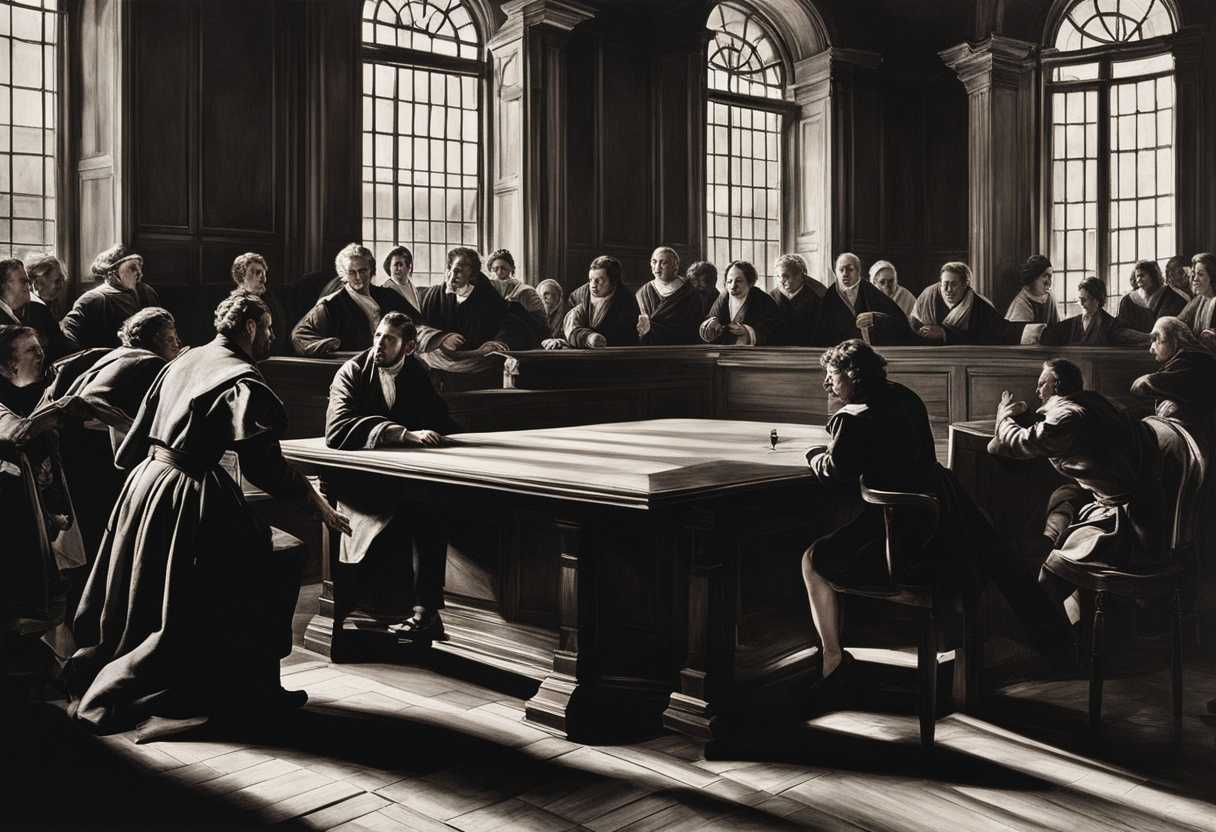
Setting the Scene for Proverbs 25:8-10
In the bustling marketplace of ancient Jerusalem, a crowd had gathered around the city gates. The sun beat down on the dusty streets as merchants shouted their wares and customers haggled over prices. Among the throng stood King Solomon, known for his wisdom and fair judgment. He had come to the marketplace to settle a dispute between two merchants, both claiming ownership of a valuable piece of land.
The first merchant, a wealthy man named Jacob, argued that the land had been in his family for generations. The second merchant, a younger man named David, insisted that he had purchased the land from Jacob’s son. The two men were at an impasse, each accusing the other of deceit. Sensing the tension in the air, King Solomon called for silence and listened carefully to both sides of the story.
After hearing their arguments, King Solomon pondered the matter deeply. Finally, he rendered his judgment, declaring that the land should be divided between the two men. Jacob would receive one half, and David would receive the other. The crowd murmured in surprise at the king’s decision, but they knew that his wisdom was unmatched. As the sun began to set over the marketplace, the two merchants thanked King Solomon for his fair judgment and went their separate ways, each satisfied with the outcome.
What is Proverbs 25:8-10 about?
This verse reminds us of the importance of showing patience and understanding when it comes to addressing misunderstandings or conflicts with others. Instead of jumping to conclusions or hastily accusing someone of wrongdoing, it encourages us to approach the situation with a level head and an open heart. We can avoid unnecessary shame and hurt feelings that may arise from hasty accusations by seeking reconciliation and understanding.
Think about a time when you may have been quick to point fingers or make assumptions about someone’s actions. How did it make you feel afterwards? Did it allow for a peaceful resolution to the issue at hand? We demonstrate respect for others and pave the way for healthier relationships built on trust and understanding by taking the time to communicate openly and seek reconciliation. Next time you find yourself in a situation where accusations may be flying, remember the wisdom of this verse and strive to approach the situation with thoughtfulness and compassion.
Understanding what Proverbs 25:8-10 really means
Proverbs 25:8-10 provides insightful guidance on navigating disputes and conflicts with others. The passage underscores the significance of humility, discretion, and the pursuit of peaceful resolutions. “Do not hastily bring into court” cautions against impulsively engaging in legal battles or public confrontations, urging thoughtful consideration and exploration of alternative solutions. The warning, “What will you do in the end, when your neighbor puts you to shame?” highlights the potential consequences of rash actions, including embarrassment and harm to one’s reputation. “Argue your case with your neighbor himself” advocates for resolving disagreements privately and directly, emphasizing the importance of personal communication over public confrontation. Additionally, “Do not reveal another’s secret” serves as a reminder to uphold trust and avoid betraying confidences, which can escalate conflicts and erode relationships.
Drawing parallels from other biblical passages enriches our understanding of conflict resolution. In Matthew 18:15-17, Jesus instructs on addressing conflicts by initially confronting the individual, escalating to involve others if needed, and ultimately seeking resolution within the community. James 1:19-20 encourages a measured approach of listening attentively, speaking thoughtfully, and controlling anger, aligning with the counsel in Proverbs to avoid impulsive actions. Romans 12:18 reinforces the importance of pursuing peace whenever feasible, emphasizing personal responsibility in fostering harmonious relationships.
The relevance of Proverbs 25:8-10 in contemporary society is striking. In a fast-paced and litigious environment, the wisdom of resolving conflicts deliberately and privately holds immense value. The prevalence of social media and public platforms can exacerbate disputes, underscoring the significance of discretion in conflict resolution. Consider a scenario where an individual faces a workplace conflict. Instead of immediately escalating the issue or resorting to public grievances, choosing to engage in a private dialogue with the colleague can lead to mutual understanding and a peaceful resolution. This approach preserves professional relationships, mitigates unnecessary drama, and exemplifies the principles advocated in Proverbs.
In conclusion, Proverbs 25:8-10 imparts essential lessons on humility, discretion, and the significance of resolving conflicts privately. By embracing these teachings, we can cultivate healthier relationships and communities, steering clear of the pitfalls associated with hasty and public disputes. The timeless wisdom encapsulated in these verses serves as a beacon for navigating conflicts with grace and wisdom, fostering peace and understanding in our interactions with others.
Why is it important to seek reconciliation?
Seeking reconciliation is important because it can prevent conflicts from escalating and getting out of control. We can show humility and a willingness to find a resolution by taking the first step towards making amends. This can help to maintain harmony and peace in our relationships, fostering a sense of understanding and unity.
Reconciliation also allows for healing and restoration in relationships that may have been damaged. We can rebuild trust and strengthen bonds with others by acknowledging faults and seeking forgiveness. This can lead to a sense of closure and moving forward in a positive direction, instead of holding onto bitterness or resentment. Seeking reconciliation ultimately reflects the values of forgiveness and compassion that are important in fostering healthy and positive relationships. It demonstrates a commitment to understanding others, resolving conflicts peacefully, and promoting empathy and understanding in our interactions with one another.
Application
Embrace the opportunity to mend broken connections and foster new beginnings. Take the first step towards reconciliation with humility and wisdom. Show grace and understanding in resolving conflicts. Your actions today can build a foundation of peace and unity in your relationships. How will you choose to be a peacemaker in your world today?

Reverend Michael Johnson is an experienced Church Minister with a profound expertise in spirituality and guidance. With a serene presence and a compassionate heart, he has faithfully served his congregation for over 20 years, leading them on a spiritual journey towards inner peace and enlightenment. Reverend Johnson’s extensive knowledge of religious philosophies and profound understanding of human nature have made him a trusted confidant and mentor to many, as he seamlessly weaves his profound wisdom into life teachings. Reverend Johnson’s calming demeanor and empathetic nature continue to uplift and heal souls, nurturing a sense of unity and tranquility within his community.