
Psalms 146:7-9 is about the assurance that God upholds and protects those who seek refuge in Him, lifting up the oppressed and caring for the needs of the vulnerable, while ultimately reigning eternally as the faithful and righteous ruler over the world.
7 who executes justice for the oppressed,
who gives food to the hungry. The Lord sets the prisoners free;
8 The Lord opens the eyes of the blind. The Lord lifts up those who are bowed down; the Lord loves the righteous.
9 The Lord watches over the sojourners; he upholds the widow and the fatherless, but the way of the wicked he brings to ruin.
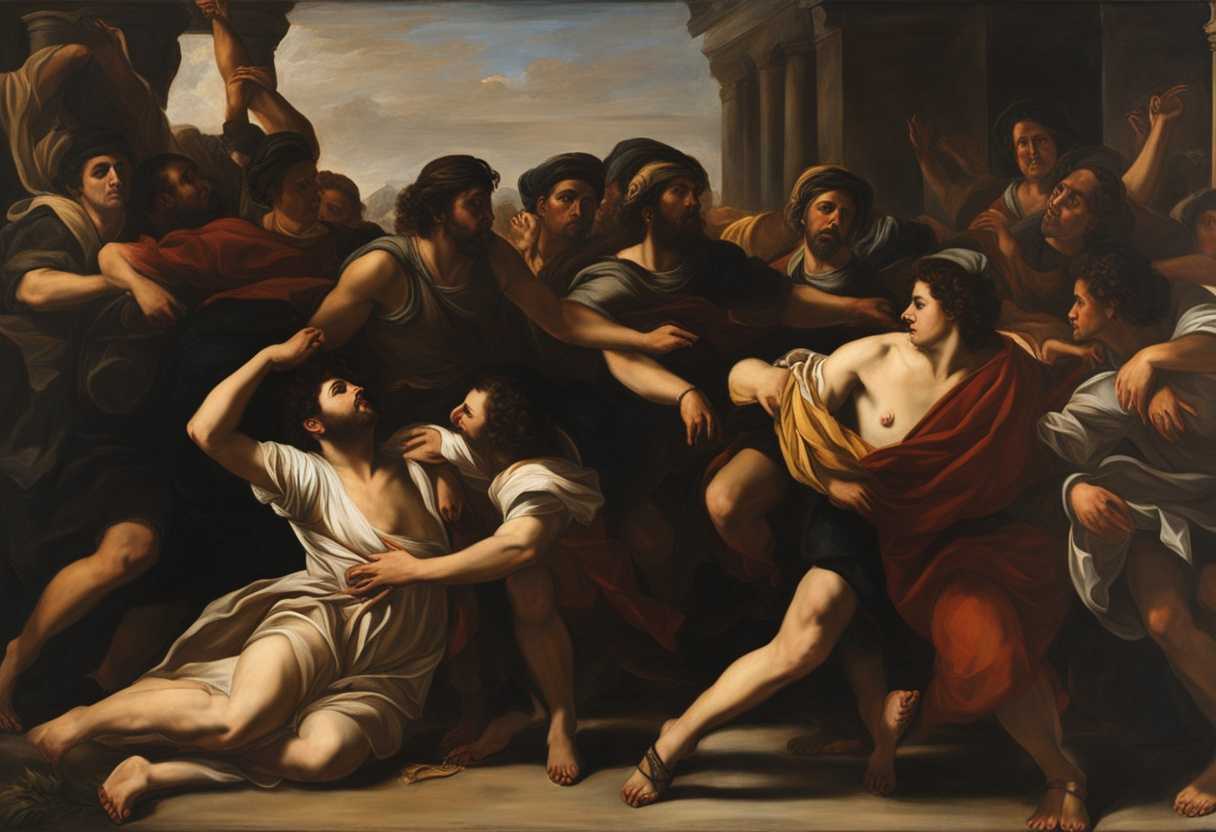
Setting the Scene for Psalms 146:7-9
In Psalms 146:7-9, the scene is set in a bustling marketplace in ancient Jerusalem. The air is filled with the sounds of merchants haggling, animals braying, and the chatter of people going about their daily business. The sun beats down on the dusty streets, casting shadows as people move about, carrying baskets of goods and bartering for their daily needs.
Among the crowd, we see a group of widows and orphans, their faces weary from the struggles of life without the support of a husband or father. They have come to the marketplace seeking help and sustenance, their eyes scanning the faces of passersby in the hopes of finding someone who will show them kindness and compassion.
Suddenly, a figure emerges from the crowd – it is King David, known for his compassion and justice. He stops in his tracks when he sees the widows and orphans, his heart moved with empathy. Without hesitation, he approaches them, offering words of comfort and assurance. The widows and orphans look up at him with gratitude and hope, finding solace in his presence and the promise of protection and provision that his words bring. In this moment, King David embodies the words of Psalms 146, where it is proclaimed that the Lord upholds the cause of the oppressed, giving food to the hungry and setting the prisoners free.
What is Psalms 146:7-9 about?
This verse illustrates the compassionate and just nature of God. It conveys the idea that God is a source of comfort and aid for those who are marginalized and mistreated in society. God embodies the values of mercy, kindness, and liberation by upholding the oppressed, feeding the hungry, and setting prisoners free. It serves as a reminder that within the divine realm, everyone is valued and deserving of dignity and care.
Have you ever felt overwhelmed by your circumstances or witnessed injustice in the world around you? This verse reassures us that God is present in those moments, providing support and advocating for those who are vulnerable. It challenges us to embody these values of compassion and justice in our own lives, to be pillars of support for those in need and to work towards creating a more equitable society. God’s love extends to all, especially to those who are in difficult situations, offering hope and redemption in times of struggle.
Understanding what Psalms 146:7-9 really means
Psalms 146:7-9 is a powerful passage that highlights God’s justice, compassion, and care for the marginalized and oppressed. This passage is part of a larger psalm that praises God for His eternal reign and His faithfulness to His people. “Executes justice for the oppressed” emphasizes God’s commitment to righting wrongs and defending those who are mistreated. “Gives food to the hungry” highlights God’s provision and care for those in need, ensuring that their basic needs are met. “Sets the prisoners free” can be understood both literally and metaphorically, indicating God’s power to liberate people from physical, emotional, and spiritual bondage. “Opens the eyes of the blind” signifies both physical healing and spiritual enlightenment, showing God’s ability to bring light into darkness. “Lifts up those who are bowed down” speaks to God’s compassion and His desire to uplift and support those who are burdened or downtrodden. “Loves the righteous” underscores God’s special affection for those who live in accordance with His will. “Watches over the sojourners” indicates God’s protection and care for foreigners and those who are far from home. “Upholds the widow and the fatherless” shows God’s particular concern for the most vulnerable members of society. “Brings the way of the wicked to ruin” assures that God’s justice will ultimately prevail, and those who do evil will face consequences.
In a world where injustice, poverty, and suffering are prevalent, this passage serves as a reminder of God’s unwavering commitment to justice and compassion. It calls believers to emulate God’s character by advocating for the oppressed, providing for the needy, and caring for the vulnerable. This passage encourages us to trust in God’s ultimate justice and provision, even when circumstances seem dire. Consider the story of a community that came together to support a local family who had lost their home in a fire. The community members provided food, clothing, and temporary shelter, embodying the principles found in Psalms 146:7-9. This act of kindness not only met the immediate needs of the family but also demonstrated God’s love and care through the actions of His people.
Psalms 146:7-9 is a profound reminder of God’s justice, provision, and compassion. It challenges us to reflect these attributes in our own lives, ensuring that we are instruments of God’s love and justice in the world. By living out these principles, we can make a tangible difference in the lives of those around us, bringing hope and healing to a broken world.
What does it mean to trust in princes?
Trusting in princes means relying on human leaders for protection and guidance instead of putting one’s faith in God. The passage warns against putting one’s confidence in mortal rulers or powerful individuals, as their authority and abilities are limited and fallible. Instead, the focus should be on God, who is eternal, steadfast, and always faithful. Placing one’s trust in princes can lead to disillusionment when they fail to fulfill expectations or when their power proves to be insufficient in times of need. This passage emphasizes the importance of turning to God for help and guidance, as His promises are sure, and His protection is unfailing. Trusting in human leaders alone can lead to disappointment, but trust in God brings true security and peace.
Application
Let’s embrace the powerful message of Psalms 146:7-9, reflecting on God’s strength and limitless love for the needy. It’s a heartfelt call to lean on His unwavering care and find solace in His righteousness. By spreading kindness, fairness, and generosity to those in need, we can embody His blessings for those who support the marginalized. Will you rise to the occasion and share God’s compassion with others today?

Reverend Michael Johnson is an experienced Church Minister with a profound expertise in spirituality and guidance. With a serene presence and a compassionate heart, he has faithfully served his congregation for over 20 years, leading them on a spiritual journey towards inner peace and enlightenment. Reverend Johnson’s extensive knowledge of religious philosophies and profound understanding of human nature have made him a trusted confidant and mentor to many, as he seamlessly weaves his profound wisdom into life teachings. Reverend Johnson’s calming demeanor and empathetic nature continue to uplift and heal souls, nurturing a sense of unity and tranquility within his community.