
John 5:4-9 is about Jesus healing a man who had been sick for 38 years at the pool of Bethesda, demonstrating Jesus’s power over sickness and his ability to provide healing and transformation to those in need.
4 for an angel of the Lord went down at certain seasons into the pool and stirred up the water; whoever stepped in first after the stirring of the water was healed of whatever disease he had.
5 One man was there who had been an invalid for thirty-eight years.
6 When Jesus saw him lying there and knew that he had already been there a long time, he said to him, “Do you want to be healed?”
7 The sick man answered him, “Sir, I have no one to put me into the pool when the water is stirred up, and while I am going another steps down before me.”
8 Jesus said to him, “Get up, take up your bed, and walk.”
9 And at once the man was healed, and he took up his bed and walked.
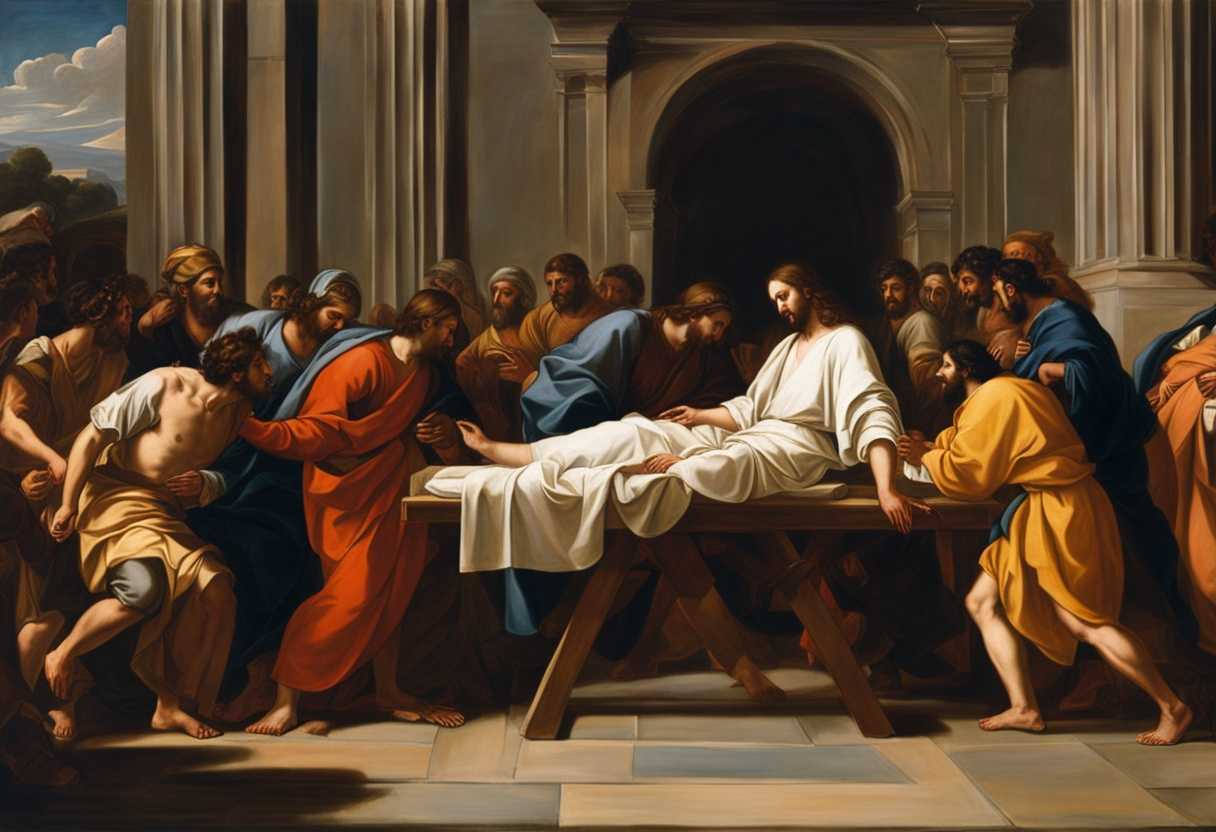
Setting the Scene for John 5:4-9
In John chapter 5, we find Jesus at the Pool of Bethesda in Jerusalem. The scene is bustling with activity as a great number of disabled people, blind, lame, and paralyzed, gather around the pool. The atmosphere is filled with anticipation and hope as they believe in the healing powers of the water. Among the crowd is a man who has been paralyzed for 38 years, lying on a mat, waiting for a chance to be healed.
Jesus approaches the man and asks him if he wants to get well. The man explains that he has no one to help him into the pool when the water is stirred, and someone else always gets in before him. Jesus then tells him to get up, pick up his mat, and walk. Instantly, the man is healed, picks up his mat, and walks away, rejoicing in his newfound strength and mobility. The onlookers are amazed at this miraculous healing and the power that Jesus possesses. The scene at the Pool of Bethesda is a powerful demonstration of Jesus’ compassion, mercy, and ability to bring healing and restoration to those in need.
What is John 5:4-9 about?
This verse from the Bible demonstrates Jesus’ compassion and power to heal those who are suffering. Jesus is showing that acts of mercy and kindness should not be limited by religious rules or traditions by healing a paralyzed man on the Sabbath. It challenges us to consider what is truly important – following rules strictly or showing love and compassion to those in need.
When reflecting on this passage, we might ask ourselves: What does this story teach us about the priorities of Jesus and the values we should uphold? How can we apply this message of compassion and healing in our own lives, even when it goes against societal norms or expectations? We can deepen our understanding of Jesus’ teachings and strive to emulate his example of love, mercy, and kindness towards others by considering the significance of this miraculous healing.
Understanding what John 5:4-9 really means
In the narrative of Jesus healing the man at the pool of Bethesda, we encounter a scene filled with symbolism and profound implications. The pool, believed to possess healing properties when stirred by an angel, sets the stage for a miraculous encounter. The man, an invalid for 38 years, represents a long-standing struggle and a deep yearning for restoration. This context lays the foundation for the transformative events that unfold.
The key phrases in this passage carry significant meanings that resonate beyond the physical healing. The mention of an angel troubling the water speaks to the belief in divine intervention and the hope for miraculous change. Jesus’ question, “Wilt thou be made whole?” goes beyond mere physical restoration, delving into the man’s readiness for transformation on a deeper level. His command to “Rise, take up thy bed, and walk” not only signifies immediate healing but also empowers the man to take action and move forward in faith.
Connecting this passage to other biblical references enriches our understanding of God’s healing power and transformative work. In Mark 2:9-12, Jesus demonstrates His authority to forgive sins and heal physical ailments, showcasing His divine nature. Isaiah 35:6’s prophecy about the Messiah bringing forth transformation emphasizes the profound impact of God’s intervention in restoring the broken. James 5:14-15 underscores the importance of faith and community in the healing process, highlighting the interconnectedness of spiritual and physical well-being.
The relevance of this story extends to people today, urging believers to have faith in God’s ability to heal and transform lives. The man’s endurance in waiting for healing teaches us about the virtues of hope and patience, even in the face of prolonged suffering. Jesus’ command to the man to “rise” serves as a reminder of the necessity of personal action and responsibility in the journey towards healing and renewal.
To illustrate the enduring message of this passage, consider a person battling addiction who finds solace in a supportive community that offers both practical assistance and spiritual guidance. Through faith, communal support, and personal effort, this individual embarks on a path of transformation and healing, akin to the man at the pool of Bethesda. The fusion of divine intervention and human agency leads to profound change and restoration.
In conclusion, the story of Jesus healing the man at the pool of Bethesda serves as a poignant reminder of God’s compassion and power to heal and transform. It beckons believers to hold onto faith, nurture hope, and take proactive steps towards healing, trusting in God’s timing and responding to His call with readiness and resolve.
How can we receive God’s healing and restoration?
We can receive God’s healing and restoration by recognizing our need for Jesus and humbly coming to Him for help. We must acknowledge that we cannot save or heal ourselves, just as the man in the passage needed Jesus to heal him. We open ourselves up to His transformative power in our lives by having faith in Jesus and turning to Him for healing.
Furthermore, we can experience God’s healing and restoration by actively seeking Him and following His instructions. Jesus gave the man specific instructions to pick up his mat and walk in the passage. Similarly, when we seek God’s guidance through prayer, reading the Bible, and seeking counsel from other believers, we position ourselves to receive His healing touch. We demonstrate our trust in His power to bring about healing and restoration in our lives by obediently following His direction.
Lastly, we can receive God’s healing and restoration by believing in His ability to work miracles in our lives. The man in the passage had been sick for 38 years, but Jesus was able to completely heal him in an instant. When we have faith that God is able to do the impossible and we surrender our circumstances to Him, we open the door for His miraculous work in our lives. We can experience the fullness of His healing and restoration by trusting in His unlimited power and unfailing love.
Application
In the story of John 5:4-9, we witness the incredible impact of unwavering faith in bringing about healing and restoration. It prompts us to trust in the divine plan set forth for us. Like the man at the pool of Bethesda, let’s embrace faith and be open to God’s transformative power in our lives. Today, will you take that leap of faith, believing that God can work wonders in your own journey towards healing and renewal?

Reverend Michael Johnson is an experienced Church Minister with a profound expertise in spirituality and guidance. With a serene presence and a compassionate heart, he has faithfully served his congregation for over 20 years, leading them on a spiritual journey towards inner peace and enlightenment. Reverend Johnson’s extensive knowledge of religious philosophies and profound understanding of human nature have made him a trusted confidant and mentor to many, as he seamlessly weaves his profound wisdom into life teachings. Reverend Johnson’s calming demeanor and empathetic nature continue to uplift and heal souls, nurturing a sense of unity and tranquility within his community.