
1 In Judah God is known;
his name is great in Israel.
2 His abode has been established in Salem,
his dwelling place in Zion.
3 There he broke the flashing arrows, the shield, the sword, and the weapons of war.
4 Glorious are you, more majestic than the mountains full of prey.
5 The stouthearted were stripped of their spoil; they sank into sleep; all the men of war were unable to use their hands.
6 At your rebuke, O God of Jacob,
both rider and horse lay stunned.
7 But you, you are to be feared!
Who can stand before you when once your anger is roused?
8 From the heavens you uttered judgment; the earth feared and was still,
9 when God arose to establish judgment,
to save all the humble of the earth.
10 Surely the wrath of man shall praise you; the remnant of wrath you will put on like a belt.
11 Make your vows to the Lord your God and perform them; let all around him bring gifts to him who is to be feared,
12 he cuts off the spirit of princes;
he is to be feared by the kings of the earth.
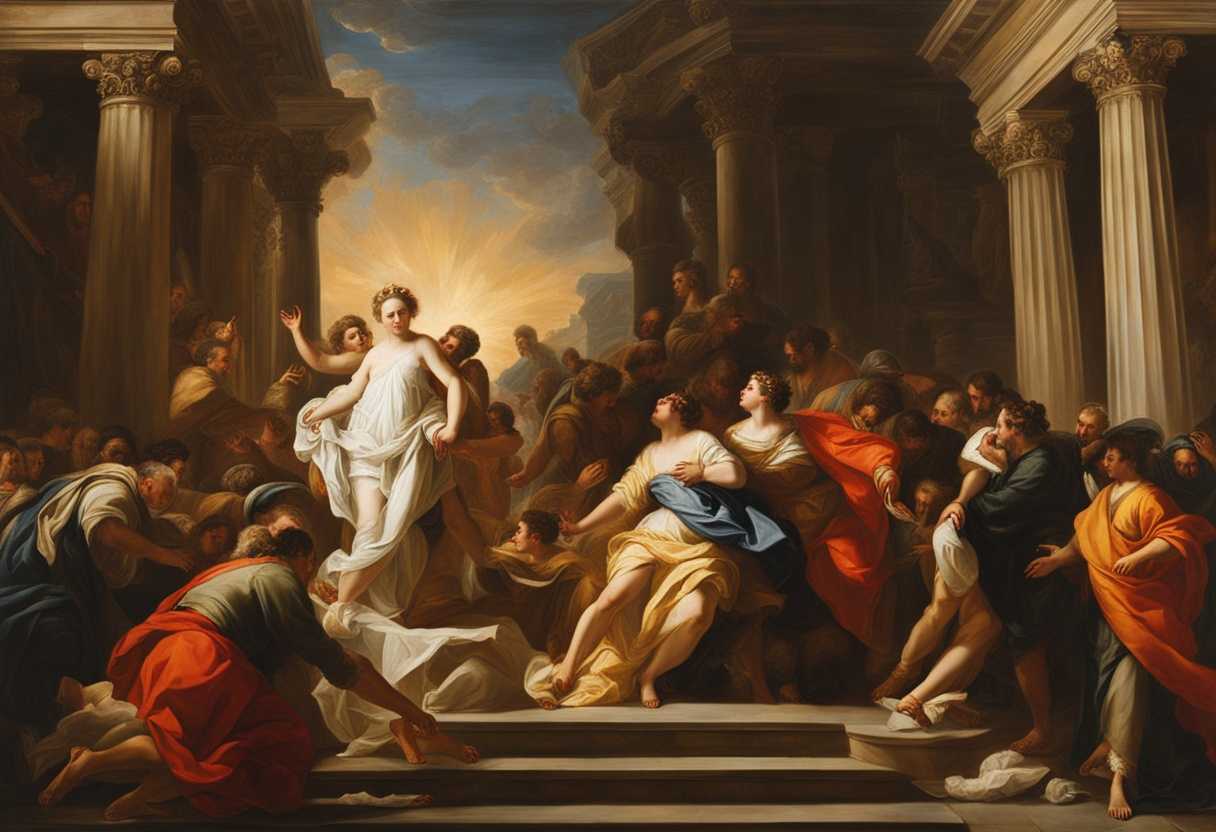
The True Meaning of Psalms 76
The Book of Psalms is a collection of sacred songs and prayers attributed to King David, the second king of ancient Israel. The author of this particular psalm reflects on God’s power and sovereignty, and how He protects His people from their enemies.
This chapter foreshadows the eventual downfall of the Assyrian army, which had threatened to invade Jerusalem. The psalmist reminds the people that God is the true source of their strength and that He will ultimately triumph over those who seek to harm them. This message of hope and trust in the Lord is a recurring theme throughout the Psalms, as seen in verses such as “The Lord is my strength and my shield; my heart trusts in him, and he helps me” (Psalm 28:7). This psalm would have provided the people of Israel with a powerful reminder of God’s unwavering protection and the futility of relying on human might alone as they faced the looming threat of the Assyrian empire. The author’s words would have encouraged the faithful to stand firm in their faith and to trust in the Lord’s deliverance, even in the face of seemingly insurmountable challenges.
Psalms 76:1-3
The verse in Psalms 76:1-3 reads, “In Judah God is known; his name is great in Israel.” His abode has been established in Salem, his dwelling place in Zion. There he broke the flashing arrows, the shield, the sword, and the weapons of war.”
Firstly, the psalmist starts by highlighting the significance of God being known in Judah and his greatness in Israel. Judah and Israel were crucial regions in the history of God’s people. Judah was one of the twelve tribes of Israel and eventually the southern kingdom after the division of Israel. Israel, on the other hand, refers to the entire nation of God’s chosen people. The psalmist celebrates the power and presence of God among his people by emphasizing God’s name being known in these places.
The mention of Salem and Zion in the next part of the verse is quite significant. Salem is believed to be an early name for Jerusalem, and Zion is the hill within Jerusalem where the fortress of King David was located and where the temple was later built. These places hold immense importance in biblical history as they were central to the worship and governance of God’s people. The psalmist praises God’s establishment of his abode in Salem and Zion, indicating the divine presence and protection over these sacred locations.
The final part of the verse speaks of God’s victorious power over weapons of war. It describes how God intervened in battle by breaking the flashing arrows, shields, swords, and other instruments of war used by the enemies. This imagery showcases God’s supremacy and ability to bring down even the most advanced tools of destruction. It emphasizes that God’s strength surpasses any human weaponry and that his divine intervention can thwart the plans of the enemy.
This verse in Psalms 76 underscores themes of divine sovereignty, protection, and victory over enemies. It reminds the readers of God’s presence among his people, his power over all nations, and his ability to triumph over any form of opposition. The references to Judah, Israel, Salem, and Zion connect the verse to various historical events and locations, demonstrating God’s consistent faithfulness and authority throughout the biblical narrative. God’s majesty and his role as the ultimate defender and protector of his people are ultimately testified in this passage.
Psalms 76:4-6
The verse in Psalms 76:4-6 reads, “You are resplendent with light, more majestic than mountains rich with game.” The valiant lie plundered, they sleep their last sleep; not one of the warriors can lift his hands. At your rebuke, God of Jacob, both horse and chariot lie still.” This passage is filled with vivid imagery and powerful symbolism, illustrating the might and sovereignty of God.
The verse begins by describing God as “resplendent with light,” which emphasizes His glory and brightness. This portrayal of God’s majesty echoes throughout the Bible, affirming His infinite power and dazzling brilliance. The comparison to mountains rich with game further underscores His grandeur, signifying abundance and richness. Mountains were often seen as places of strength and refuge in the Bible, emphasizing God’s unwavering stability and provision.
The following lines recount the defeat of the valiant warriors, emphasizing the helplessness and ultimate demise of those who oppose God. The imagery of the warriors lying plundered and unable to lift their hands highlights the decisive and final victory of God over His enemies. This serves as a reminder that no matter how strong or valiant human warriors may seem, they are ultimately no match for the Almighty.
The reference to the “God of Jacob” is significant as it connects this passage to the history of Israel. Jacob, whose name was later changed to Israel, was a central figure in the Old Testament and the father of the twelve tribes of Israel. Throughout the Bible, God is often referred to as the God of Abraham, Isaac, and Jacob, highlighting His covenant with the nation of Israel and His faithfulness to His chosen people.
The mention of horses and chariots lying still at God’s rebuke alludes to the miraculous interventions of God on behalf of His people. This imagery recalls the parting of the Red Sea during the exodus from Egypt and the defeat of the Egyptian army, where God showed His power by causing the chariots and horses to stall and drown in the sea (Exodus 14:26-28). It serves as a powerful reminder that God’s authority surpasses any human strength or weaponry. This passage in Psalms 76 exalts God’s sovereignty, majesty, and victory over His enemies. It reinforces the timeless message of the Bible that God is the ultimate authority, and all human powers and kingdoms will ultimately submit to His will. The vivid imagery and symbolism used in these verses make it a powerful declaration of God’s strength and supremacy, inspiring awe and reverence for His divine nature.
Psalms 76:7-9
The verse in Psalms 76:7-9 breaks down into three sections, each depicting different aspects of God’s power and majesty. The first section in verse 7 reads, “You alone are to be feared. Who can stand before you when you are angry?” This verse emphasizes the concept of God’s supremacy and the fear that should be instilled in us as His creations. It speaks to the awe-inspiring nature of God’s power and the inability of any being to stand against Him when He is displeased. This notion of fearing God is a central theme throughout the Bible, emphasizing the need for reverence and humility in the presence of the Almighty.
Moving on to the second section in verse 8, “From heaven you pronounced judgment, and the land feared and was quiet.” Here, the Psalmist reflects on a specific event where God intervened in human affairs by passing judgment. The mention of the land trembling in fear signifies the impactful nature of God’s judgment, which has the ability to bring about a hushed reverence among the people. This portrayal of God as the ultimate judge aligns with other biblical narratives where God’s judgments are carried out to bring about justice and order in the world.
Lastly, in verse 9, we read, “When you, God, rose up to judge, to save all the afflicted of the land.” This section highlights not only the role of God as a just judge but also as a savior to the oppressed and afflicted. The imagery painted here is that of God actively rising up to defend and rescue those who are suffering, emphasizing His compassion and mercy towards His people. This aspect of God as a protector and deliverer is a recurring motif throughout the Bible, with numerous instances where God comes to the aid of His people in times of distress. Psalms 76:7-9 serves as a reminder of God’s sovereignty, His role as judge and savior, and the importance of awe and reverence in our relationship with Him. It underscores the timeless message of God’s power and compassion, His ability to bring judgment and mercy, and the need for us to recognize and submit to His authority. These themes are woven throughout the Bible, from the accounts of God’s deliverance in the Old Testament to the ultimate redemption through Christ in the New Testament. The verses in Psalms 76 resonate with the broader narrative of God’s character and His interactions with humanity, inviting us to reflect on our own reverence and trust in Him.
Psalms 76:10-12
The verses in Psalms 76:10-12 read: “Surely mankind’s wrath shall praise You; You shall gird Yourself with the remainder of wrath.” Make vows to the Lord your God, and pay them; let all who are around Him bring presents to Him who ought to be feared. He shall cut off the spirit of princes; He is awesome to the kings of the earth.”
Breaking down these verses, we can see several important points being made. The first part talks about how even the wrath of mankind can be turned around to ultimately bring praise to God. This is a powerful concept that showcases God’s supreme sovereignty and ability to use even the most challenging situations for His glory. It demonstrates an important message that even in times of strife or anger, God can work through these emotions to bring about His divine plan and ultimately show His greatness.
The next part emphasizes the importance of making vows to the Lord and fulfilling them. It reminds us of the significance of honoring our commitments to God and giving Him the reverence He deserves. This call to faithfulness and obedience reflects the theme of obedience and loyalty found throughout the Bible. “Do not delay to fulfill it when you make a vow to God,” is written in the book of Ecclesiastes 5:4-5. He has no pleasure in fools; fulfill your vow. It is better not to make a vow than to make one and not fulfill it.” This shows the importance of taking vows seriously and fulfilling them as an act of devotion to God.
The final part of the verse highlights God’s power over the leaders and rulers of the earth. It speaks of how He can bring down the pride and spirits of princes and kings, emphasizing His supremacy over all earthly powers. This is a recurring theme in the Bible, where God’s authority and control over worldly leaders are demonstrated time and time again. From the stories of Pharaoh in the time of Moses to King Herod during the birth of Jesus, the Bible shows that God’s authority reigns supreme over earthly powers, and they are subject to His will and judgment. Psalms 76:10-12 conveys powerful messages about God’s sovereignty, the importance of faithfulness and obedience to Him, and His ultimate authority over all earthly powers. It serves as a reminder for us to trust in God’s plan even in times of turmoil, to honor our commitments to Him, and to recognize His unmatched power and glory that surpasses all human rulers and authorities.
After Psalms 76
The Lord’s Mighty Acts
The prophet recounted the Lord’s mighty acts. He spoke of how the Lord crushed the enemies of his people. The Lord’s power and majesty were on full display. The prophet marveled at the Lord’s ability to subdue the most formidable foes. The prophet reflected on these events and felt a sense of awe and reverence. He recognized that the Lord’s ways were beyond human understanding. The prophet knew that the Lord’s judgments were righteous and true. The prophet issued a call to all who would hear in the final verses. He urged them to make vows to the Lord and to bring gifts to the Awesome One. For the Lord is the one who strikes terror in the hearts of the wicked, yet provides refuge for the righteous. This is the God we serve, my brothers and sisters. We will now turn our attention to the next chapter, where we will see the Lord’s hand at work in a new and remarkable way.

Reverend Michael Johnson is an experienced Church Minister with a profound expertise in spirituality and guidance. With a serene presence and a compassionate heart, he has faithfully served his congregation for over 20 years, leading them on a spiritual journey towards inner peace and enlightenment. Reverend Johnson’s extensive knowledge of religious philosophies and profound understanding of human nature have made him a trusted confidant and mentor to many, as he seamlessly weaves his profound wisdom into life teachings. Reverend Johnson’s calming demeanor and empathetic nature continue to uplift and heal souls, nurturing a sense of unity and tranquility within his community.