
is about recognizing and praising the power and greatness of God, especially in times of challenge and turmoil.
1 In Judah God is known;
his name is great in Israel.
2 His abode has been established in Salem,
his dwelling place in Zion.
3 There he broke the flashing arrows, the shield, the sword, and the weapons of war.
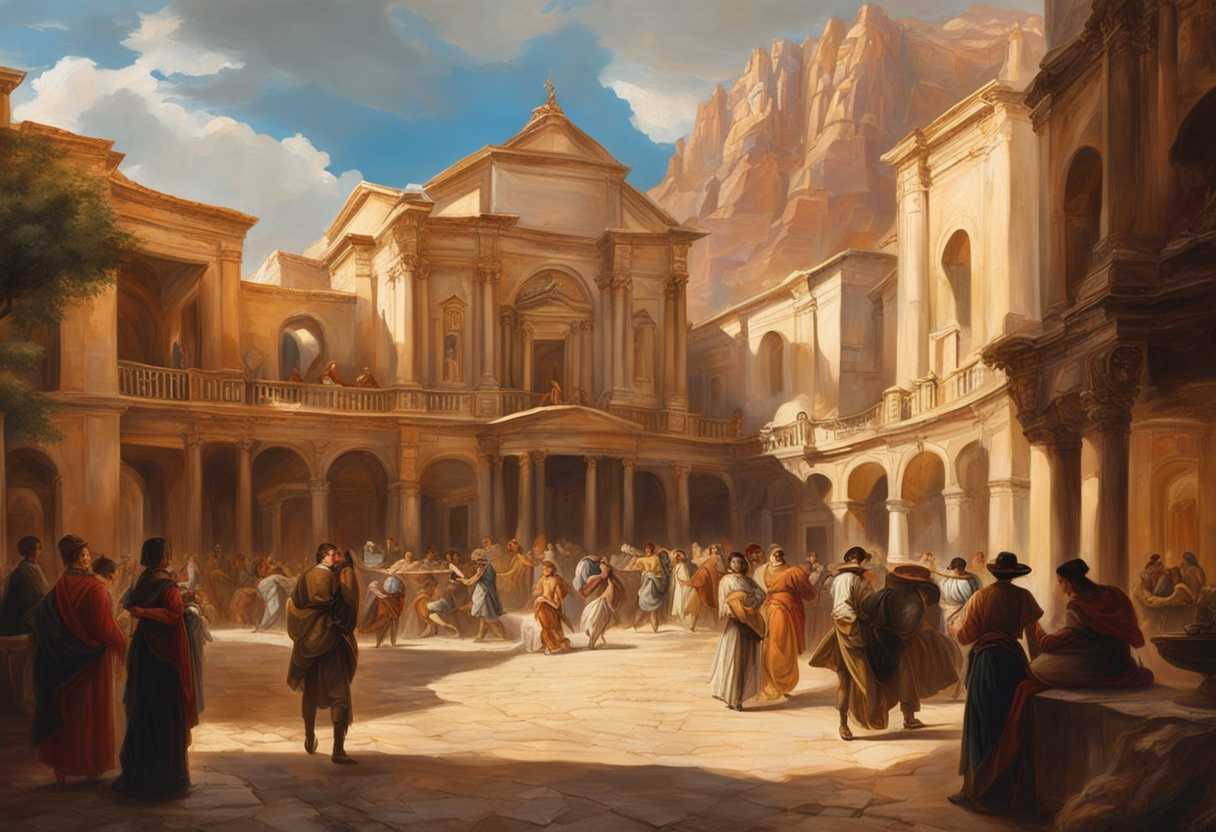
Setting the Scene for Psalms 76:1-3
The scene in Psalms 76:1-3 is set in the majestic city of Jerusalem, the capital of Israel. The city is bustling with activity as people from all walks of life gather together in the temple to worship and seek the presence of God. The temple is a grand structure, adorned with intricate carvings and gold accents, a symbol of the Israelites’ devotion to their God.
Among the crowd are King David, the beloved ruler of Israel, and his trusted advisors and warriors. They have come to the temple to offer sacrifices and praises to God for His protection and deliverance in times of trouble. The atmosphere is filled with reverence and awe as the people lift their voices in songs of thanksgiving and adoration.
As the sun sets over the city, casting a golden glow over the temple, King David stands before the people, his heart overflowing with gratitude. He raises his hands to heaven and declares, “In Judah God is known; his name is great in Israel. His abode has been established in Salem, his dwelling place in Zion.” The people respond with shouts of joy and praise, their hearts united in worship of the Almighty God who reigns over all.
What is Psalms 76:1-3 about?
This verse highlights the recognition and reverence for God in the land of Judah and Israel. It emphasizes that God’s name is highly esteemed and revered in these places, signifying His importance and presence among the people. But why is it significant that God is known in Judah and His name is great in Israel? It speaks to the deep spiritual and cultural connection these regions have with God, indicating a strong faith and devotion to Him. It suggests that God’s influence and impact are felt deeply among the people of Judah and Israel, shaping their values, beliefs, and actions. The verse also alludes to the idea that God’s presence and influence are not limited to a specific geographic location. It underscores the universal nature of God’s greatness and the acknowledgment of His power and authority beyond the borders of Judah and Israel. This recognition reminds us that God’s name holds significance and reverence across different communities and nations, uniting believers in their worship and praise. So, as we reflect on this verse, let us consider the profound impact of God’s presence in our lives and the ways in which we can honor and magnify His name, not just in Judah or Israel, but in every corner of the world.
Understanding what Psalms 76:1-3 really means
Psalms 76:1-3 is a powerful passage that speaks to the majesty and sovereignty of God. It highlights God’s presence, His protection, and His power over all adversaries. “In Judah God is known; his name is great in Israel.” This phrase emphasizes the recognition and reverence of God among His people. Judah and Israel represent the chosen people who have experienced God’s mighty works. God’s greatness is not just a concept but a lived reality among His people. His deeds make His name known and revered. As we reflect on Exodus 15:11, “Who among the gods is like you, Lord? Who is like you—majestic in holiness, awesome in glory, working wonders?” we are reminded of God’s unmatched power and glory.
“His tent is in Salem, his dwelling place in Zion.” This signifies God’s presence among His people. Salem (Jerusalem) and Zion are symbolic of God’s holy habitation. God chooses to dwell among His people, signifying His closeness and accessibility to those who seek Him. Psalm 132:13-14 echoes this sentiment, “For the Lord has chosen Zion, he has desired it for his dwelling, saying, ‘This is my resting place for ever and ever; here I will sit enthroned, for I have desired it.’” God’s desire to be with His people is a testament to His love and commitment to us. “There he broke the flashing arrows, the shields and the swords, the weapons of war.” This illustrates God’s power to disarm and defeat the enemies of His people. It is a testament to His protective nature. Isaiah 54:17 reinforces this truth, “No weapon forged against you will prevail, and you will refute every tongue that accuses you. This is the heritage of the servants of the Lord, and this is their vindication from me,” declares the Lord.”
In today’s world, where uncertainty and conflict are prevalent, this passage reassures us of God’s unchanging nature. He is still present, powerful, and protective. Consider a time when you felt overwhelmed by life’s challenges, much like facing a battle. Just as God broke the weapons of war in ancient times, He can dismantle the obstacles in your life today. A friend of mine once faced a seemingly insurmountable financial crisis. Through prayer and faith, they experienced unexpected provision and support, much like God breaking the arrows and shields of their adversities. Psalms 76:1-3 is a reminder of God’s greatness, His presence among us, and His power to protect and deliver. It calls us to recognize His sovereignty and trust in His ability to overcome any challenge we face.
How can we honor God with true worship?
We can honor God with true worship by acknowledging His greatness and giving Him the respect and reverence He deserves. When we approach God with humility and awe, recognizing His sovereignty and power, we demonstrate our true worship. This involves a deep sense of respect and adoration for who God is and what He has done.
Additionally, true worship involves offering our whole selves to God in sincere devotion. This means giving Him our hearts, minds, and actions in worship. When we truly worship God, we do so with authenticity and sincerity, not just going through the motions or putting on a show. Our worship should be a reflection of our genuine love and gratitude towards God. We should come before God in true worship with a spirit of thankfulness and praise. Giving thanks to God for His blessings and praising Him for His goodness are essential components of honoring God in worship. We demonstrate our love for God and acknowledge His goodness in our lives by expressing our gratitude and adoration through praise and thanksgiving.
Application
Embrace the strength and authority of our God, like a reliable leader at work or a guiding light in your family. Acknowledge His grandeur and offer Him the respect and appreciation He deserves for His endless blessings. Will you commit to honoring Him in every aspect of your life?

Reverend Michael Johnson is an experienced Church Minister with a profound expertise in spirituality and guidance. With a serene presence and a compassionate heart, he has faithfully served his congregation for over 20 years, leading them on a spiritual journey towards inner peace and enlightenment. Reverend Johnson’s extensive knowledge of religious philosophies and profound understanding of human nature have made him a trusted confidant and mentor to many, as he seamlessly weaves his profound wisdom into life teachings. Reverend Johnson’s calming demeanor and empathetic nature continue to uplift and heal souls, nurturing a sense of unity and tranquility within his community.