
Psalms 150:1-6 is about praising God wholeheartedly with various musical instruments and rejoicing in His greatness with all forms of worship and adoration.
1 Praise the Lord! Praise God in his sanctuary; praise him in his mighty heavens!
2 Praise him for his mighty deeds; praise him according to his excellent greatness!
3 Praise him with trumpet sound; praise him with lute and harp!
4 Praise him with tambourine and dance; praise him with strings and pipe!
5 Praise him with sounding cymbals; praise him with loud clashing cymbals!
6 Let everything that has breath praise the Lord! Praise the Lord!
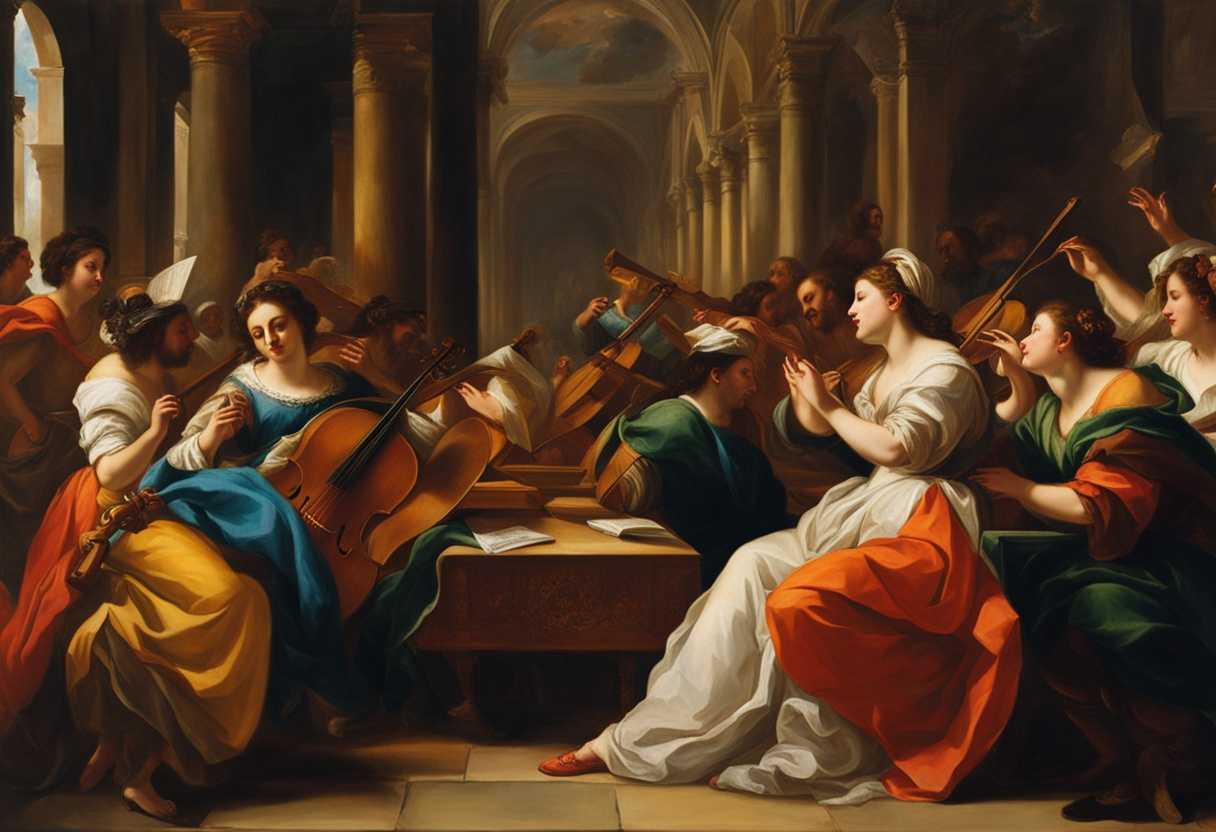
Setting the Scene for Psalms 150:1-6
The scene in Psalms 150:1-6 is set in the grand and majestic Temple of Jerusalem. The air is filled with the scent of burning incense, and the sound of harps, lyres, and cymbals reverberates through the halls. The Temple is bustling with activity as priests, Levites, and worshippers gather to praise and worship the Lord.
Among the crowd are King David, who composed many of the Psalms, and his son King Solomon, who built the Temple. They are joined by a multitude of musicians, singers, and dancers, all dressed in their finest garments, ready to offer their talents in praise of the Almighty. The atmosphere is one of reverence and joy, as the people lift their voices in song and their hands in worship.
As the music swells and the praises rise, the scene is a beautiful display of unity and devotion to God. The words of Psalms 150 come alive as every instrument and voice joins together in harmony, exalting the Lord for His mighty deeds and excellent greatness. The scene is a powerful reminder of the importance of worship and praise in the life of believers, as they come together to glorify the name of the Lord in His holy sanctuary.
What is Psalms 150:1-6 about?
This verse is a beautiful reminder of the power of praising the Lord through music and dance. It celebrates the idea that everything that has breath, every living creature, should offer praise to God. When we engage in music and dance as a form of worship, we are using our whole selves – our body, mind, and spirit – to glorify God.
Music has the ability to touch our hearts and souls in a unique way, and dance can express our joy and adoration in a physical form. When we combine these elements in praise, we are engaging in a holistic worship experience that honors God with our entire being. This verse challenges us to consider how we can incorporate music and dance into our worship practices, and how we can encourage others to join us in exalting the Lord in this way. We reflect on this verse, pondering the significance of using our breath, our very life force, to praise God. How can we use our gifts of music and movement to honor Him in our daily lives? How can we inspire others to join us in celebrating God through these expressive forms? We can embrace the call to praise the Lord with all that we are, knowing that music and dance can be powerful tools for deepening our relationship with Him and spreading His love to the world.
Understanding what Psalms 150:1-6 really means
Psalms 150:1-6, the final chapter of the Book of Psalms, is often referred to as the “Hallelujah Psalm,” encapsulating a call to praise the Lord. This chapter serves as a crescendo of praise, summarizing the themes of worship and adoration that resonate throughout the Psalms. The opening verse sets the tone, urging us to praise God in both the earthly sanctuary and the heavenly realms, emphasizing that worship transcends physical boundaries and acknowledges the omnipresence of God. As 1 Chronicles 16:29 echoes, worship is about ascribing glory to the Lord and coming before Him in the splendor of His holiness.
Moving forward, the Psalm prompts us to praise God for His acts of power and surpassing greatness, recognizing His mighty deeds and inherent greatness. Exodus 15:11 reinforces this sentiment, highlighting God’s unmatched majesty and glory in His wondrous works. The subsequent verses vividly depict a symphony of praise, utilizing various musical instruments and forms of expression to glorify God. This diversity in worship, as seen in 2 Samuel 6:5, showcases the vibrant and multifaceted ways in which we can honor God through art and music.
The all-encompassing call for all living beings to praise the Lord in the final verse underscores the universal nature of worship. Isaiah 42:10 further emphasizes this inclusivity, inviting every living creature to participate in the praise of God, illustrating the breadth and depth of worship that transcends human boundaries. In today’s context, this Psalm remains relevant by reminding us of the universal call to worship, encouraging diverse expressions of praise through individual talents and resources, and highlighting the significance of both communal and personal worship in our lives.
Reflecting on personal experiences, such as attending a multicultural worship service, reinforces the beauty of diversity in worship. Each person bringing their unique instruments and styles of music mirrors the essence of Psalms 150:1-6, showcasing unity in diversity and the collective symphony of praise to God. This anecdote underscores the lesson that worship is not about uniformity but about embracing the richness of individual contributions to the collective worship of God.
In conclusion, Psalms 150:1-6 serves as a poignant reminder of the vital role of praise in our lives. It calls us to acknowledge God’s greatness, utilize our unique gifts in worship, and unite in the universal chorus of praise. In a world often marked by division, this Psalm unites us in a common purpose: to glorify the Lord with all that we are and all that we have.
How can we praise God with music and dance?
We can praise God with music and dance by acknowledging His greatness and demonstrating our joy and gratitude through our movements and melodies. Through music, we can lift our voices in harmonious praise, creating a beautiful sound that honors God’s glory and power. When we lift our bodies in dance, we express our adoration and reverence through physical movement, reflecting the joy in our hearts that comes from knowing and worshiping the Almighty.
The verses in Psalms highlight the various ways we can worship God through musical instruments, singing, and dancing. We can engage not only our hearts and minds but also our bodies in worship by utilizing these forms of expression. Music and dance have the power to invoke emotions, draw us closer to God, and unite us as a community in praise and thanksgiving. We can truly celebrate and glorify the Lord in a way that is both vibrant and heartfelt by engaging in these practices.
Application
Let’s embody the spirit of Psalms 150:1-6 and pour out our gratitude and admiration to the One who guides us. Don’t be hesitant in showing your full devotion and appreciation for the blessings and kindness He has bestowed upon us. Allow yourself to be moved to sing, play, and share in the jubilant reverence of His eternal care. Are you ready to join in praising and honoring His name with unwavering dedication?

Reverend Michael Johnson is an experienced Church Minister with a profound expertise in spirituality and guidance. With a serene presence and a compassionate heart, he has faithfully served his congregation for over 20 years, leading them on a spiritual journey towards inner peace and enlightenment. Reverend Johnson’s extensive knowledge of religious philosophies and profound understanding of human nature have made him a trusted confidant and mentor to many, as he seamlessly weaves his profound wisdom into life teachings. Reverend Johnson’s calming demeanor and empathetic nature continue to uplift and heal souls, nurturing a sense of unity and tranquility within his community.