
Psalms 53:1 is about the foolishness of those who deny the existence of God and live in wickedness.
1 The fool says in his heart, “There is no God.” They are corrupt, doing abominable iniquity; there is none who does good.
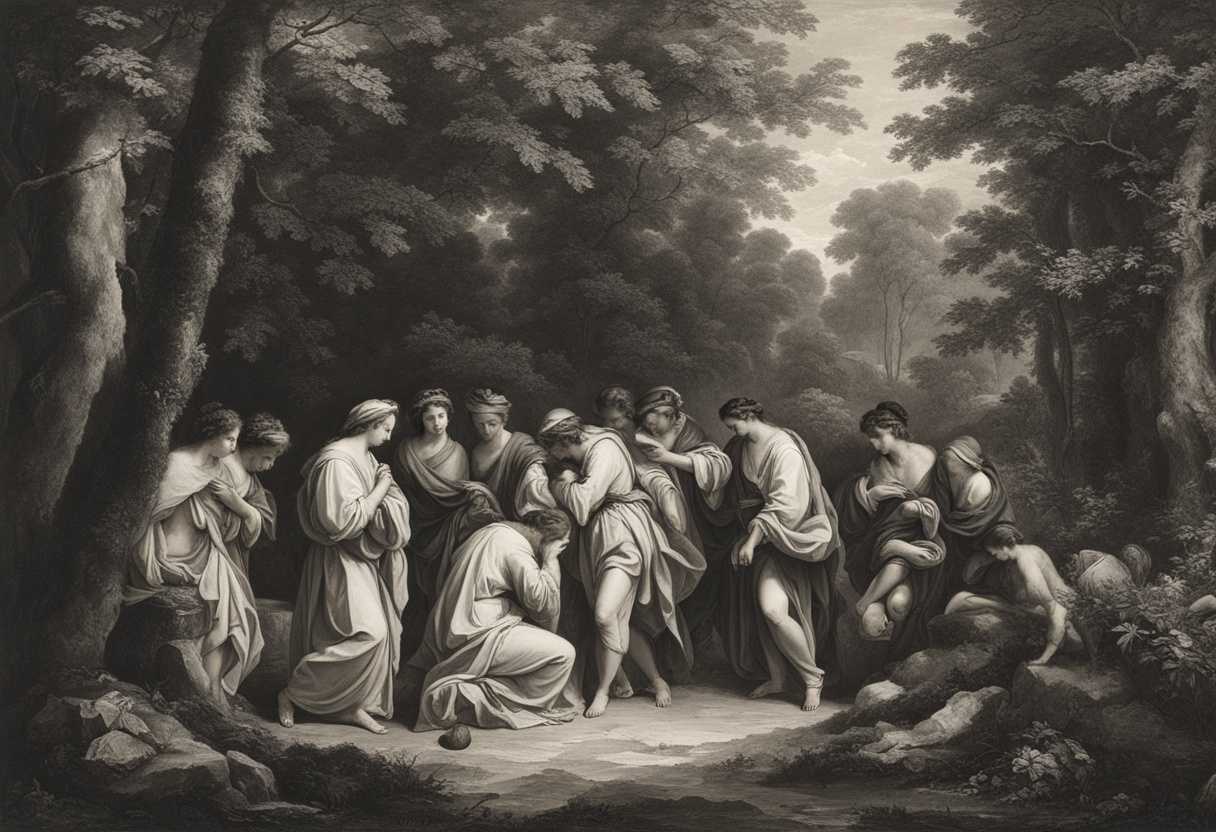
Setting the Scene for Psalms 53:1
In the scene described in Psalms 53:1, we find a group of weary travelers seeking refuge in the wilderness. The sun is setting, casting a warm golden glow over the rugged terrain. The travelers, led by a man named David, have been on a long and arduous journey, fleeing from their enemies who seek to harm them. As they make camp for the night, the air is filled with the sounds of rustling leaves and distant howls of wild animals.
Among the travelers is a mix of men and women, young and old, all looking to David for guidance and protection. They huddle together around a crackling campfire, their faces illuminated by the dancing flames. Despite the dangers that surround them, there is a sense of peace and unity among the group, as they find solace in each other’s company and in their shared faith.
As the night deepens, David takes out a scroll and begins to recite the words of Psalms 53, a prayer for deliverance and salvation in the face of adversity. The travelers listen intently, their hearts lifted by the powerful words of hope and trust in the Lord. In this moment, surrounded by the beauty and harshness of the wilderness, they find strength in their shared belief and in the knowledge that they are not alone on their journey.
What is Psalms 53:1 about?
This verse serves as a powerful reminder of the irrationality of denying the existence of God. It highlights the foolishness of those who choose to ignore the overwhelming evidence of a higher power at work in the world. Describing them as “fools” emphasizes the lack of wisdom and understanding in denying something as fundamental as the existence of God.
Have you ever wondered about the complexities and wonders of the universe? From the intricate design of a snowflake to the vastness of the galaxies, it is hard to fathom that all of this could be mere coincidence. This verse challenges us to consider the evidence of God’s existence all around us and to reflect on the folly of rejecting such a profound truth. Think about the purpose and order that exist in the world as you ponder the meaning of this verse. Consider the beauty of nature, the intricacy of the human body, and the mysteries of the universe. Is it possible that all of this could have come into being without a divine creator? Take a moment to reflect on your beliefs and consider the compelling argument for the existence of God presented in this verse.
Understanding what Psalms 53:1 really means
Psalms 53:1 is a poignant reflection on the consequences of denying the existence of God. It delves into the folly of disbelief and the moral decay that can ensue when individuals turn away from acknowledging a higher power. This verse serves as a stark reminder of the importance of faith and the ethical compass that belief in God provides in navigating life’s complexities.
Drawing parallels with Psalms 14:1, which echoes a similar sentiment about the foolishness of denying God, Psalms 53:1 reinforces the timeless message about the perils of disbelief. Additionally, references to Romans 1:21-22 and Proverbs 1:7 further emphasize the theme of wisdom versus folly, highlighting the significance of honoring God and embracing divine instruction in leading a purposeful life.
In today’s world, characterized by widespread skepticism and secular ideologies, Psalms 53:1 remains relevant as a call to introspection. It challenges individuals to evaluate their beliefs and recognize the profound impact these beliefs have on their actions and the broader societal fabric. The verse prompts contemplation on the moral implications of denying God and the potential societal repercussions of such denial.
Consider a community that once thrived on shared values rooted in faith but gradually drifted away from these foundational beliefs. As skepticism grew and the importance of moral principles diminished, the community witnessed a rise in selfishness, dishonesty, and discord. This anecdote vividly illustrates how forsaking core beliefs can lead to societal deterioration, mirroring the “corrupt” and “abominable” actions described in Psalms 53:1.
“The fool says in his heart, ‘There is no God.’” This powerful phrase underscores the deep-rooted nature of disbelief, portraying it as more than mere words but a foundational conviction that shapes one’s worldview and conduct. It underscores the profound impact of denying God’s existence on an individual’s moral compass and overall outlook on life. Similarly, the depiction of individuals as “corrupt” and engaging in “abominable iniquity” underscores the moral decay that can result from rejecting a higher moral authority, highlighting the absence of an ultimate standard for distinguishing right from wrong.
In conclusion, Psalms 53:1 stands as a timeless admonition against disbelief and its moral repercussions. It urges individuals to engage in self-reflection, reevaluate their beliefs, and consider the role of faith as a guiding principle for personal and communal well-being. By internalizing the wisdom encapsulated in this verse, individuals can strive to lead lives that align with divine principles, fostering a more harmonious and virtuous society.
How can we see God’s existence in nature?
One way we can see God’s existence in nature is by observing the intricate beauty and order in the world around us. From the vibrant colors of a sunset to the delicate design of a flower, nature showcases the creativity and perfection of a divine creator. The complexity and balance found in ecosystems, weather patterns, and even the human body all point towards a higher power at work.
Furthermore, the cycles of life and death in nature can be seen as a reflection of God’s eternal nature. We see the cycle of renewal and regeneration that echoes the promise of life after death, just as plants wither in autumn only to bloom again in spring. We can recognize the presence of a guiding force that sustains and renews the world in a continuous cycle of creation and rebirth by observing the resilience and interconnectedness of all living things.
Application
Let’s dive into Psalms 53:1 – analyzing our hearts and actions, exploring the light of wisdom through God. Let’s ponder on foolishness in our daily lives, and strive to embrace divine guidance. Let this verse be our compass, guiding us towards righteousness in all endeavors. Will you answer the call to walk in wisdom and virtue with conviction?

Reverend Michael Johnson is an experienced Church Minister with a profound expertise in spirituality and guidance. With a serene presence and a compassionate heart, he has faithfully served his congregation for over 20 years, leading them on a spiritual journey towards inner peace and enlightenment. Reverend Johnson’s extensive knowledge of religious philosophies and profound understanding of human nature have made him a trusted confidant and mentor to many, as he seamlessly weaves his profound wisdom into life teachings. Reverend Johnson’s calming demeanor and empathetic nature continue to uplift and heal souls, nurturing a sense of unity and tranquility within his community.