
1 Then I was given a measuring rod like a staff, and I was told, “Rise and measure the temple of God and the altar and those who worship there,
2 but do not measure the court outside the temple; leave that out, for it is given over to the nations, and they will trample the holy city for forty-two months.
3 And I will grant authority to my two witnesses, and they will prophesy for 1,260 days, clothed in sackcloth.
4 These are the two olive trees and the two lampstands that stand before the Lord of the earth.
5 And if anyone would harm them, fire pours from their mouth and consumes their foes. If anyone would harm them, this is how he is doomed to be killed.
6 They have the power to shut the sky, that no rain may fall during the days of their prophesying, and they have power over the waters to turn them into blood and to strike the earth with every kind of plague, as often as they desire.
7 And when they have finished their testimony, the beast that rises from the bottomless pit will make war on them and conquer them and kill them.
8 and their dead bodies will lie in the street of the great city that symbolically is called Sodom and Egypt, where their Lord was crucified.
9 For three and a half days some from the peoples and tribes and languages and nations will gaze at their dead bodies and refuse to let them be placed in a tomb,
10 and those who dwell on the earth will rejoice over them and make merry and exchange presents, because these two prophets had been a torment to those who dwell on the earth.
11 But after the three and a half days a breath of life from God entered them, and they stood up on their feet, and great fear fell on those who saw them.
12 Then they heard a loud voice from heaven saying to them, “Come up here.” And they went up to heaven in a cloud, and their enemies watched them.
13 And at that hour there was a great earthquake, and a tenth of the city fell. Seven thousand people were killed in the earthquake, and the rest were terrified and gave glory to the God of heaven.
14 The second woe has passed; behold, the third woe is soon to come.
15 Then the seventh angel blew his trumpet, and there were loud voices in heaven, saying, “The kingdom of the world has become the kingdom of our Lord and of his Christ, and he shall reign forever and ever.”
16 And the twenty-four elders who sit on their thrones before God fell on their faces and worshiped God,
17 saying, “We give thanks to you, Lord God Almighty, who is and who was, for you have taken your great power and begun to reign.
18 The nations raged, but your wrath came, and the time for the dead to be judged, and for rewarding your servants, the prophets and saints, and those who fear your name, both small and great, and for destroying the destroyers of the earth.”
19 Then God’s temple in heaven was opened, and the ark of his covenant was seen within his temple. There were flashes of lightning, rumblings, peals of thunder, an earthquake, and heavy hail.
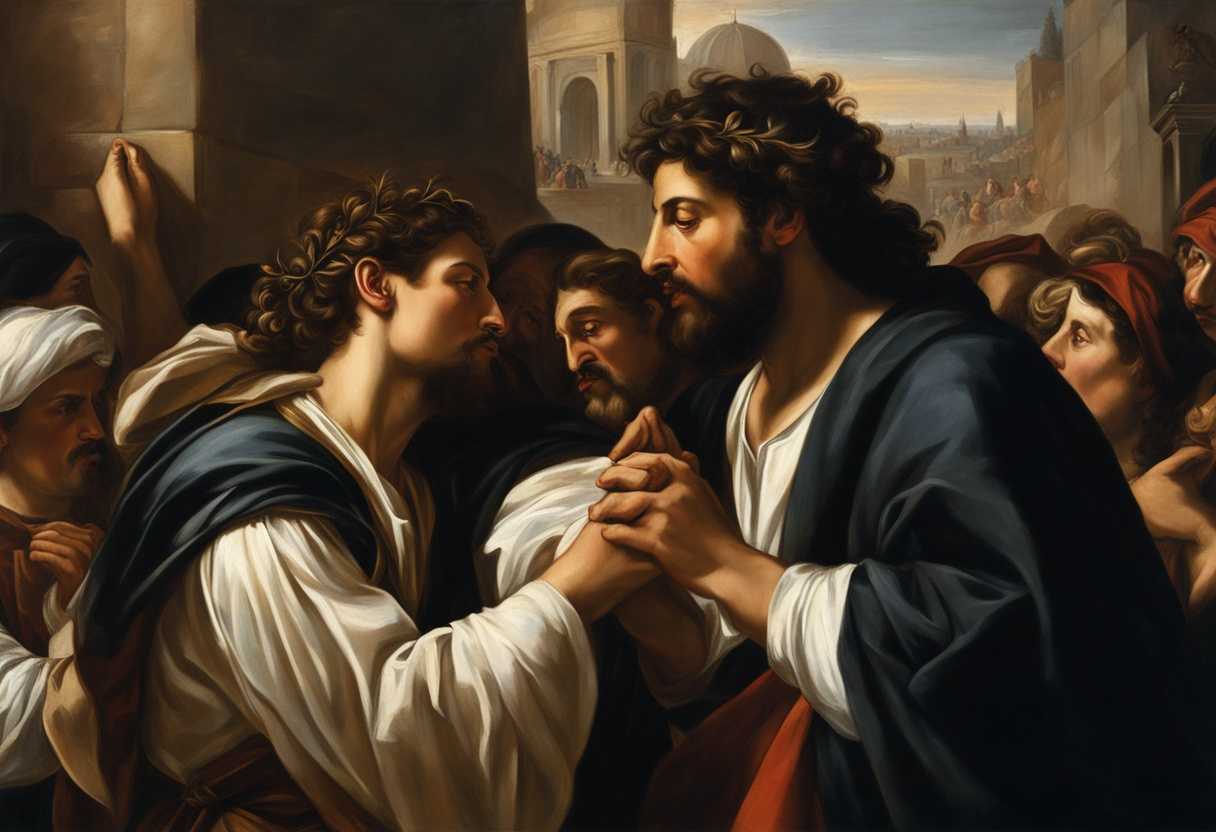
The True Meaning of Revelation 11
The Book of Revelation, the final book of the Bible, was written by the apostle John during his exile on the island of Patmos. John, one of the original twelve disciples, had a unique perspective on the life and teachings of Jesus Christ. John in this chapter provides a glimpse into the events that will unfold during the end times, leading up to the ultimate triumph of God’s kingdom.
The chapter begins by introducing two witnesses who will prophesy and testify for a period of 1,260 days. Their ministry will be marked by miraculous powers, as they are able to control the weather and strike their enemies with plagues. However, their witness will ultimately be met with opposition and persecution, as the “beast” will overcome and kill them. This foreshadows the intense spiritual battle that will rage during the end times, as the forces of evil seek to silence the truth.
The chapter also describes the destruction of the “great city,” which is likely a symbolic reference to the corrupt and ungodly systems of the world. This event is followed by a powerful earthquake that shakes the foundations of the earth, a reminder of the ultimate sovereignty of God and the inevitability of His judgment. Throughout this passage, John draws upon imagery and themes from other biblical books, such as the prophets and the Gospels, to paint a vivid picture of the cosmic struggle between good and evil.
Revelation 11:1-3
An angel gave me a reed like a measuring rod and instructed me to measure the temple of God and the altar, along with its worshipers, as stated in Revelation 11:1-3. But exclude the outer court; do not measure it, because it has been given to the Gentiles. They will trample on the holy city for 42 months. And I will appoint my two witnesses, and they will prophesy for 1,260 days, clothed in sackcloth.’”
The first section of these verses talks about measuring the temple, the altar, and the worshipers. This act of measuring signifies ownership, protection, and separation for a specific purpose. The temple symbolizes the presence of God and His people, and the act of measuring it implies God’s ownership and protection over His chosen ones. The exclusion of the outer court from the measurement indicates a division between those who are truly devoted to God and those who are not. The reference to the Gentiles trampling the holy city for 42 months signifies a period of persecution and tribulation, emphasizing the trials that God’s people will face.
The second part introduces the two witnesses who will prophesy for 1,260 days. These witnesses symbolize the faithful servants of God who proclaim His truth and judgment during a time of great turmoil. The use of sackcloth, a coarse material worn during times of mourning or repentance, emphasizes the seriousness of their message and the need for repentance. It is believed that these two witnesses could be a symbolic representation of Old Testament figures like Moses and Elijah, who performed miracles and stood against opposing forces in the past.
The mention of 1,260 days is also significant, as it corresponds to three and a half years in the Jewish calendar, symbolizing a time of trial and testing in biblical prophecy. This time period is echoed in other parts of the Bible, such as Daniel 7:25 and Revelation 12:6, underscoring its importance in eschatological events. These verses in Revelation 11 convey themes of divine ownership, protection of God’s people, the division between the faithful and the unfaithful, persecution, the presence of prophetic witnesses, and the inevitability of trials before the ultimate victory of God. It serves as a reminder for believers to stand firm in their faith, even in the midst of persecution and tribulation, trusting in God’s sovereignty and His ultimate plan for redemption.
Revelation 11:4-6
Two witnesses are given significant power and authority in Revelation 11:4-6. These verses state, “They are the two olive trees and the two lampstands, and they stand before the Lord of the earth. If anyone tries to harm them, fire comes from their mouths and devours their enemies. This is how anyone who wants to harm them must die. They have power to shut up the heavens so that it will not rain during the time they are prophesying, and they have power to turn the waters into blood and to strike the earth with every kind of plague as often as they want.”
The imagery of the two witnesses as olive trees and lampstands is rich in symbolism. Olive trees in the Bible are often associated with peace, prosperity, and spiritual abundance. Lampstands symbolize light, which represents truth and guidance. This indicates that these two witnesses carry a message of peace and light before the Lord. Their ability to bring destruction upon their enemies with fire from their mouths echoes the power of God’s Word to defend His servants. This also calls to mind the story of Elijah in the Old Testament, who called down fire from heaven to consume the soldiers who came to arrest him (2 Kings 1:10-12).
The references to shutting up the heavens, turning waters into blood, and striking the earth with plagues mirror the plagues that were brought upon Egypt by Moses and Aaron in the book of Exodus. These miraculous acts serve as a testimony to the divine authority and power vested in the two witnesses. They show that their words are backed by God’s sovereignty by demonstrating control over natural elements. This display of power also serves as a warning to those who seek to oppose them, emphasizing the consequences of going against the will of God.
Through these verses, we are reminded of the recurring theme in the Bible of God using chosen individuals to proclaim His message and perform His wonders. Just as Moses and Elijah were instrumental in revealing God’s power and will in the Old Testament, the two witnesses in Revelation 11 continue this legacy by bearing witness to God’s truth and executing His judgments upon the earth. Their presence underscores the continuity of God’s plan throughout history and reaffirms the importance of faithful obedience to His commands as a mark of true discipleship.
Revelation 11:7-10
The text in Revelation 11:7-10 presents a significant portion that describes the activities of the two witnesses. The verse reads, “When they have finished their testimony, the beast that comes up from the Abyss will attack them, and overpower and kill them. Their bodies will lie in the public square of the great city—which is figuratively called Sodom and Egypt—where also their Lord was crucified. For three and a half days some from every people, tribe, language and nation will gaze on their bodies and refuse them burial. The inhabitants of the earth will gloat over them and will celebrate by sending each other gifts, because these two prophets had tormented those who live on the earth.”
Here, the two witnesses have been preaching and testifying for a specific period, after which they are attacked and killed by the beast. The beast is a prominent figure in Revelation, often associated with evil forces and symbolic of worldly powers that oppose God. The mention of the Abyss further solidifies the beast’s connection to darkness and chaos. This action of killing the witnesses also reflects the persecution that believers may face for their faith throughout history.
The location where their bodies lay, referred to as Sodom and Egypt, symbolizes spiritual degradation and oppression. A clear parallel is drawn between the suffering of the witnesses and that of Jesus Christ by equating this place to where their Lord was crucified. This comparison highlights the sacrificial nature of their ministry and underscores the idea that followers of Christ may also face persecution and martyrdom.
The reaction of the people to the death of the witnesses is one of contempt and celebration. This response echoes the animosity often directed towards prophets and believers in the Bible. The refusal to bury the bodies and the public display of their corpses serve as a form of humiliation and a way for their enemies to demonstrate apparent victory over them. This event portrays a vivid picture of the world’s rejection of God’s messengers and the perversion of values in a society that revels in the downfall of righteousness.
The prophecy of the witnesses’ resurrection after three and a half days points to the ultimate triumph of God’s purposes and the defeat of the forces of evil. This miraculous event serves as a testimony to the power and sovereignty of God, emphasizing that even in the face of persecution and apparent defeat, His plans cannot be thwarted. The eventual vindication of the witnesses and their exaltation mirrors the resurrection and glorification of Jesus Christ, bringing hope and encouragement to believers facing trials and tribulations. The recurring theme of persecution, martyrdom, and eventual victory in the face of adversity is seen in examining this passage. The narrative of the two witnesses in Revelation 11 serves as a reminder to Christians that they may encounter opposition and suffering for their faith, but ultimately, God’s purposes will prevail. This section of the text encourages believers to remain steadfast in their convictions, knowing that God is faithful and will ultimately bring justice and redemption to His people.
Revelation 11:11-14
Several important sections to break down and provide commentary on are found in Revelation 11:11-14. “But after the three and a half days the breath of life from God entered them, and they stood on their feet, and terror struck those who saw them. The breath of life from God brings back to life the two witnesses who had been dead for three and a half days in this verse. This miraculous event not only demonstrates God’s power over life and death but also serves as a powerful sign to those who witness it. The resurrection of the two witnesses symbolizes God’s victory over death and the ultimate triumph of His kingdom. This event reminds believers of the promise of eternal life and resurrection as mentioned in other parts of the Bible such as in John 11:25-26 where Jesus says, “I am the resurrection and the life. The one who believes in me will live, even though they die.”
- “Then they heard a loud voice from heaven saying to them, ‘Come up here.’ And they went up to heaven in a cloud, while their enemies looked on.”
This section describes the ascension of the two witnesses into heaven in a cloud after being raised from the dead. The imagery of ascending into heaven in a cloud is reminiscent of Jesus’ own ascension described in Acts 1:9-11. The fact that their enemies witness this event emphasizes God’s power and authority over all things, including those who oppose Him. The ascension of the two witnesses also signifies the completion of their mission on earth and their reward in heaven, echoing the promise of rewards for the faithful in other parts of the Bible like in Matthew 5:12 where Jesus says, “Rejoice and be glad, because great is your reward in heaven.”
- “At that very hour there was a severe earthquake and a tenth of the city collapsed. Seven thousand people were killed in the earthquake, and the survivors were terrified and gave glory to the God of heaven.”
Following the ascension of the two witnesses, a severe earthquake occurs, causing destruction and death. This event symbolizes God’s judgment and serves as a reminder of the consequences of rejecting Him. The number seven is often associated with completeness or perfection in the Bible, and the mention of seven thousand people killed may symbolize a large, but specific, portion of the population who face judgment. The fact that the survivors are terrified and give glory to God highlights the transformative power of God’s judgments, as even in the midst of destruction, some may turn to Him in reverence and repentance. This echoes the theme of judgment and repentance seen throughout the Bible, such as in Revelation 16:9 where people are described as refusing to repent despite witnessing God’s judgments. Revelation 11:11-14 contains powerful imagery and symbolism that conveys timeless messages about God’s power, His faithfulness to His servants, the consequences of rejecting Him, and the ultimate victory of His kingdom. The resurrection and ascension of the two witnesses, the earthquake and its aftermath, all serve to remind believers of the importance of faithfulness and obedience, the certainty of God’s judgment, and the hope of eternal life in His presence.
Revelation 11:15-19
Several important sections can be identified in Revelation 11:15-19 that hold significance in understanding the message conveyed in this passage.
Beginning with verse 15, we see the declaration of a significant moment in the vision of John, where the seventh angel blows his trumpet, announcing that “The kingdom of the world has become the kingdom of our Lord and of his Messiah, and he will reign for ever and ever.” This proclamation signifies the establishment of God’s eternal and sovereign rule over all creation through Jesus Christ. It speaks to the fulfillment of prophecies throughout the Bible, such as Daniel 7:13-14, where the Son of Man is given dominion and kingship that will never be destroyed. This moment represents the ultimate victory of God over all evil and the triumph of His kingdom. It serves as a reminder to believers that despite the trials and tribulations they may face, God’s ultimate plan of redemption and restoration will come to fruition.
Moving on to verses 16-18, we see the response to this proclamation by the twenty-four elders before God’s throne. They fall on their faces and worship God, acknowledging His power and sovereignty. The elders express gratitude for God’s intervention in the world’s affairs and His commencement of His eternal reign. This act of worship underscores the importance of recognizing and honoring God’s supremacy over all things. It serves as a reminder for believers to humble themselves before God, offering Him praise and adoration for His mighty deeds and righteous judgments. The reverence shown by the elders exemplifies the proper response to God’s authority and highlights the eternal nature of His kingdom. The focus shifts to the opening of the temple of God in heaven, revealing the ark of His covenant in verse 19. This symbolic act signifies the unveiling of God’s presence and faithfulness to His covenant promises. The ark of the covenant was a sacred object in the Old Testament that represented God’s presence among His people and His faithfulness to His promises. Its appearance in this vision alludes to the restoration of the covenant relationship between God and His people, as well as the fulfillment of His redemptive plan. This imagery conveys the idea of God dwelling among His people in a renewed and everlasting covenant, emphasizing the close relationship between God and His followers. It points to the ultimate fulfillment of God’s promises throughout history, culminating in the establishment of His eternal kingdom. Revelation 11:15-19 offers a powerful depiction of God’s final victory and the establishment of His eternal kingdom. It emphasizes the sovereignty of God, the response of worship from His creatures, and the unveiling of His covenant promises. Believers reflecting on this passage are reminded of the certainty of God’s ultimate triumph, the importance of worship and humility before Him, and the assurance of His faithfulness to His covenant. The message conveyed in these verses serves as a source of encouragement and hope for believers, inspiring them to remain steadfast in their faith and trust in God’s divine plan for the future.
After Revelation 11
The two witnesses had completed their testimony, and the beast that comes up from the bottomless pit made war against them and overcame them. Their bodies lay in the street of the great city, which is figuratively called Sodom and Egypt, where also their Lord was crucified. For three and a half days, the people of the earth rejoiced and celebrated, for these two prophets had tormented them. But the breath of life from God entered them, and they stood on their feet, and great fear fell on those who saw them. This was a pivotal moment, a foreshadowing of the ultimate triumph of God’s kingdom over the forces of evil. The stage was set for the next chapter, where the seventh trumpet would sound, and the world would witness the unfolding of God’s final judgment.

Reverend Michael Johnson is an experienced Church Minister with a profound expertise in spirituality and guidance. With a serene presence and a compassionate heart, he has faithfully served his congregation for over 20 years, leading them on a spiritual journey towards inner peace and enlightenment. Reverend Johnson’s extensive knowledge of religious philosophies and profound understanding of human nature have made him a trusted confidant and mentor to many, as he seamlessly weaves his profound wisdom into life teachings. Reverend Johnson’s calming demeanor and empathetic nature continue to uplift and heal souls, nurturing a sense of unity and tranquility within his community.