
9 And the great dragon was thrown down, that ancient serpent, who is called the devil and Satan, the deceiver of the whole world—he was thrown down to the earth, and his angels were thrown down with him.
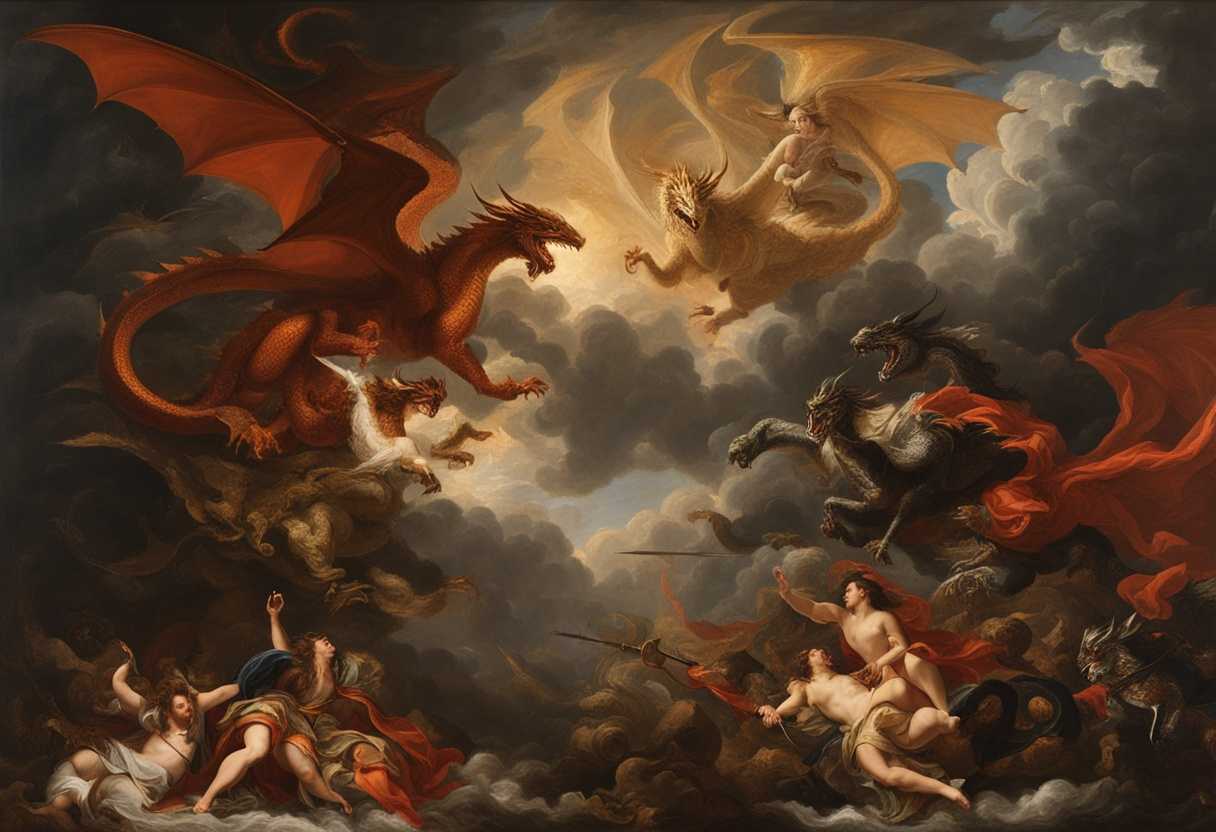
Setting the Scene for Revelation 12:9
In Revelation chapter 12, the scene opens with a great sign appearing in heaven: a woman clothed with the sun, with the moon under her feet, and a crown of twelve stars on her head. This woman is pregnant and about to give birth, but a great red dragon with seven heads and ten horns stands before her, ready to devour her child as soon as it is born. The woman represents Israel or the Church, and the child symbolizes Jesus Christ.
As the tension builds in this heavenly scene, the dragon, who is identified as the ancient serpent called the devil or Satan, is poised to strike. The dragon’s tail sweeps a third of the stars from the sky and hurls them to the earth, symbolizing the angels who followed him in rebellion against God. The stage is set for a cosmic battle between good and evil, light and darkness, as the forces of heaven and hell prepare to clash.
Surrounded by the celestial splendor of heaven, the woman, the child, and the dragon are locked in a spiritual struggle that will ultimately be resolved through the victory of the Lamb of God. The imagery is rich with symbolism and meaning, drawing the reader into a vivid portrayal of the cosmic conflict between God and the forces of evil.
What is Revelation 12:9 about?
The character of the great dragon, the old serpent, who is identified as the Devil and Satan, represents the defeat of evil in this verse. This imagery is symbolic of the ultimate triumph of good over evil, where evil is not just defeated but cast out from its place of prominence. The use of multiple names – dragon, serpent, Devil, Satan – emphasizes the various forms and guises that evil can take in our lives. It serves as a reminder that evil can come in different shapes and sizes, but ultimately, it can be overcome.
Reflecting on this verse, we may question what dragons or serpents we are currently facing in our own lives. What kind of evil do we see in the world around us? And how can we draw strength from the idea that ultimately, evil will be cast out? This verse can offer comfort and hope to those facing challenging times, reminding us that no matter how powerful evil may appear, it is not invincible. It encourages us to stand firm in our beliefs and values, knowing that ultimately, goodness and light will prevail over darkness.
Understanding what Revelation 12:9 really means
Structure for Commentary:
1. Introduction to the Verse
2. Context within the Book of Revelation
3. Breakdown of Key Phrases and Their Meanings
4. Related Biblical Passages
5. Relevance to People Today
6. Anecdote for Illustration
7. We encounter a vivid portrayal of a cosmic battle between good and evil in Revelation 12:9. This verse specifically describes the expulsion of a great adversary from heaven. It’s a moment that marks a significant turning point in the spiritual narrative of the Bible.
Context within the Book of Revelation:
The Book of Revelation, authored by John, presents a series of visions that reveal the ultimate triumph of God over evil. This particular verse is part of a larger vision involving a woman, a dragon, and a child, symbolizing the ongoing struggle between God’s people and the forces of darkness. Understanding this context helps us grasp the magnitude of the events described.
Breakdown of Key Phrases and Their Meanings:
– “The great dragon was hurled down”: This phrase signifies the defeat of a formidable foe. The dragon is a symbol of immense power and malice.
– “That ancient serpent called the devil, or Satan”: This identifies the dragon with the serpent from Genesis, highlighting a continuous thread of deception and rebellion against God.
– “Who leads the whole world astray”: This underscores the dragon’s influence and the pervasive nature of his deceit.
– “He was hurled to the earth, and his angels with him”: This indicates a complete expulsion, not just of Satan but also his followers, symbolizing a decisive victory for the forces of good. The serpent’s first act of deception is seen in Genesis 3:1-15. Jesus mentions witnessing Satan fall “like lightning from heaven” in Luke 10:18, which parallels this verse in Revelation. These passages create a comprehensive narrative arc, from the fall of man to the ultimate defeat of evil.
Relevance to People Today:
This verse serves as a powerful reminder that evil, regardless of its apparent strength, is ultimately defeated. This message offers hope in our modern world, where deceit and wickedness can seem overwhelming. It reassures us that truth and righteousness will prevail. A young woman in our congregation who struggled with addiction provides an illustrative anecdote. She described her battle as a “dragon” that seemed unbeatable. Through faith, prayer, and community support, she found the strength to overcome. Her story mirrors the cosmic struggle described in Revelation, showing that personal battles against “dragons” can be won through divine help. We should ask ourselves in reflecting on this verse: What “dragons” are we facing in our own lives? How can we draw strength from God’s promise of ultimate victory over evil? Are we vigilant against the deceit that leads us astray? This verse not only encourages us to recognize the ongoing spiritual battle but also invites us to participate actively in the triumph of good through our daily actions and faith.
How can we discern false teachings and deception?
One way to discern false teachings and deception is to recognize the tactics of the enemy. Satan deceives the whole world in Revelation. This serves as a reminder that the devil is the father of lies and seeks to lead people astray from the truth. Therefore, when we encounter teachings that are contrary to the core beliefs of Christianity or that lead us away from the teachings of Jesus, we should be cautious and discerning.
Another way to distinguish false teachings is by comparing them to the Word of God. The Bible is the ultimate standard of truth, and any teaching that deviates from its principles should raise red flags. We can effectively identify and combat false teachings that may try to infiltrate our beliefs by being well-grounded in Scripture and seeking wisdom through prayer and guidance from the Holy Spirit.
Additionally, staying connected to a community of believers and seeking counsel from spiritual leaders can help us navigate through potential deception. We can gain clarity and discernment to recognize falsehoods and uphold the truth of God’s Word by discussing and examining different teachings within the context of a supportive Christian community.
Application
When life feels like a constant hustle, remember there’s a bigger battle at play. Don’t just sit on the sidelines—jump in and actively pray, fortify your faith, and gear up with God’s armor every day. Will you take a stand against the challenges thrown your way and walk confidently in Christ’s triumph?

Reverend Michael Johnson is an experienced Church Minister with a profound expertise in spirituality and guidance. With a serene presence and a compassionate heart, he has faithfully served his congregation for over 20 years, leading them on a spiritual journey towards inner peace and enlightenment. Reverend Johnson’s extensive knowledge of religious philosophies and profound understanding of human nature have made him a trusted confidant and mentor to many, as he seamlessly weaves his profound wisdom into life teachings. Reverend Johnson’s calming demeanor and empathetic nature continue to uplift and heal souls, nurturing a sense of unity and tranquility within his community.