
Revelation 14:10-11 is about the severe consequences of worshiping the beast and receiving its mark, illustrating the notion of eternal punishment and separation from God for those who choose to align themselves with evil, ultimately emphasizing the stark contrast between divine judgment and the hope of salvation for the faithful.
10 he also will drink the wine of God’s wrath, poured full strength into the cup of his anger, and he will be tormented with fire and sulfur in the presence of the holy angels and in the presence of the Lamb.
11 And the smoke of their torment goes up forever and ever, and they have no rest, day or night, these worshipers of the beast and its image, and whoever receives the mark of its name.
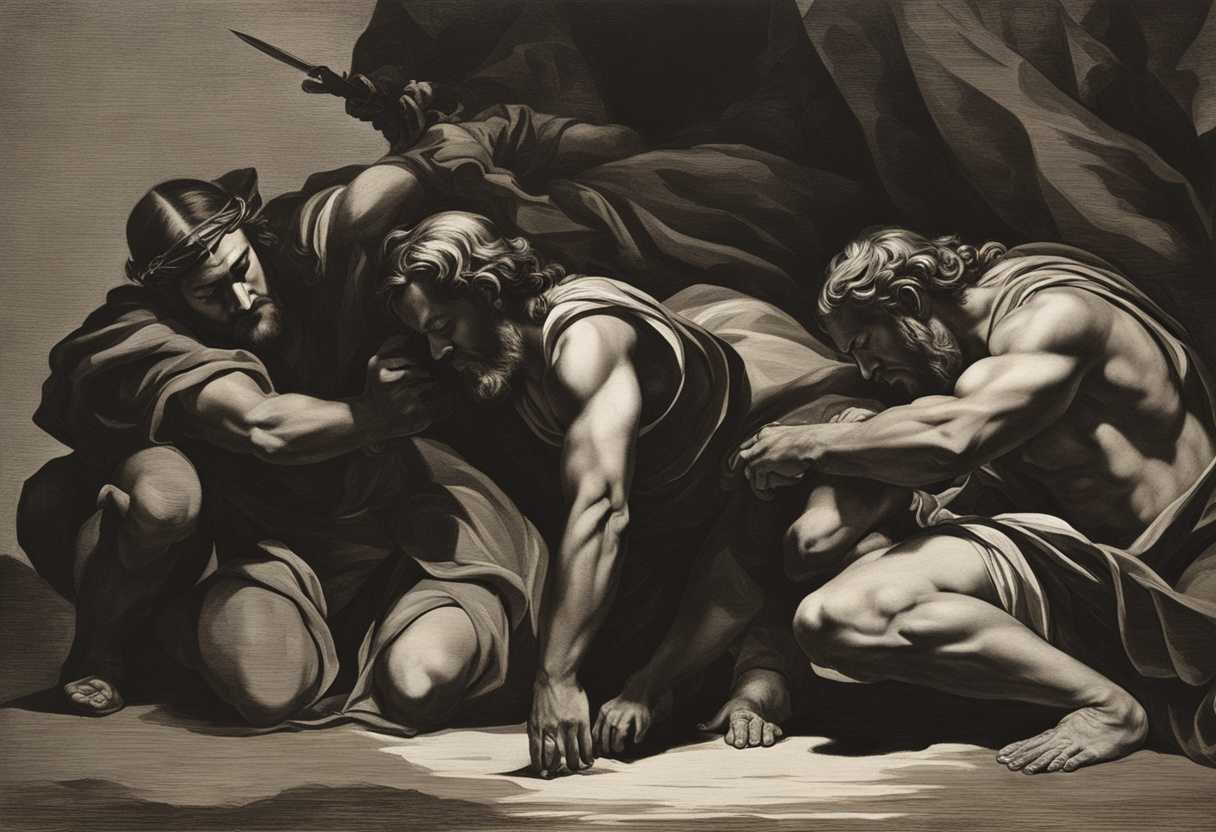
Setting the Scene for Revelation 14:10-11
In a vivid and haunting vision, the scene unfolds in the celestial realm, where the air is thick with tension and the weight of divine judgment hangs heavily. The backdrop is a stark contrast of light and darkness, with the brilliance of heaven illuminating the figures gathered before the throne of God. Among them stands a multitude of angels, their wings shimmering like precious metals, and their expressions a mix of solemnity and resolve. They are witnesses to the unfolding drama, a cosmic confrontation between good and evil, where the fate of humanity hangs in the balance.
At the center of this scene is a figure representing the rebellious spirit of mankind, a symbol of defiance against divine authority. This individual, perhaps a leader of a great empire or a false prophet, has led many astray, enticing them with promises of power and prosperity. As he stands before the throne, the weight of his actions bears down upon him, and the consequences of his choices become painfully clear. The air crackles with the anticipation of judgment, as the angels prepare to deliver the decree that will seal his fate. Surrounding him are the souls of those who followed him, their faces etched with regret and despair, realizing too late the folly of their allegiance.
The atmosphere is charged with a sense of finality, as the cries of the damned echo through the expanse, a chilling reminder of the eternal consequences of their rebellion. The smoke of their torment rises like a dark cloud, a stark visual representation of the separation from the divine presence they now face. The scene is both terrifying and awe-inspiring, a powerful reminder of the choices made in life and the ultimate justice that awaits. In this moment, the reality of eternal separation from God becomes palpable, as the vision serves as a warning to all who would dare to turn away from the light.
What is Revelation 14:10-11 about?
We are confronted with the stark realities of judgment and the consequences that come from the choices we make in these verses. When the text speaks of worshiping the beast, it symbolizes turning away from divine guidance and submitting to forces that oppose God. Have you ever considered what it truly means to choose between worldly desires and the will of God? This dichotomy not only serves to highlight the importance of fidelity to one’s faith but also reminds us of the potential consequences of our decisions. The “eternal punishment” mentioned may evoke feelings of fear and discomfort, but it calls us to reflect on the depth of our commitments and the paths we follow in life. The language of punishment serves as both a warning and an invitation to self-examination. It compels us to ask ourselves: What does it mean to align ourselves with God’s commandments? Sometimes we are seduced by the allure of immediate gratification rather than consciously choosing paths that honor our spiritual beliefs in our daily lives. God’s judgment, as described in these verses, is not merely punitive; instead, it underscores a profound sense of justice that exists within the moral universe. It emphasizes that every choice we make has ramifications—both for ourselves and our relationship with the divine. We might ask ourselves how we can navigate our lives in a way that aligns with our spiritual values and resists the temptations that lead us astray as we ponder these spiritual truths.
Understanding what Revelation 14:10-11 really means
Revelation 14:10-11 presents a sobering depiction of the consequences faced by those who choose to worship the beast and accept its mark. This passage serves as a stark warning about the eternal ramifications of our choices in faith and allegiance. It compels us to consider the weight of our decisions and the paths we choose in our spiritual journeys.
The Book of Revelation, written during a time of intense persecution for early Christians, reveals the ultimate victory of Christ over evil. It emphasizes the importance of remaining steadfast in faith amidst trials. Understanding this context enriches our interpretation of the passage, as it highlights the urgency and seriousness with which the early church approached their faith. They were not merely facing societal pressures; they were confronted with life-and-death decisions regarding their allegiance to God.
Key phrases in this passage carry profound meanings. When it states, “He will drink of the wine of God’s wrath,” it illustrates the severity of divine judgment. In biblical literature, wine often symbolizes joy, yet here it represents the bitter consequences of sin. This imagery signifies a complete and unrelenting judgment from God, a reminder that our choices have consequences that extend beyond our immediate circumstances. Furthermore, the phrase “tormented with fire and sulfur” evokes the imagery of hell and eternal separation from God. While fire can symbolize purification, in this context, it represents the ultimate punishment for those who reject God. The permanence of these consequences is underscored by the phrase, “the smoke of their torment goes up forever and ever,” reminding us that our choices resonate into eternity.
This theme of eternal judgment is echoed in other biblical passages. Matthew 25:46 speaks of eternal punishment for the wicked, reinforcing the idea of a final judgment. Similarly, 2 Thessalonians 1:9 describes the fate of those who do not know God, highlighting the seriousness of rejecting His grace. Revelation 20:10 depicts the ultimate fate of the devil, serving as a reminder of God’s ultimate victory over evil. Together, these scriptures paint a comprehensive picture of the consequences of our choices in relation to our faith.
In today’s world, filled with distractions and temptations, this passage serves as a wake-up call. Many individuals face choices that challenge their faith and values. The allure of materialism, power, and societal acceptance can lead one away from God. Consider a young professional who is offered a promotion that requires compromising their integrity. The temptation to pursue success at the cost of their values is real. This passage reminds us that such choices can have eternal consequences, urging us to remain faithful to our beliefs.
In conclusion, Revelation 14:10-11 is a powerful reminder of the importance of our choices in faith. It calls us to reflect on whom we serve and the implications of our decisions. As we navigate our lives, may we choose to align ourselves with God, understanding that His grace and mercy are always available to those who seek Him. Let us be vigilant in our choices, recognizing that they shape not only our present but also our eternal destiny.
What consequences do our choices have for eternity?
The choices we make during our lifetime have profound implications that extend beyond our earthly existence and into eternity. This passage illustrates a stark reality, emphasizing that actions taken in life are not merely temporary decisions but carry a weight that can influence the state of one’s eternal being. Those who engage in behaviors contrary to divine principles face serious repercussions that are described in vivid terms, highlighting the gravity of their choices. This serves as a reminder that our decisions resonate throughout eternity, shaping our ultimate fate. This narrative inherently calls for awareness and accountability. It reinforces the belief that life is filled with moral significance; each choice contributes to a larger narrative in the story of our existence. The severity of the consequences suggests that we are not only responsible for our actions but must also be mindful of the values and principles guiding those actions. Our choices reflect our alignment with or deviation from a higher moral standard, ultimately influencing our eternal destiny. Our decisions have universal implications; they speak to the collective human experience and the enduring impact of our behavior on ourselves and others. Understanding that our choices bear eternal consequences can instill a sense of urgency and responsibility in our daily lives. Therefore, embracing a path of righteousness and aligning our choices with deeper values can lead to a more fulfilling eternal existence, reinforcing the idea that we have the agency to shape our spiritual journey significantly.
Application
Life is like a busy highway; your choices are the steering wheel. Every decision you make directs your journey. Are you choosing the right lane that leads to fulfillment and purpose, or are you stuck in traffic, letting others dictate your path? Embrace your faith wholeheartedly and let it guide your actions—just like you would prioritize family over distractions. It’s time to evaluate if you’re living out your values or simply going along for the ride. So, what direction are you really heading in?

Reverend Michael Johnson is an experienced Church Minister with a profound expertise in spirituality and guidance. With a serene presence and a compassionate heart, he has faithfully served his congregation for over 20 years, leading them on a spiritual journey towards inner peace and enlightenment. Reverend Johnson’s extensive knowledge of religious philosophies and profound understanding of human nature have made him a trusted confidant and mentor to many, as he seamlessly weaves his profound wisdom into life teachings. Reverend Johnson’s calming demeanor and empathetic nature continue to uplift and heal souls, nurturing a sense of unity and tranquility within his community.