
Revelation 14:17-20 is about the symbolic imagery of the final judgment and the separation of the righteous from the wicked, where the grapes of the Earth are harvested and thrown into the great winepress of God’s wrath, representing the ultimate culmination of divine justice and retribution.
17 Then another angel came out of the temple in heaven, and he too had a sharp sickle.
18 And another angel came out from the altar, the angel who has authority over the fire, and he called with a loud voice to the one who had the sharp sickle, “Put in your sickle and gather the clusters from the vine of the earth, for its grapes are ripe.”
19 So the angel swung his sickle across the earth and gathered the grape harvest of the earth and threw it into the great winepress of the wrath of God.
20 And the winepress was trodden outside the city, and blood flowed from the winepress, as high as a horse’s bridle, for 1,600 stadia.
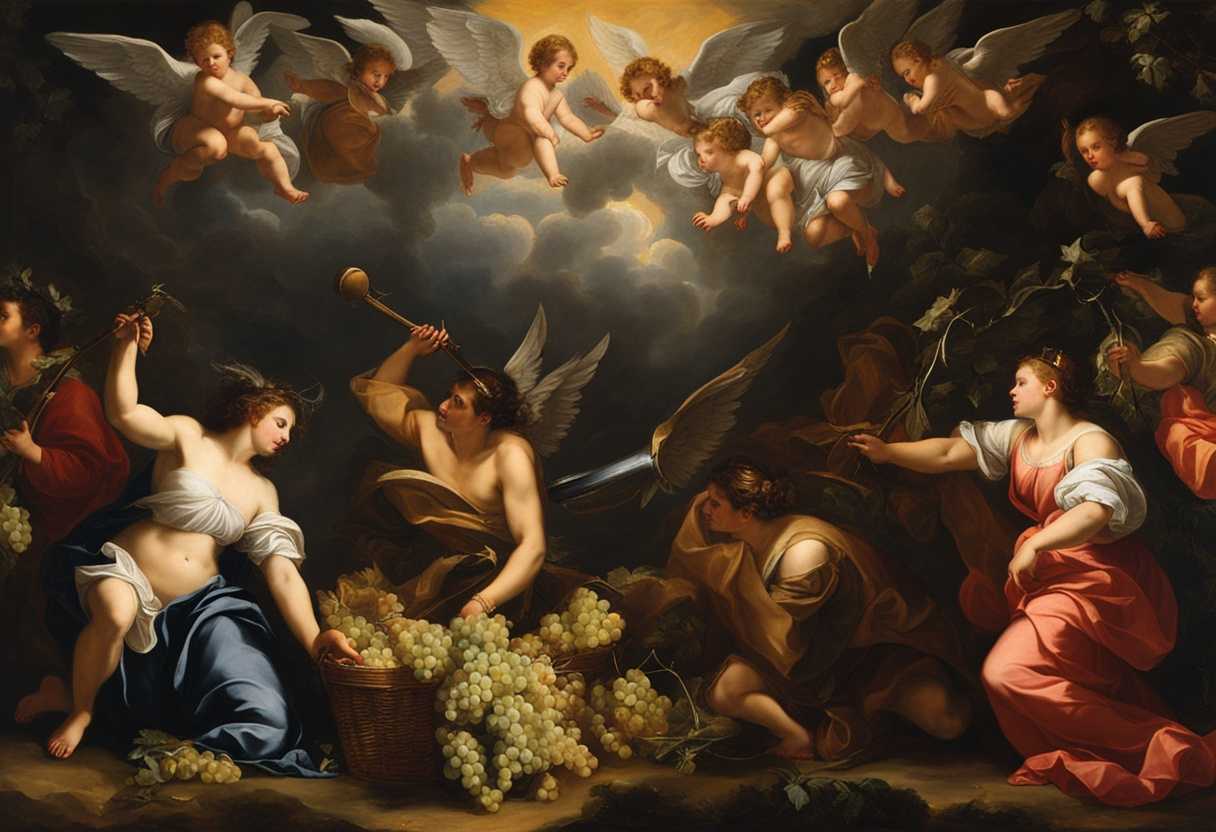
Setting the Scene for Revelation 14:17-20
In Revelation chapter 14, the scene is set in a vast and heavenly landscape. The air is filled with a sense of anticipation and awe as the angels prepare to carry out the final judgments of God. The stage is set for the culmination of the battle between good and evil, with the forces of darkness gathering against the righteous.
In this particular passage, we see a powerful image of an angel coming out of the temple in heaven, holding a sharp sickle. Another angel, who also has a sharp sickle, comes out from the altar. These angels are given the command to harvest the earth, separating the wheat from the weeds. The earth is ripe for judgment, and the time has come for God’s justice to be carried out.
Surrounding these angels are the redeemed, those who have remained faithful to God despite the trials and tribulations of the world. They stand in awe and reverence, witnessing the unfolding of God’s divine plan. As the angels swing their sickles, the grapes of wrath are gathered and thrown into the great winepress of God’s wrath, symbolizing the final judgment that will be poured out on the unrepentant. The scene is both terrifying and awe-inspiring, a reminder of the power and sovereignty of God over all creation.
What is Revelation 14:17-20 about?
Imagine a bountiful harvest, where all the hard work of planting and nurturing crops comes to fruition. Just like the earth yielding its produce, our actions in life also have consequences. This verse speaks to the concept of reaping what we sow – the outcomes of our choices and behavior. When the harvest of the earth is reaped, it symbolizes the culmination of all that has been done, for better or for worse.
Now, imagine grapes being trampled underfoot in a show of anger and retribution. The image of grapes of wrath being trampled evokes a sense of justice or punishment for wrongdoing. This verse reminds us that there are consequences for our actions, and that we must be mindful of the seeds we sow in our daily lives. It prompts us to reflect on our choices and decisions, and to consider the impact they may have not only on ourselves but on others as well. Just like a harvest must be tended to and cared for, so too must we nurture our relationships and attitudes, lest we face the trampling of our own metaphorical “grapes of wrath.”
Understanding what Revelation 14:17-20 really means
In Revelation 14:17-20, we find ourselves immersed in John’s vivid vision of the end times, a prophetic glimpse into the final judgment that awaits the world. The passage unfolds with the appearance of an angel wielding a sharp sickle, ready to reap the harvest of the earth. This imagery is laden with symbolism, pointing towards the culmination of God’s plan for humanity and the ultimate reckoning that will take place.
The figure of the angel, emerging from the heavenly temple with a sharp sickle in hand, signifies the divine authority and power behind the impending judgment. Angels in biblical tradition often serve as messengers and instruments of God’s will, executing His decrees with precision and purpose. The sharp sickle, in this context, represents the instrument through which God’s judgment will be swiftly and decisively carried out.
As the angel commands the gathering of the ripe grapes from the earth’s vine, we are confronted with the profound symbolism of the grape harvest. Throughout the Bible, the grape harvest is a potent metaphor for judgment and the end of an age. The clusters of grapes, symbolizing the people of the earth, are deemed ripe, signaling that the time for divine judgment has come, and the world stands on the brink of God’s final intervention.
“The great winepress of God’s wrath” evokes a chilling image of the impending judgment, where the wicked will face the full force of God’s righteous anger. The winepress, a place of crushing and squeezing, serves as a stark reminder of the consequences of unrepentant sin and rebellion against God. The phrase “God’s wrath” underscores the seriousness and inevitability of divine justice, a theme that reverberates throughout the passage.
Drawing parallels with Old Testament prophecies like Joel 3:13 and New Testament teachings such as Matthew 13:39, Revelation 14:17-20 aligns itself within the broader biblical narrative of divine judgment and the end times. These interconnected passages reinforce the consistent message of God’s sovereignty, justice, and the ultimate accountability of all humanity before Him.
In our contemporary context, this passage serves as a poignant reminder of the reality of divine judgment, urging us to reflect on our lives and align them with God’s will. It prompts us to consider our spiritual readiness for the inevitable day of reckoning, compelling us to live with a sense of urgency and purpose in light of eternity.
Consider the story of an individual who, upon grasping the gravity of divine judgment, underwent a profound transformation in their life. This anecdote illustrates how the awareness of God’s ultimate justice can catalyze a radical shift in perspective, leading to a life characterized by repentance, obedience, and a deepened relationship with God.
As we contemplate the weighty themes of Revelation 14:17-20, may we be spurred to introspection and action, striving to live in a manner that honors God and prepares us for the future that awaits. Let us seek guidance and strength through prayer, asking for wisdom to discern God’s will and the fortitude to walk faithfully in His ways.
How do we align our lives with God’s harvest?
To align our lives with God’s harvest as described in Revelation 14:17-20, we must first understand the importance of being prepared for the final gathering. We too must ensure that we are spiritually mature and ready for the judgment day, just as the angel in the passage calls for the grapes to be fully ripe before they are thrown into the winepress of God’s wrath.
Secondly, we should strive to bear good fruit in our lives, reflecting the righteousness and holiness of God. Our actions and deeds should reflect our commitment to following God’s will and bearing fruit that brings glory to His name, just as the grape harvest signifies the end times when the righteous will be separated from the unrighteous.
Lastly, we should be mindful of the consequences of ignoring God’s call to repentance and righteousness. The imagery of the winepress overflowing with blood serves as a stark reminder of the judgment that awaits those who refuse to align their lives with God’s will. Therefore, we should continuously seek to align ourselves with God’s harvest by living a life that is pleasing to Him and bearing fruit that reflects our faith and commitment to Him.
Application
Time is ticking, and our faith must yield a bountiful harvest. Let’s sow seeds of love and kindness without hesitation – our spiritual journey demands it. We are each tasked with nourishing our faith, at work and home, creating a legacy that shines brightly. Are you willing to be the gardener of your soul and cultivate a garden of righteousness for all to see?

Reverend Michael Johnson is an experienced Church Minister with a profound expertise in spirituality and guidance. With a serene presence and a compassionate heart, he has faithfully served his congregation for over 20 years, leading them on a spiritual journey towards inner peace and enlightenment. Reverend Johnson’s extensive knowledge of religious philosophies and profound understanding of human nature have made him a trusted confidant and mentor to many, as he seamlessly weaves his profound wisdom into life teachings. Reverend Johnson’s calming demeanor and empathetic nature continue to uplift and heal souls, nurturing a sense of unity and tranquility within his community.